admin
admin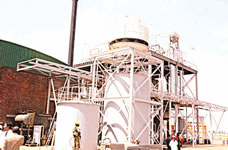
become a white elephant due to limited supply of raw materials.
Representing one of the country’s major investments in the post independence era, the Mt Hampden plant, situated about 15 km north-west of Harare has remained idle.
The plant, the first of its kind in Africa and only one of the few in the universe was the brainchild of joint efforts between the Reserve Bank of Zimbabwe and Korean investors. It processes oils from seeds such as sunflower, jatropha, cotton, soya beans as well as vegetables to produce bio-diesel.
It has capacity of producing up to 100 million litres when fully integrated, supported by availability of sufficient feedstock.
A follow up by The Herald Business this week revealed that the plant never operated on a commercial basis largely due to inadequate supplies of feedstock in the form of oils from cotton, soya beans, jatropha and cotton. Some outgrower schemes by the National Oil Company of Zimbabwe and the Forestry Commission fell by the way side.
According to bio-energy experts, at least one tonne of seed oil is required to produce up to 300 litres of bio-diesel.
Sources this week indicated that several issues were overlooked prior to the establishment of the plant with the major one being the ability of local farmers to grow and supply enough oil seeds for the plant. The sources also noted that “little” investment was also made to capacitate farmers.
“The project would have succeeded if productivity levels were sufficient to produce enough oils to feed the plant,” said one source who requested not to be named.
Science and Technology Development Minister Professor Heneri Dzinotyiwei said in an interview this week that the bio-diesel project had virtually become redundant.
He said since the plant was not designed to crush oil seeds, some small crushing plants were needed in oil seed growing areas to support the project.
“We need some kind of processed oil that can be fed into the plant and that can only be achieved when we have enough seed. We are convinced that we did not do proper homework before implementing the project.
“A proper research is now required and key areas that need to be looked into are essentially on ways of improving oil seed production. We will then work on small plants, which will crush the seeds that will be fed into the Mt Hampden plant,” said the Minister.
He added that the plant has never operated on commercial basis since 2007.
“What they are doing is to just keep the machine running.”
Reserve Bank of Zimbabwe Governor Dr Gideon Gono was said to be out of the country on business but his advisor Dr Munyaradzi Kereke said: “Its very sad that such a noble innovation has been allowed to be seriously underutilised for whatever reason the authorities do have. As you know the RBZ has been outlawed from the core mandate of monetary policy.
“The bio-diesel project is as relevant today as it was when it was officially launched by His Excellency the Head of State and Government and Commander-In-Chief of the Zimbabwe Defence Forces, President Mugabe,” he said.
Dr Kereke said the original strategy was that it was going to have significant backward and forward integration synergies with Jatropha and other oil seed farmers and end-users of diesel.
“Unfortunately the statutory operating environment of the central bank seems to have blurred the central bank’s capacity to see this vision through and we hope the relevant authorities will not let the nation down,” said Dr Kereke.
Agriculture, Mechanisation and Irrigation Development Minister Dr Joseph Made yesterday said a programme was already in place to transform various farmlands into “oil fields.”
“We cannot afford to take a back seat when we have such a big plant and we are certainly going to use the land reform to expand production of oil crops,” said Minister Made.
Noczim, which was mandated to spearhead growing of jatropha, has since stopped this to concentrate on its “core business.”
“We have stopped the jatropha
programme to focus on core business,” said an official who added, “Even the projects that we intended to do did not succeed very well.”
Bio-diesel holds great promise for African nations as over-reliance on fossil fuels has long drained national budgets.
Fuel prices are constantly rising, stressing the need for African governments to consider bio-fuels as an alternative.
In the developed world, the EU targets member states to generate at least 10 percent of their energy from bio- fuels by 2020.



 Online Reporter