SINIKIWE Ndlovu bears the pain similar to that of being knifed by a double-edged sword.
Apart from having to do all the household chores including traversing long distances to fetch firewood and water, she also suffers from the vagaries of climate change, especially hunger.
Often, she runs out of ideas on what to put on the table for the family, a duty that has been surrendered to her by her mother.
Crops did not do well in Silobela, Midlands province due to the effects of climate change that distorted rainfall patterns, thus community members are staring hunger in the face.
At 15, Sinikiwe is prone to all forms of negative effects brought about by climate change.
In her ”line of duty”, there are many hazards including sexual abuse by herdsmen and other men she comes across in the bushes where she normally looks for firewood or water.
Sinikiwe, who is a Form Three learner, also has to burn the midnight oil as she studies using candles or a paraffin lamp, which pose a danger to her and her surroundings.
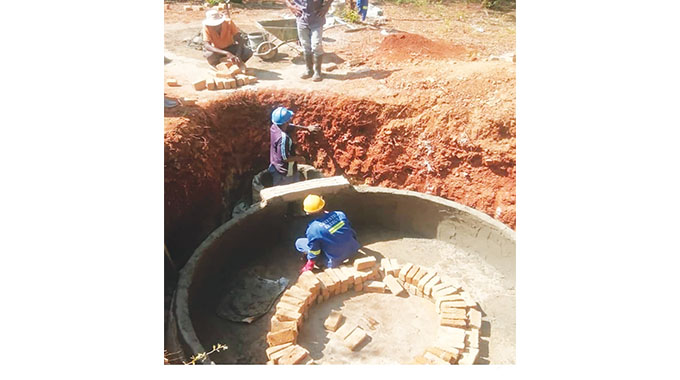
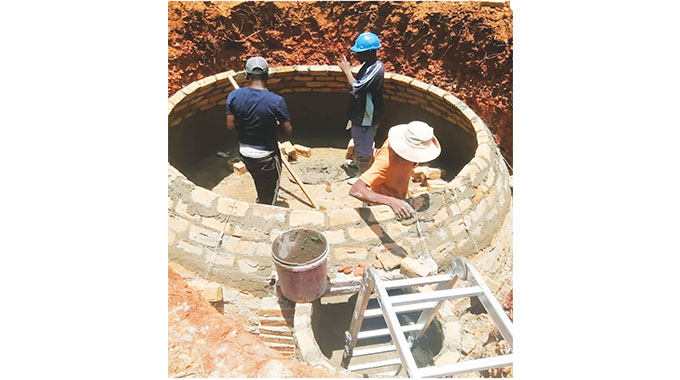
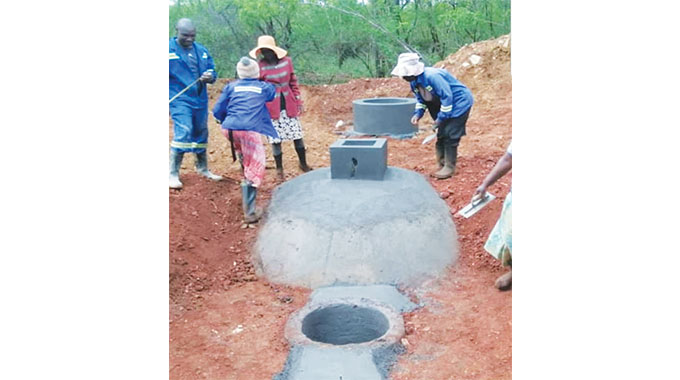
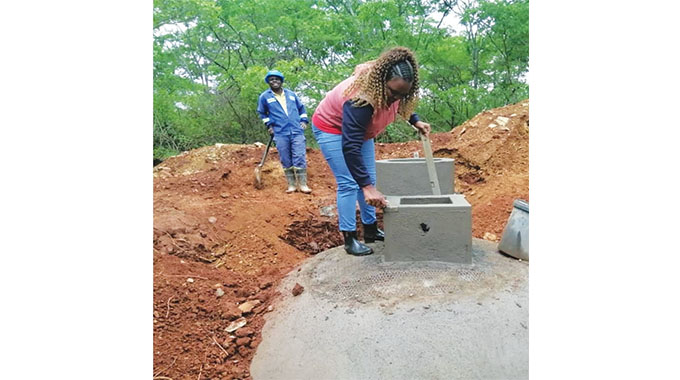
But an initiative by the Zibagwe Rural District Council (ZRDC) to construct biogas digesters across the district has come to the rescue of Sinikiwe and other rural girls who have been experiencing similar challenges.
The initiative has seen women, girls and the community at large benefiting from the biogas digester recently constructed by the RDC in their area.
A biogas digester is a blend of gas primarily methane and carbon dioxide produced by bacteria acting on organic materials in an oxygen-free environment.
The gas is smoke-free and burns with a blue flame, similar to that of liquid petroleum gas.
The use of waste including human waste, crops and other waste allows some environmental advantages such as environmentally friendly re-circulation of organic waste from rural households.
Biogas is a biofuel that is produced from the decomposition of organic waste (plant and animal products) in anaerobic conditions.
In a biogas digester, anaerobic bacteria digest organic materials into biogas, which contains both energy (gas), and valuable soil products (liquids and solids). Biogas production mimics the natural environmental cycles.
During the breakdown of organic waste, nutrients such as nitrogen, phosphorus, and potassium are conserved and can be recycled back to the land in the form of effluent.
This therefore means that there is less work for Sinikiwe and other rural girls as this energy source can be used for lighting, cooking and charging gadgets among other domestic uses.
This will go a long way in reducing deforestation as there will be less cutting down of trees for cooking purposes.
Zibagwe RDC has earmarked construction of community-based biogas digesters in all its 33 wards that will benefit at least 30 people per ward translating to about 1 000 beneficiaries across the district.
While the targeted beneficiaries are women and girls, people living with disabilities and the youths are also set to benefit from the project.
Zibagwe RDC CEO, Mr Farayi Desmond Machaya said this project was mainly driven by the need to protect the girl-child and the environment (forests in this case).
Protection of the girl child who is usually at the receiving end of climate change is a major priority for the council.
“Young girls walk long distances to fetch firewood hence they are prone to rape and other forms of sexual abuse. Women usually travel long distances to fetch firewood and by so doing, encounter a lot of wildlife and even abusive men,” he said.
Above all, biogas digesters provide a clean source of energy.
“Biogas provides a cleaner source of energy as no toxic smoke and soot is produced that can lead to health problems. The bio fertiliser can act as a soil conditioner due to its texture allowing better water holding capacity therefore it improves yields,” he said.
According to Mr Machaya, the RDC is dedicated to reducing the cutting down of trees as communities search for firewood.
“As the rate of deforestation is increasing in Zibagwe RDC communities, the biogas digesters will eliminate the use of firewood. Also, there is reduction of carbon emissions as biogas has a lower carbon footprint.
“Council is taking strides towards participating in forest preservation activities in line with SDG13 on climate action. Our technical team is currently producing maps for forests to participate in the Go-Green, Go-Blue project,” said Mr Machaya.
According to Mr Machaya, the project will benefit local communities in more ways than one.
“Proceeds from sale of carbon credits go directly to the participating communities who will be assisted by the council to venture into various socio-economic projects including road rehabilitation, construction of schools, clinics, procurement of ambulances, among other projects that the community will identify,” he said.
Plans are afoot to roll out more community biogas digesters in the second round before rolling out household based biodigesters in the future.
The development has pleased stakeholders who are in complete support and are also implementing complementary projects to support the move taken by the rural authority.
Environmental Management Agency (EMA) Midlands Provincial Spokesperson Mr Oswald Ndlovu said the programme would complement EMA’s programmes to promote the use of cleaner sources of energy in the Midlands Province.
“EMA rolled out biogas projects in Midlands Province in 2016. The goal was to decrease energy poverty in rural areas and make cleaner cooking fuels more accessible. Reliance on firewood for fuel promotes deforestation and indoor air pollution. This project therefore benefits women especially as they have the responsibility of fetching firewood. Another benefit is that the effluent from the digester is used as a fertiliser in the field, which improves soil fertility thereby improving crop yields,” said Mr Ndlovu.
Ms Edwick Madzimure, Women’s International League for Peace and Freedom (WILPF) Zimbabwe president said the project goes a long way in lessening the burden for women and girls.
“It lessens the burden and risks associated with the use of wood fuel especially for girls and women who do most of the chores. There are a lot of stories of girls that were raped while fetching firewood and some attacked by wild animals,” she said.
Ms Madzimure said it reduces over-reliance on artificial fertilisers which also contribute to global warming.
“The use of firewood leads to deforestation and desertification thus exacerbating the climate crisis.
Moreso; the use of biogas digesters reduces the climate crisis because cow dung produces methane, a gas that contributes a lot to global warming. The residue from the biogas can be used as manure,” she explained.
Midlands Provincial Forestry Extension Manager, Mr Rodrick Nyawhai said such initiatives have seen deforestation decreasing from 330 000 hectares annually to 262 000 hectares per annum.
He said his organisation appreciates those who are working hard to provide alternative energy sources to communities.
“Currently deforestation is high in resettled areas as compared to communal areas. This is due to decongestion of communal areas as a result of the land reform. Land clearing for agricultural purposes in newly settled areas is the major contributing factor,” he said.
The Forestry Commission, said Mr Nyawhai, would continue with initiatives to try and combat deforestation.
“We will continue doing conservation awareness campaigns, woodland management with communities, regulation activities and forming Natural Resources Management Committees in communities across the country as well as initiating tree planting strategies,” he said.
Permanent Secretary in the Ministry of Environment, Climate, Tourism and Hospitality Industry, Ambassador Raphael Faranisi said girls and women were on the receiving end of climate change hence they need to be protected.
“Government is in the process of creating a fund to cater for victims of human-wildlife conflict. Part of the fund is to construct solar boreholes, biogas digesters and other alternative sources of energy so that women and girls do not travel long distances to ferry firewood and water. This is the most vulnerable group as it is always linked to household chores,” said Ambassador Faranisi.
This is indeed a project worth emulating by most rural authorities as a measure to reduce the risks faced by Sinikiwe, her mother and other girls and women across the country.
Kariba ferry disaster becomes Zimbabwe’s deadliest with 92 confirmed
Walter Nyamukondiwa in Kariba THE death toll from the Rida Mbuya Nehanda ferry disaster has risen to 92, making it the country’s deadliest transport tragedy and surpassing the 1991 Nyanga…
Government intensifies fight against drug supply chains
Sukuwenkosi Dube-Matutu [email protected] GOVERNMENT has intensified efforts to combat drug and substance abuse, with renewed focus now being placed on dismantling supply networks responsible for bringing harmful substances into communities.…


 Chronicle Editor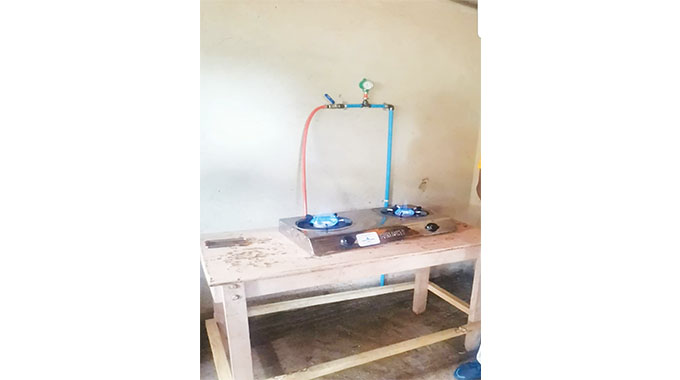


 Online Reporter