Online Reporter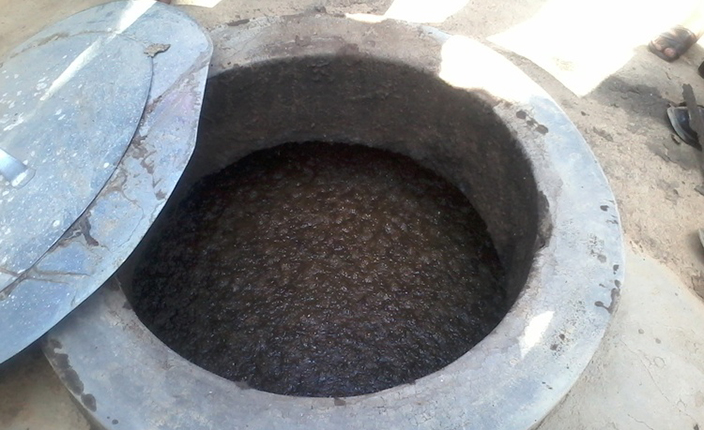
Sifelani Tsiko
Chifamba High School headmaster Mr Steven Mutaiwa cannot hide his joy when talking about how a biogas project at the institution has lessened worries in the corridors of his mind.
The school, located in Guruve, runs a boarding service for 94 learners (out of a student population of up to 900) and procuring firewood was a nightmare for him.
“We would buy five lorry-loads of firewood every month at a cost of nearly US$500 per month including transport,” he said.
“Sourcing firewood was stressful, worse still as educators we were alive to the impact of this on our dwindling forestry.”
A biogas project implemented at the school with the support of the Capacitating One Health in Eastern and Southern Africa (Cohesa) programme by the University of Zimbabwe and Cirad, has removed lines of worry from his face.
Capacitating One Health in Eastern and Southern Africa (COHESA) is co-funded by the OACPS Research and Innovation Programme, an initiative implemented by the Organisation of African, Caribbean and Pacific States (OACPS), with the financial support of the European Union.
The consortium is composed of the International Livestock Research Institute (ILRI), CIRAD — a French agricultural research and cooperation organisation, and the International Service for the Acquisition of Agri-biotech Applications (ISAAA).
It is financed by the European Union and aims to effectively protect the health of people, animals, plants and the shared environment. Zimbabwe is among 12 African countries that are benefiting from a e9,3 million (US$10 million) Cohesa project.
Ever since a biogas plant was established at Chifamba High School with the support of implementing partners, the Chinhoyi University of Technology and Harare Institute of Technology, the savings have been enormous.
“The use of methane gas from our biodigester is helping us save a lot,” Mr Mutaiwa said.
“Our firewood demand has dropped to two lorry loads a month. And I am optimistic that once our new kitchen has been completed with biogas fittings, we will further cut our costs,” he said.
In addition, he said, the school is upgrading the use of solar power from 10kva to 20kva, something which will help the school to realise huge savings
By installing a 20kva system, he said, the school will be off-grid and will be able to power courses such as metal technology, textile technology, food and nutrition as well as the administration block.
The installation of a biodigester plant is now a key resource for saving the expense of buying firewood while also preserving a significant amount of trees and reducing carbon emissions from burning wood.
Moving from buying five lorry-loads of firewood for each three-month school term to two is significant.
The use of methane gas has seen benefits from their biogas project, including reduced fuel wood costs, cuts in pollution and promotion of cleaner energy approaches.
Biogas digesters can significantly reduce energy costs for boarding schools by providing a renewable energy source from organic waste such as cow dung and pig waste found at the school.
It has led to lower electricity bills, low use of firewood and with hope for potentially reducing school fees in future.
The biogas plants have also reduced reliance on traditional energy sources, mitigating the impact of power cuts on school operations.
A number of schools in the country have embraced the use of biogas for cooking and heating, as the country moves to adopt cleaner energy technologies.
“This is a good project with a potential to be rolled out in other wards of Guruve district,” said Prof Kudakwashe Chitindingu, lead implementer and Chinhoyi University of Technology expert.
“Chifamba High School has become a model of how efforts to reduce deforestation and emissions can be made at the local level.
“This model can be replicated in other schools in the district to generate methane gas for cooking and heating.”
Cow dung and pig waste at the school is deposited into a biodigester buried underground.
Bacteria break down this waste and gas is produced as a by-product of this process.
A pipe transfers the gas from the digester to the kitchen a few metres away.
The use of biogas has reduced the need for firewood and electricity from the grid.
“By lowering energy costs, schools can potentially lower overall operational expenses, which could translate into reduced school fees for parents in future,” a council official said.
“Energy consumes a huge budget for schools. And the use of green fuel which is renewable energy helps reduce carbon emissions and promote a cleaner environment.”
Mr Mutaiwa said the use of biogas has several other benefits for the school.
“We are growing vegetables on our school yard using organic fertiliser — a by-product of the biogas production,” he said.
“This project is quite exciting and we are mixing the by-product with rabbit urine, to make a strong biofertiliser free from chemicals that destroy our soils.”
Consequences for the environment of using fire wood dire.
Deforestation in Guruve district is a serious issue driven primarily by agricultural expansion and the need for fuelwood, particularly for cooking, heating and tobacco curing.
This problem plays out in various parts of the country.
The situation is serious in various parts of the country and such small and localised efforts could help to stem the deforestation.
About 80 percent of the country’s population of 16 million lives in rural areas where there is no electricity, with many still using wood to cook and cure tobacco.
As of 2024, Zimbabwe’s annual deforestation rate fell to approximately 262,000 hectares per year from a high of around 300 000 hectares a year, according to the Forestry Commision.
This reduction is attributed to several factors, including reforestation initiatives, enhanced law enforcement, and increased community involvement.
As part of its national action plan for the UN Paris accord on climate change, Zimbabwe aims to reduce emissions from deforestation and forest degradation.
And, small and localised efforts such as the installation of a biogas plant at Chifamba High School in Guruve, can make a huge difference in the long run.