admin
admin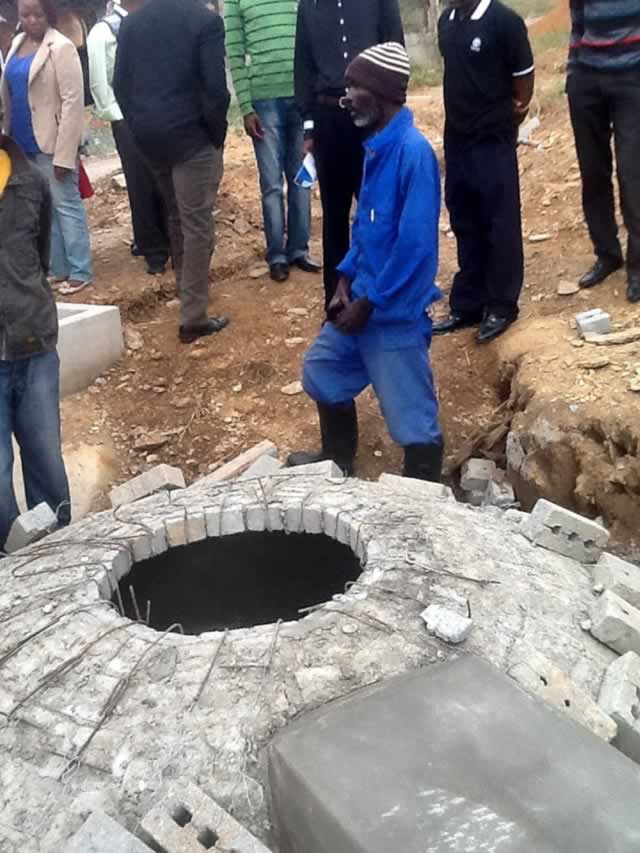

Lungelo Ndlovu
Biogas provides a clean and easily-controlled source of renewable energy, able to replace firewood or fossil fuels.
It has proved to be a valuable source of energy in rural areas because it requires very little labour to harness and does not emit any dangerous substances into the atmosphere.
There is an initiative in Insiza District, in Matabeleland South, where about 15 biogas digesters have been constructed to improve living standards of people in the rural community through production of the alternative source of fuel. The community can use the green energy for domestic purposes like lighting their homes and cooking.
Most rural communities in Zimbabwe use firewood for both cooking and lighting purposes. This leads to greater dependence on the natural environment. Communities cut down trees for firewood, which results in a decrease of vegetative cover. The depletion of vegetation also happens in peri-urban areas as some urbanites who cannot afford electricity or have houses not linked to the power grid, fetch firewood.
Communities such as Ntshene Village in Esigodini are battling with the results of land degradation such as soil erosion and gullies because there is no longer vegetative cover in their area.
Many villagers travel long distances in search of firewood and some even go as far as hiking the mountains for it.
Sithandekile Ncube of Ntshene says lack of firewood is a serious problem in her area.
“We walk long distances for firewood here in Ntshene. It is a daunting task for us women because we have to carry a bunch of firewood on our heads while carrying a baby on the back. Regardless of the distance and the mountain, one has to go often to the mountain because the firewood won’t last you a week. For some of us who don’t have scotch carts, you don’t have a choice because you need the energy for cooking and lighting purposes,” said Ncube.
Harnessing biogas at her home can help solve her troubles. The alternative energy source is ideal for her as it is made from organic matter by a natural fermentation process, using materials such as farm waste (manure), plant matter, sewage and biomass.
Most rural communities have these materials at their disposal as a lot of them keep cows and pigs.
A man at Esiphezini area has realised the importance of the alternative energy source and how it can change his life. With the help of Netherlands Development Organisation (SNV), a non-governmental organisation, he is in a process of setting up a biogas digester at his home, to collect gas for both lighting and cooking purposes.
In Filabusi at Phangani Vocational Training Centre biogas is used for cooking purposes.
“You can easily boil your water using this biogas stove and it will only take you 15 minutes. We use biogas for cooking sadza and many other things and it doesn’t emit smoke at all. It is so much different from other forms of fuel and it is very easy to use. Some gases like propane smell but with this one you will never feel anything,” explained a worker at the centre.
Jabulani Khumalo from Tsholotsho told Chronicle in an interview that biogas makes rural life easier.
“Ever since I started using biogas, my life has been completely transformed. I can do other things than to think about fetching firewood and buying paraffin or candles for lighting purposes. With biogas I get all these things, plus more because the by-product is manure. I use this manure for fertilizer in the garden and in my fields,” said Khumalo.
Once a biogas digester is set up and properly managed, it can provide renewable methane gas for more than 15 years. On a larger scale, one can use biogas to run generators and make electricity or to power combustion engines.
Through an initiative between the Ministry of Energy and Power Development, Ministry of Agriculture, Mechanisation and Irrigation Development, Rural Electrification Agency, Hivos and SNV, use of biogas is expected to increase in this country.
A vibrant biogas project that will benefit more than 67,000 households nationwide will be implemented through a programme called Zimbabwe Domestic Biogas Programme. It is expected that more than 7,400 households would be using biogas technology in rural Zimbabwe by 2017.
Due to global climate change which is impacting negatively on the people’s livelihoods throughout Africa and the need for greener energy solutions, Rwanda has adopted biogas technology at an entrepreneurial level, where locals are making business out of it.
According to SNV Country Director, Lawrence Attipoe, biogas technology is being considered an alternative energy resource by many African countries. His organisation is expecting to establish a vibrant biogas sector in Zimbabwe.
“In Africa, we are in 10 countries. The fastest growing is Kenya and Ethiopia because they have livestock. The most entrepreneurial one where people have embraced the business of it is Rwanda. In this country builders of biogas digesters go to the market and talk to people and build digesters for them. It is very exciting, we have also worked with people in Asia, Nepal and we have built more than 10,000 digesters there,” said Attipoe.
SNV has trained quite a number of biogas digester builders in Zimbabwe and it is expected that more people are going to embrace the alternative renewable source of energy.
“Last year, we trained 40 builders and 20 graduated recently,” he said.
“We want to improve the environment and also to improve the health of women as it reduces the burden on them. We want people to own it themselves and for them to invest in it.”


 Online Reporter