

 admin
admin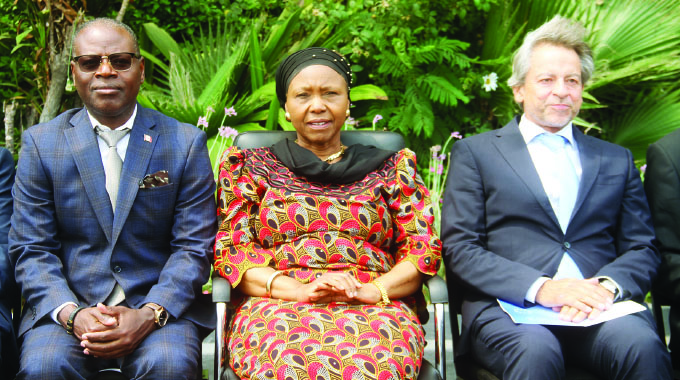
Columbus Mabika
Herald Reporter
Zimbabwe is a signatory to all conventions banning biological weapons and is now upgrading enforcement to ensure that it controls unauthorised trafficking across its territory.
The United Nations has been upgrading the obligations of member states under the Biological Weapons Convention to enhance preparedness and response strategies against threats of biological weapons, and Zimbabwe is determined to meet its new and old obligations, Defence Minister Oppah Muchinguri-Kashiri said yesterday, while officially opening a forum on the national implementation of the BWC in Harare.
The BWC prohibits the development, production, acquisition, transfer, and stockpiling of biological and toxin weapons. The convention is a commitment representing international consensus on the need to strictly adhere to balancing scientific advancement with ethics to prevent the proliferation and misuse of biological sciences for harmful purposes.
To strengthen the Convention on Weapons of Mass Destruction, the UN Security Council Resolution 1540 of 2004 obligates State parties to refrain from providing any form of support to non-State actors that attempt to develop, acquire, manufacture, transport, and transfer or use nuclear, chemical and biological weapons for terrorism.
The resolution also requires member states to implement domestic controls over materials related to the production of biological weapons within their territories and enhance border security to prevent illicit trafficking of these materials.
Many peaceful purposes use some of the same raw materials, and this is why the convention wants to see control and authorisations so that the materials are not diverted into weapons and destruction.
“Zimbabwe attaches great importance to bilateral and multilateral cooperation. Zimbabwe stands ready to share insights to bolster her capacity to meet all obligations and derive benefits against threats of biological weapons,” said Minister Muchinguri-Kashiri.
Zimbabwe has made significant progress in the implementation of BWC, with a Biological Warfare Bill currently before Parliament, that will culminate into an Act of Parliament.
The Act would strengthen the country’s legal framework in the fight against biological weapons.
The Covid-19 pandemic, while a natural new disease, demonstrated the vulnerability of modern societies, dictating the need to proactively address bio-threats and to enhance national frameworks on bio-safety, bio-security and non-proliferation of biological weapons.
European Union Ambassador Mr Jobst von Kirchman acknowledged Zimbabwe’s dedication to strengthening its national mechanisms for preventing and countering biological threats.
“Zimbabwe has taken steps in implementing the BWC at the national level notably submitting confidence building measure report in 2012. These reports are essential for promoting transparency and fostering trust among states,” he said.
Recent global health crises have demonstrated how swiftly biological threats can cross borders and disrupt nations.
In a speech read on his behalf, UN resident coordinator, Mr Edward Kallon said the BWC is a fundamental pillar of global peace and security architecture and is a cornerstone of the international disarmament non-proliferation regime.



 Charles Duri
 Online Reporter