admin
admin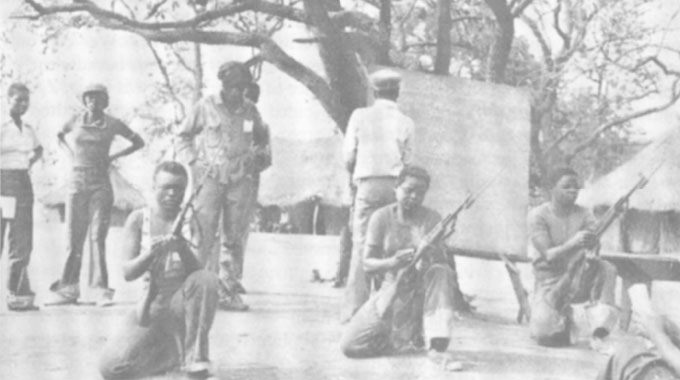
Beaven Dhliwayo Features Writer
During the struggle for independence, ZANU PF’s Marxist-Leninist ideological grounding meant that the revolutionary party had to devote time to conscientising comrades about women’s rights. The party’s leadership was alive to the reality of the broader struggle for Zimbabwe being intrinsically linked to women emancipation. Efforts to mobilise cadres about the centrality of women’s rights in the struggle led to the consummation of the ZANU PF Women’s League in 1977 in Xai Xai, Mozambique. To get an in-depth understanding of how the league has evolved in the post-Independence era, our Reporter Beaven Dhliwayo (BD) speaks to Women’s League secretary Cde Mable Chinomona (MC) who is also the Senate president. Below are excerpts of the interview.
BD: How did the idea of the Women’s League come about?
MC: The idea for us to have a women’s wing came about during the liberation struggle. Although we were fighting side-by-side with our male counterparts, there were issues that were affecting us as women. We had needs that were different from those of men. As you know, female comrades go on their “periods” and this was best understood by other women. Even diseases that affected women differed from those that affected men. So then came the idea to create a platform for women where they could discuss issues that affected them and to share ideas and how best they could help in the liberation struggle. This brought about the birth of the Women’s League. Women were thus given a voice and empowered to lead just like the male comrades. Previously, it was seen as taboo for women to lead or speak in front of men. It is not that they were not smart, but the opportunities were not readily available.
BD: Considering that the Women’s League was formed in the liberation struggle, what challenges did you face as women? In your view, were they resolved?
MC: Challenges we were facing during the struggle include the provision of clothes for women combatants. Like I said, for example, there were no pads for women to use during their “periods”. It’s common that some women get sick during menstruation. So there was need for medication and good hospitals to take care of women. Malnutrition also affected women more than men. Solving these challenges was not easy despite the fact that some countries were supporting us. They supplied us with guns and ammunition and gave us second-hand clothes. I remember some could even wear different shoes as long as they fitted. But the big issue was lack of nutritious food. Women suffered from severe hiccups which weakened joints. Some would shiver persistently. We also anticipated that women join male comrades on the negotiation table. Men naturally didn’t understand some of the women’s plight such as menstruation. There were few women in leadership positions. So these are some aspects that brought about the formation of the Women’s League. The first woman to join the negotiating table was former Vice President, Joice Mujuru. She was among the founding members of the Women’s League with the likes of the late Sally Mugabe. But resolving the problems was not easy because many young girls joined the struggle in their thousands. Food was not enough and sickness easily caught the girl child. I remember at Tembwe Military Camp many died. So our fellow women were trained as nurse aides and helped a lot in the camps.
BD: Can you briefly take us through your journey?
We stayed in thick bushes so that the white Rhodesians wouldn’t locate us easily. We used trees and grass to make our beds. Women did most of the chores to build barracks. We could sleep near each other with the male comrades and nothing happened. This gave us a strong relationship as freedom fighters and it moulded us to understand we are the same in independent Zimbabwe. The then leadership did not forget us as women and created the Ministry of Community Development and Women’s Affairs, which was led by Mai Mujuru. The Women’s League started mobilising women, encouraging them to undertake chores or tasks traditionally regarded as only done by men. As part of the struggle, we knew that we were equals, but we continued to educate those that didn’t go to the war front. We continued dispelling the idea that women’s role was in the kitchen. It took a long time for women to vote for each other during elections. The Women’s League is still the driving force in ZANU PF.
BD: What role is the Women’s League playing in present day Zimbabwe?
MC: It is just a continuation and you know it’s a process. These are things that cannot be dealt with in a day, but the belief that women’s role is in the kitchen is long gone. We are now working together as men and women to develop our beautiful country, Zimbabwe. Our role as the Women’s League is to mobilise, support for ZANU PF and see to it that young women are empowered.
There are some issues we couldn’t do as the older generation, but I am happy we are setting the pace so that young women are empowered. Now as the President of Senate, I believe it helps to encourage young women that they can also be leaders. The role we are playing today is to elevate all young women. Families should desist from looking down upon the girl child.
BD: As the Women’s League what are the programmes underway to empower women?
MC: We are encouraging women to venture into fast food business and bakeries. We are training women to make soap, home detergents, petroleum and other products. As the Women’s League, we are also encouraging women to venture into farming. Soya bean farming is one of the projects underway. This will ease shortages of cooking oil. I also thank the Government for including women in Parliament. We cannot be there forever, hence the young should come and learn from us. We are not the first to lead; there were other women before us. What we are doing today, we are doing for future generations. On female representation in Parliament, the first elections did not yield more women. Female candidates did not have the wealth to compete with male counterparts. They were elbowed out because they could not donate to the electorate. There was that stigma that if we voted for a woman what will she give us in return.
BD: How is the Women’s League advocating equal opportunities in politics and business?
MC: It’s not easy, but Government put in place the Ministry of Women Affairs, Gender and Community Development to look into women affairs. We are working closely with them to empower women. You know it started with Mbuya Nehanda so we cannot just abandon it. We continue to carry her struggle because she did it as a woman. Women are naturally hard workers; they are the ones working in the farms. We are glad that the party’s and country’s Constitutions are clear that women should also own farms. For example, Norma Mliswa is doing well at her farm in Mashonaland West and it’s a clear testimony that women can do it.
We are happy to have Oppah Muchinguri-Kashiri as Zanu PF national chair and Minister of Defence and War Veterans. This means we are making great strides in creating equal opportunities for women both in politics and business. This will make our young women eager to lead in future. I am happy that with the support of the First Lady, Amai Auxillia Mnangagwa, young women are being encouraged to get screened for cervical cancer. She is also supporting women to start projects so that they stop being dependent on man, and we are very thankful.
BD: Your last words to young girls out there?
MC: I want them to know that it is not easy to be someone successful in life. Young girls should be courageous. In Shona they say; “Kuda chimwe unotorega chimwe” (to win something you have to sacrifice another). Relationships with boys have been there. Girls should concentrate on improving themselves academically and still engage in relationships at a later stage. We encourage them that whatever we are doing is for the good of their future. We want to leave this country in a good state for the young generation so that they continue with the legacy.
This is for both girls and boys; we don’t want them to sell the country. We hope to continue engaging the young, especially the girl child so that they desist from thinking that marriage is the end of poverty.


 Online Reporter