Online Reporter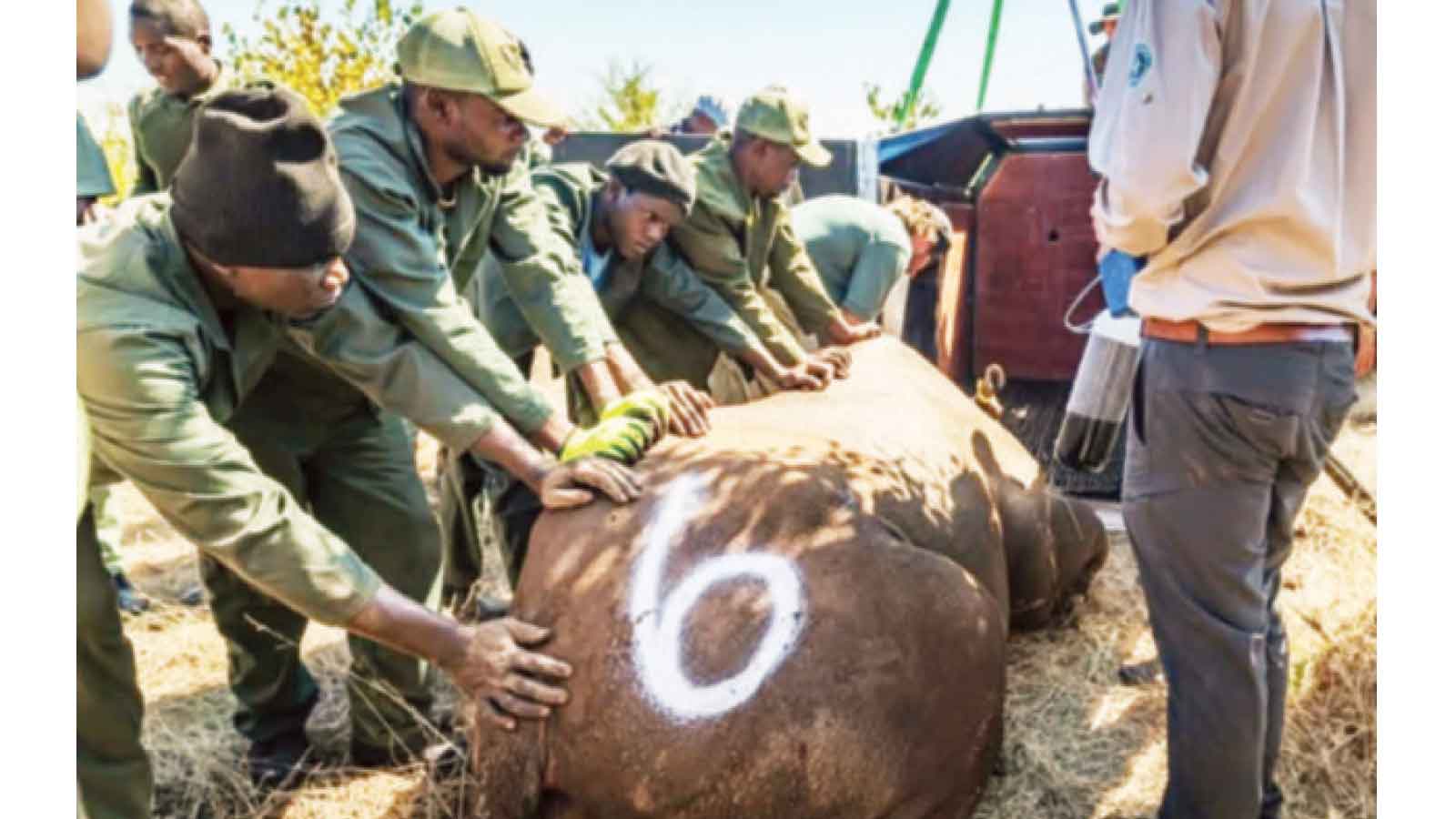
Ivan Zhakata-Herald Correspondent
A GROUP of endangered black rhinos has been reintroduced into Matusadona National Park, marking the return of a species that disappeared from the area more than three decades ago due to poaching.
The historic reintroduction has been hailed as one of Zimbabwe’s most significant conservation milestones in recent years and forms part of efforts to rebuild black rhino populations under the country’s National Rhino Strategy.
The animals, sourced from Imire Rhino and Wildlife Conservancy, Matobo National Park and another undisclosed location, were airlifted to Matusadona on the shores of Lake Kariba before being placed in specially constructed holding bomas for monitoring ahead of their phased release into a secure 175km2 intensive protection zone.
Before poaching decimated rhino populations in the late 1980s and early 1990s, the Sebungwe region, centred around Matusadona, supported Zimbabwe’s largest contiguous population of black rhino.
As poaching intensified, the Zimbabwe Parks and Wildlife Management Authority (ZimParks) removed the remaining animals from high-risk areas and relocated them to safer sites around the country.
Speaking on the development, ZimParks director-general Prof Edison Gandiwa said the return of the animals was a landmark achievement for Zimbabwe’s conservation sector.
“The return of black rhino to Matusadona National Park is a historic event and a proud moment for Zimbabwe’s conservation efforts.
“It is a testament to what is possible when Government, conservation organisations and local partners work together with shared purpose. ZimParks has always known that Matusadona has the habitat and now, through this partnership, the security and management capacity to support a viable population. Today, that conviction has been realised,” he said.
Conservationists said some of the animals being reintroduced were direct descendants of rhinos that were removed from Matusadona during the poaching crisis, preserving the genetic lineage of the species that once thrived in the park.
Each rhino has been fitted with a tracking device to enable real-time monitoring and rapid response in the event of stress or injury.
Imire Rhino and Wildlife Conservancy manager Mr Reilly Travers said the return of the animals represented the culmination of decades of conservation work.
“It is a moment filled with pride, hope and belief in the power of long-term partnership and shared vision. Today is not only about the rhinos themselves, but about the extraordinary dedication shown over the past 25 years by rangers, conservationists, partners and local communities who helped safeguard these animals for their eventual return to their rightful home range,” said Mr Travers
Matusadona National Park manager, Mr Michael Pelham, who witnessed the removal of the last surviving rhinos from the park in the 1990s, said the reintroduction was deeply emotional.
“I was here in the 1990s when we lost them. I helped capture the last survivors, we crated them and flew them out to safety, not knowing if the species would ever come back.
“Having witnessed the rhino’s catastrophic decline in Matusadona, it is incredibly emotional to see their return. Matusadona is synonymous with black rhino, and walking through this landscape recently, there has been an overbearing sense that we are missing an icon,” he said.
Mr Daniel Sithole, country manager of Matusadona Conservation Trust, said the return of the animals was a Zimbabwean conservation success story.
African Parks chief executive Mr Peter Fearnhead said the development reflected the remarkable recovery of Matusadona National Park.