

 admin
admin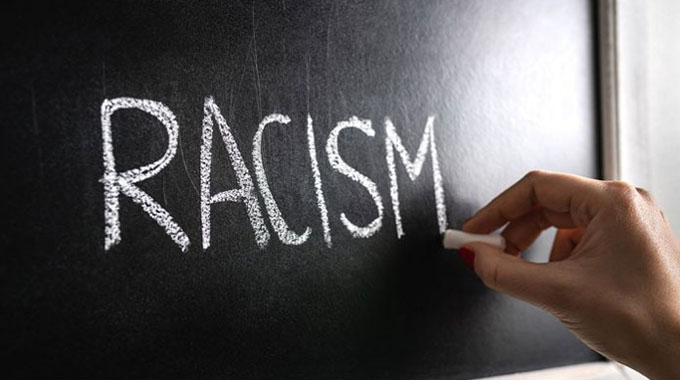
Dr Masimba Mavaza
“I was awakened by a very loud sound,” a black student in Ukraine started his story. “I looked out through the window from my 18th floor room. I saw a thick black smoke coming up, but I could not see where it was coming from.
“I then heard people screaming and loud shouts and footsteps sounding like spattering water in a heavy storm.
“The smoke was chocking. It was accompanied by heavy smell of burning plastic. I quickly put on my pyjamas and opened my door. It was clear chaos. Our building was hit by a missile and it was burning from down upwards.
“I realised I was in trouble. I jumped back in the room and grabbed a bag with my passports. There was no time to pack. I just took the bag and a blanket which I wrapped around me so that it will protect me from the fire.
“I followed the crowd. We had to use stairs because the lifts stopped working when the room was hit by the missile.
“The Russians were coming. There was an escape route from 15th floor. So, when we reached the floor, we had to use a slide to the ground.
“It was scaring, but that was all we had. I slid down and hit the ground with a thud. Hundreds of people were sliding down, so before I rose from the ground, another person slid into my ribs. I felt a pain I had never felt before, but it was time to save my life.
“I rolled away from the bottom of the huge slide. I realised I had just survived a bomb. We were then taken to the car park where people were asked to board busses which would take us to the border with Poland.
“It was such a relief. I joined the queue. As I reached the bus, a heavily built man who was at the door grabbed me by the collar and roughly pushed me to the ground and shouted: “Dogs and blacks are not going to use buses. Rescue mission is for us only”.
“I collected myself up and saw many people shouting at me. The attitude of people from Ukraine against blacks stinks. I realised that no black person was allowed. This was a significant show of racism. Ukraine has always been seriously racist.
“It is tough to be a black person in Ukraine. They treat you like a dog. We were many blacks who were not allowed on the bus. I realised that these buses where the last way out of here. I then jumped onto the last bus.
“We tussled with a guard who could not let us on the bus, but finally blacks overpowered him. We sat on the bus and as I sat down, a man shouted that if there is a black person on a seat they must stand up and give space to a white person.
“As he spoke, another loud bang silenced him. The driver just drove off with us inside. That is how we managed to reach the border. Refugees from many different countries – from Africa, the Middle East and India – mostly students of Ukrainian universities got to the Medyka pedestrian border to cross, fleeing the conflict in Ukraine, to eastern Poland”
Another Zimbabwean, Barlaney Mufaro Gurure, a space engineering student from Zimbabwe, finally reached the front of a nine-hour queue at Ukraine’s western border crossing of Krakovets after an exhausting four-day trip.
He was denied entry and threatened with assault.
“We felt treated like animals,” the 19-year-old said in a phone interview from a Warsaw hotel.
Gurure, a freshman at the National Aviation University, fled Kyiv hours after Russian President Vladimir Putin ordered troops into Ukraine.
“When we left Kyiv we were just trying to survive,” he said. “We never thought that they would have treated us like that. I thought we were all equal, that we were trying to stand together.”
This is what is happening to black people at the border.
Many Africans have reported episodes of abuse and discrimination while trying to cross into Ukraine’s neighbours.
The worst thing is that they are being abused by people from Ukraine and those from the countries they are trying to enter.
Since the war started, more than 1 000 black African students have fled from Ukraine to neighbouring countries.
The United Nations said over four million other people are currently in Poland.
Queues along the border are now tens of kilometres long with some African students describing to Al Jazeera how they have been waiting for days to cross, amid freezing temperatures and with no food, blankets or shelters.
The well-wishers and some volunteer groups will come and give only white people soup and blankets and nothing for the black students.
Maria Tome cried on the phone as she described how, when it was her turn to cross, the border guard pushed her and four other African students she was travelling with aside, giving priority to Ukrainians.
It took hours, and relentless demands, before they were also allowed to go through border control.
For others, issues started before reaching border crossings.
Al Jazeera reported that “Claire Moor, another Black student, was pushed down as she tried to board a train at Lviv’s train station.
The guard insisted that only women could take the train.
The officer looked away, Moor said, as she pointed out that she was, indeed, a woman.
“I was shocked because I did not know the extent of the racism,” she added.
BBC reported that Jan Moss, a volunteer with the Polish aid organisation, Grupa Zagranica, who has been providing assistance at the Polish-Ukrainian border, said while refugees have been welcomed at many crossings out of Ukraine without any form of discrimination, the reception near Medyka has been more problematic as refugees were being organised based on “racial profiling”.
Ukrainians and Polish nationals are allowed to pass through the much quicker vehicles’ lane, while blacks have to go through the pedestrian one, a three-stage process that can last from 14 to 50 hours, Moss said.
Horrified by such racism, Al Jazeera contacted Ukraine’s Border Guard Service via email over the allegations of segregation at the borders, but had not received a response.
In the last 20 years, Ukraine has emerged as a choice destination for African students, especially in medicine-related fields as it is cheaper compared with universities in the United States and elsewhere like Europe.
These students go there for education, they pay fees, thereby outing income to Ukraine.
Racism is rife in Eastern Europe and the Ukrainians are the worst.
The dilemma of the students is that they are in the middle between the racists and war.
The African Union reacted to the outcry on Monday: “Reports that Africans are singled out for unacceptable dissimilar treatment would be shockingly racist and in breach of international law,” it said in a statement.
A spokesperson from South Africa’s foreign ministry said on Sunday that a group of its nationals and other Africans were being “treated badly” at the Polish-Ukrainian border.
The Nigerian government also expressed concerns over reports of discriminatory behaviour, including a video widely shared on social media showing a Nigerian woman with her young baby being forcibly made to give up her seat to another person.
There is a group of Nigerians and Zimbabweans who have been refused entry into Poland.
Polish, like most Eastern European countries, are racist and our embassies have to take this up, not to wail over this type of cruelty.
But some foreigners said they received a warm welcome in neighbouring countries such as Moldova and Romania, including a relatively smooth transit.
A report from CNN news cable said: “As the Russian invasion of Ukraine continues, foreign students attempting to leave the country say they are experiencing racist treatment by Ukrainian security forces and border officials.”
One African medical student told CNN that she and other foreigners were ordered off the public transit bus at a checkpoint between Ukraine and Poland border.
They were told to stand aside as the bus drove off with only Ukrainian nationals on board, she says. Another Nigerian student Rachel Onyegbule, a Nigerian first-year medical student in Lviv, was left stranded at the border town of Shehyni, some 400 miles from Ukraine’s capital, Kyiv.
She told CNN: “More than 10 buses came and we were watching everyone leave. We thought after they took all the Ukrainians they would take us, but they told us we had to walk, that there were no more buses and told us to walk. Only blacks were ordered to walk in the cold if they want to escape the war.
“My body was numb from the cold and we haven’t slept in about four days now. Ukrainians have been prioritized over Africans – men and women – at every point. There’s no need for us to ask why. We know why. I just want to get home.”
Onyegbule says she eventually got her exit document stamped on Monday morning around 4.30am. local time.
Saakshi Ijantkar, a fourth-year medical student from India, also shared her ordeal with CNN on Monday via a phone call from Lviv, western Ukraine.
“There are three check posts we need to go through to get to the border,” she said. “A lot of people are stranded there. They don’t allow Indians to go through.”
CNN has been unable to confirm the identities or affiliations of the people who operated the checkpoints, but Ijantkar said they were all wearing uniforms.
“They allow 30 Indians only after 500 Ukrainians get in. To get to this border you need to walk 4 to 5 kilometers from the first check point to the second one. Ukrainians are given taxis and buses to travel, all other nationalities have to walk. They were very racist to Indians and other nationalities,'” the 22-year-old from Mumbai told CNN.
She said she witnessed violence from the guards to the students waiting at the Ukrainian side of the Shehyni-Medyka border.
Ukrainian men aged between 18 and 60 are no longer allowed to leave the country, but that decree does not extend to men who are foreign nationals.
“They were very cruel. The second checkpoint was the worst. When they opened the gate for you to cross to the Ukrainian border, you stay between the Ukraine and Poland, the Ukrainian army don’t allow African and Indian men and boys to cross when you get there. They only allowed the African and Indian girls to get in. We had to literally cry and beg at their feet. After the Indian girls got in, the boys were beaten up. There was no reason for them to beat us with this cruelty,” Ijantkar said.
“I saw an Egyptian man standing at the front with his hands on the rails, and because of that one guard pushed him with so much force and the man hit the fence, which is covered in spikes, and he lost consciousness.
“We took him outside to give him CPR. They just didn’t care and they were beating the students, they didn’t give two hoots about us, only the Ukrainians.”
CNN contacted the Ukrainian army in light of the allegations of violence, but did not immediately hear back.
Ijantkar said many of the students waited for at least a day, but she eventually turned back to Lviv because she was terrified, waiting in freezing temperatures with no food, water, or blankets.
“I saw people shaking so terribly in the cold, they were collapsing because of hypothermia. Some have frostbite and blisters. We couldn’t get any help and (were) just standing for hours,” she said.
Andriy Demchenko, a spokesman for the Border Guard Service of Ukraine told CNN Monday that allegations of segregation at the borders are untrue and that the guards are working under enormous pressure at the borders – but are working within the law.
“From the day when (Russian President Vladimir) Putin made an attack on Ukraine, the influx of people trying to leave Ukraine and the war zone has increased tremendously. If earlier, people trying to cross the border into the European Union and back amounted up to 50,000 (people) a day, now the amount doubled and continues to increase. There is huge pressure on checkpoints, on border guards.
“In order to speed up the process and allow larger amounts of people to cross, the government has simplified the procedure of the border crossing as much as possible. Due to the increase in the volume of the individuals crossing, people have to stay in long queues. However, I can state that everything happens according to the law. There is absolutely no division by nation, citizenship, or class at the border,” Demchenko said.
Ukraine attracts many foreign students wanting to study medicine because it has a strong reputation for medical courses and tuition – and other expenses are much lower than in programs in other Western nations.
Another stranded student told CNN on Sunday that border staff on the Ukrainian side of the border were showing prejudice against foreign students especially black ones.
“They are depriving the foreigners. They are being very racist with us at the border. They tell us that Ukrainian citizens have to pass first while telling foreigners to stay back,” said Nneka Abigail, a 23-year-old medical student from Nigeria.
“It’s very difficult at the moment for Black Africans and other foreigners to cross. The Ukrainian officials are allowing more Ukrainians to cross into Poland. For instance, around 200 to 300 Ukrainians can cross, and then only 10 foreigners or 5 will be allowed to cross… and the duration of time is too long. It’s really hard… they push us, kick us, insult us,” Abigail said.
Most students have decided to air the prejudice they received from the border guards.
One of those who shared their story online is Korrine Denga, a medical student from Zimbabwe who had been studying in Ukraine since September.
She fled the country on Friday but, with the aid of two London-based friends, managed to raise more than £20,000 ($26,800) to help stranded Afro-Caribbean students.
“This situation we’re in is a life-or-death situation. We need to make sure that all the African students cross the border successfully and safely,” she said, speaking on Instagram Live from the Romanian side of the border on Sunday.
Around 500,000 refugees from Ukraine have so far crossed to neighboring European countries, the UN High Commissioner for Refugees, Filippo Grandi, said.
Some of those CNN spoke to said they did not blame the Ukrainian authorities for prioritizing their citizens but rather their own governments for failure to assist them out of the country.
Nigeria’s foreign affairs minister Geoffrey Onyeama said on Twitter that Ukrainian authoritiesd had assured him that there were no restrictions on foreigners wanting to leave Ukraine.
“Problem is the result of chaos on the border and checkpoints leading to them,” he stated, adding that he is “personally coordinating with our missions in Ukraine, Poland, Russia, Romania and Hungary to ensure we get our citizens out of Ukraine and bring back to Nigeria those ready to return while supporting those who are remaining”.
African nations on the UN Security Council Monday condemned discrimination against African citizens at the Ukrainian border during a UNSC meeting at the UN HQ in New York City.
“We strongly condemn this racism and believe that it is damaging to the spirit of solidarity that is so urgently needed today. The mistreatment of African peoples on Europe’s borders needs to cease immediately, whether to the Africans fleeing Ukraine or to those crossing the Mediterranean,” Kenyan Ambassador to the UN Martin Kimani said.
Historically Ukraine is a multi-ethnic country that was formerly part of the Soviet Union.
Racism and ethnic discrimination has arguably been a largely fringe issue in the past, but has had a climb in social influence due to ultra-nationalist parties gaining attention in recent years.
There have been recorded incidents of violence where the victim’s race is widely thought to have played a role, these incidents receive extensive media coverage and are usually condemned by all mainstream political forces.
Human Rights Watch reported that “racism and xenophobia remain entrenched problems in Ukraine”.
In 2012, the European Commission against Racism and Intolerance (ECRI) reported that “tolerance towards Jews, Russians and Romani appears to have significantly declined in Ukraine since 2000 and prejudices are also reflected in daily life against other groups, who experience problems in accessing goods and services”.
It is worth considering that, according to Alexander Feldman, president of the Association of National and Cultural Unions of Ukraine, “People attacked on racial grounds do not report the incidents to the police and police often fail to classify such attacks as racially motivated and often write them off as domestic offence or hooliganism.
“From 2010 many Africans came to Ukraine to pursue studies in medicine. The influx of black and dark skinned people shocked the social fabric of Ukraine and the attack on blacks became common.”
Prior to this, Christine Pirovolakis, Senior External Relations Officer at the UK branch of the United Nations High Commissioner for Refugees (UNHCR), told The Independent: “UNHCR is aware of reports of individuals facing challenges entering Poland from Ukraine and is following up on them.”
One Ukrainian Border force member who spoke on condition of anonymity said: “We advocate for access to safety for all, regardless their legal status, nationality and race as well as access to asylum for those who want to seek asylum.”
This comes after a number of black, south Asian and Mediterranean refugees shared accounts of being blocked at borders while trying to make crossings while white Ukranians have been prioritized.
Organisations, government officials and public figures around the world have condemned the discriminatory treatment, including the Mayor of London, Sadiq Khan, the African Union and American entertainer Beyoncé.
The attitude of the Ukrainians is very bad.
The BeyGood charity, which Beyoncé launched in 2013, tweeted on Monday: “We are saddened by the news of African and other international students being denied at the border as they attempt to leave Ukraine. We are hopeful that the various embassies could swiftly rectify the situation to help those in need of support.”
However, as we write, 125 Zimbabwean students have been evacuated by Zimbabwean embassy in German.



 Online Reporter