

 admin
admin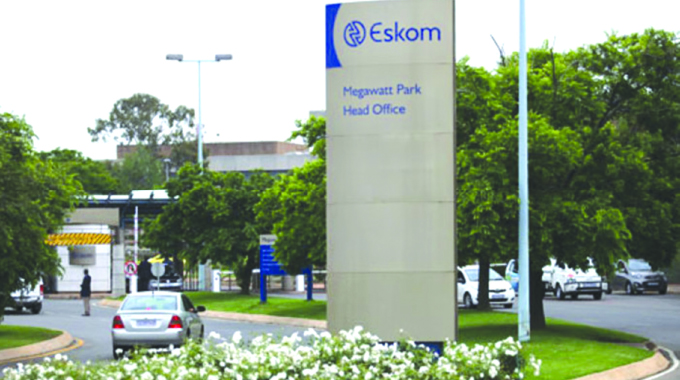
JOHANNESBURG. — South Africa could face a complete blackout, the National Union of Metalworkers of SA warned yesterday in response to a court interdict against a strike at Eskom.
The union would embark on an unprotected strike if Eskom did not meet its demand of at least a double-digit increase, Numsa head of collective bargaining Stephen Nhlapo said during a protest outside the power utility’s Megawatt Park headquarters in Sunninghill, Johannesburg.
The power utility has obtained a court interdict to prevent its workers from striking because it is designated an essential service provider.
Nhlapo said the union would not be intimidated if Eskom threatened mass dismissals.
“There is not going to be load-shedding. It will be total blackout.”
Dozens of Numsa members picketed outside Eskom’s Megawatt Park headquarters in Sunninghill yesterday morning.
The men and women, wearing red Numsa T-shirts, waved sticks and placards in support of their demand for a 12 percent across the board wage increase, they also want a R1 000 housing allowance, and a standby allowance of R100.
Placards held by the protesters read: “1 year agreement”, “3 years agreement equals slavery”, and “We demand 30 days minimum time off”.
On Tuesday Eskom spokesperson Andrew Etzinger said the power utility obtained a court interdict preventing its employees from striking. It argued that because Eskom was designated an essential service provider, workers were prohibited from striking.
The head of Numsa said wage talks with an employers group will resume today after more than 200 000 workers in the engineering and metals industry downed tools on Tuesday.
“We will be meeting for talks on Thursday night (today), the principle is a double-digit increase,” Irvin Jim, Numsa’s general secretary, told Reuters.
Numsa, South Africa’s largest union, is demanding wage increases of between 12 percent and 15 percent from more than 10 000 employers which are represented by the Steel and Engineering Industries Federation of Southern Africa (Seifsa).
“We are dealing with workers who are earning as little as R5 400 a month, nobody can be able to live on that,” said Jim.
The union yesterday protested at Eskom’s headquarters in Johannesburg and has threatened to strike for better wages at its operations despite a labour court decision preventing it from doing so.
Jim said the union would not allow Eskom to “hide behind the law” but that for now its workers will not down tools there and restrict their protest activity to picketing.
Today, Numsa deputy general secretary Karl Cloete said the union was prepared to go on an illegal strike at Eskom.
“We are quite willing to risk unprotected action. This time around, Numsa members in Eskom shall not be deterred by the so-called essential service provisions behind which Eskom is hiding. This is no empty threat.”
Eskom would not disclose what it had offered in the ongoing wage negotiations.
Leaders of the protest ushered Numsa members out of the street along which they were protesting as metro police kept watch. One of the leaders encouraged picketers to be more lively.
“You are not moving, you are not singing,” he said to those standing at the back of the crowd. “Those who do not know how to dance, they can clap their hands,” he told them.
Numsa’s engineering and metal workers strike comes a week after platinum miners went back to work after a crippling five-month stoppage that sent Africa’s most advanced economy into contraction in the first quarter.
Meanwhile, Finance Minister Nhlanhla Nene said yesterday the economic fallout of the strike by over 200 000 workers in the metal and engineering industries cannot be quantified at this stage.
“We are not able to quantify the one that has just ended. How do we quantify the one that has not even (taken place) but it is going to have an impact, no doubt about that,” said Nene, who was speaking on the sidelines of a briefing to parliament’s finance portfolio committee.
Nene said both the strike in the platinum mining sector, which ended a week ago, and the current industrial action by Numsa would have an effect on revenue projects.
Officials of the SA Revenue Service told MPs they expected to collect revenue of close to a R1trn in the tax season which officially opened on Tuesday.
The effect the strikes could have on revenue collection could not be confirmed for some time. However, the government still expects to meet its revenue collection targets.
Nene said government would allow Numsa and employers to continue wage talks, but suggested it would consider stepping in should the impasse continue.
“With the existing industrial labour relations laws that we have, government is not part of those negotiations, but government can actually create an enabling environment in order to get the parties talking, and I would imagine government would step in at the right time, but we would allow the process to take its course,” Nene said.
Labour Minister Mildred Oliphant chaired a marathon meeting between employers and Numsa on Monday night.
Numsa has revised its wage demands down from 15 percent to 12 percent, while employers have moved from an offer of 8 percent to 8.5 percent. — Sapa/Reuters.



 Online Reporter