admin
admin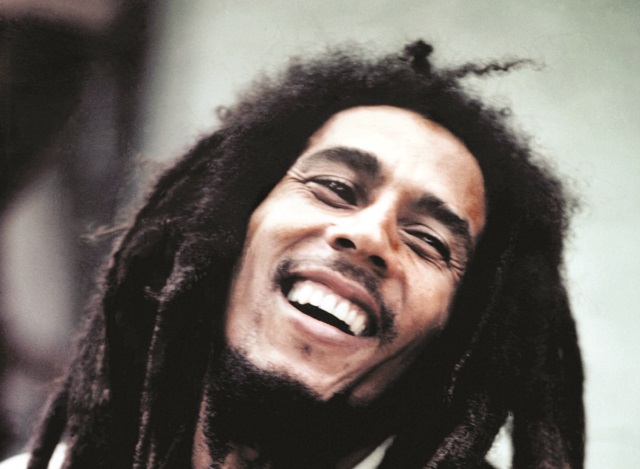
Fred Zindi Music
This week, marks the 35th anniversary of Robert Nesta Marley aka Bob Marley’s death. On May 11, 1981, the world was bombarded with the shocking news of Bob Marley’s death whom, we are told, died from cancer which had developed from his toe since 1976. Without Bob Marley, reggae music would still be largely confined to a handful of singers, bands and sound systems dotted around the Caribbean and among West Indian communities in the cities of Britain and North America. Through his devotion to the principles of Rastafari, Marley became the prophet of all Black people as he preached strength and social unity to oppressed peoples across the globe. His music crossed racial boundaries, providing black people with a new level of dignity. Since his death, there has been an uneasy vacuum within reggae music, as if it is marking time until another prophet, with the capacity to carry millions, takes up his role.
It was almost inevitable that a man so identified with the struggles against class and racial oppression should be invited to perform at the celebrations of the birth of a new nation, Zimbabwe. On April 18, 1980, Bob Marley performed at Rufaro Stadium in Harare and celebrated Zimbabwe independence.
The first contact between the new Zimbabwe Government and Bob Marley had come in March, 1980. It was simply, an invitation for Bob Marley to attend the country’s Independence Celebrations.
The intention was not for him to perform, so the invitation was just for him and his wife, Rita. However, Bob Marley, being the revolutionary he had become, wrote a song entitled ‘Zimbabwe’ just before Zimbabwe celebrated its Independence in 1980. He insisted that his whole band should be invited too and would give a performance at the celebrations.
Chris Blackwell, his manager at the time was against this tour, but Marley who had been following events in Zimbabwe decided he would go. He hired a PA system in London and paid for its freight to Zimbabwe at his own expense.
As we celebrate his life, this week, I am surprised to find out that there are several popular Zimdancehall musicians who do not know anything about Bob Marley, yet their careers have been shaped and fuelled by Marley’s musical contribution.
The other day, I asked one Zimdancehall artiste to name just one Marley tune he knows. He had no idea. The second one I asked had no idea either. After a long pause, he suddenly asked me, “Hey! Isn’t that the guy who sang ‘Zimbabwe’?”
“Yes, what other songs did he sing?” I asked further. He did not have a clue. I couldn’t believe this amount of ignorance by people who are supposed to be in the know.
Bob Marley had a long catalogue of music. Songs such as “No Woman No Cry”, “Redemption Song”, “One Love”, “I Shot The Sheriff”, “Waiting In Vain”, “Could You Be Loved”, “Bufallo Soldier”, “Three Little Birds” and “Iron, Lion Zion” are popular tunes, to name just a few.
It is true that most of these youths were not born when these songs were written. They never interacted with Marley because he died in 1981 before they were even born. I still expect them to know something about Bob Marley if they are really serious about the music which originated from Jamaica.
It has been many years since I left English Literature classes but if you were to ask me about the plays written by William Shakespeare, who died way back in May 1616, whether one likes Shakespeare or not, plays like “King Lear”, “Macbeth”, “Julius Caesar”, “The Tempest”, “Hamlet”, “Othello” or even “Romeo and Juliet” are still at my fingertips.
Bob Marley who formed the Wailers Band together with Bunny Wailer and Peter Tosh in the early 1970s became an international star after being discovered by Chris Blackwell, a white man from Jamaica who was the chief executive officer of Island Records.
Stories of why Blackwell signed the group vary. A fascination with Rastafari coupled with a strong belief that reggae could, if marketed correctly, become an international music force, seem the most likely reasons. In any case, Blackwell knew they would have to move cautiously.
White European and American audiences could not be expected to change their tastes in music overnight and latch on to reggae immediately.
Blackwell financed the sophisticated “Catch a Fire” album (1973), a strong collection of diverse songs, packaged in an imitation Zippo lighter sleeve. It sold well enough for Blackwell to be as good as his word and take Bob Marley and the Wailers under the Island Records wing.
The group went to Britain later that year as the rock chic darlings. Blackwell’s campaign had paid off. Their album was nestling alongside those of the Eagles and the Rolling Stones, both in the charts and in high street chain-store browser racks. They played four nights at London’s Speakeasy and made an appearance on national television. On their departure, they went to the US to join Sly and the Family Stone on tour.
On the face of it, the Wailers had cracked the nut. By the end of that year they had completed a second Island album, “Burnin”, and confirmed a second UK tour.
The album paled in comparison to the previous one, yet it did contain the classic “I Shot the Sheriff” that rock guitarist Eric Clapton made into a hit single for himself. Suddenly the world, Zimbabwe included, was aware of the Rastaman.
Towards the close of an exhausting world tour (1980) Marley collapsed after a concert at New York’s Madison Square Gardens and was taken to Sloane Kettering Hospital where cancer was diagnosed. His discomfort must have been chronic and on May 8 he admitted himself to the Cedars Lebanon Hospital where he died three days later on May 11.
He was provided with a state funeral in Jamaica.
Bob Marley had been the biggest single foreign currency earner in Jamaica leaving an estimated $46 million behind.
This week, is Bob Marley remembrance week in Zimbabwe.
On Saturday, this week, reggae fans will converge at New Ambassador Hotel where they will be given an opportunity to celebrate and commemorate the life of Bob Marley from 2pm until late.
This will be coupled with another memorial service of the late Munya Nyemba who played the bass guitar with Transit Crew. Performances will be by Transit Crew itself, Dino Mudondo, Hotta Fyre Band, House of Stone and Chikwata 263. To enable the event to be picture perfect, Music Crossroads, Zimbabwe have kindly donated their PA system and backline equipment for this event. Come Saturday, we will all be singing:
Natty dread it inna Zimbabwe
Set it up inna Zimbabwe
Mash it up inna Zimbabwe
Africans a liberate Zimbabwe
No more internal power struggle
We come together, to overcome
The little trouble
Soon We will find out
Who is the real revolutionary
Brother you’re right, you’re right
Feedback: [email protected]



 Online Reporter