Online Reporter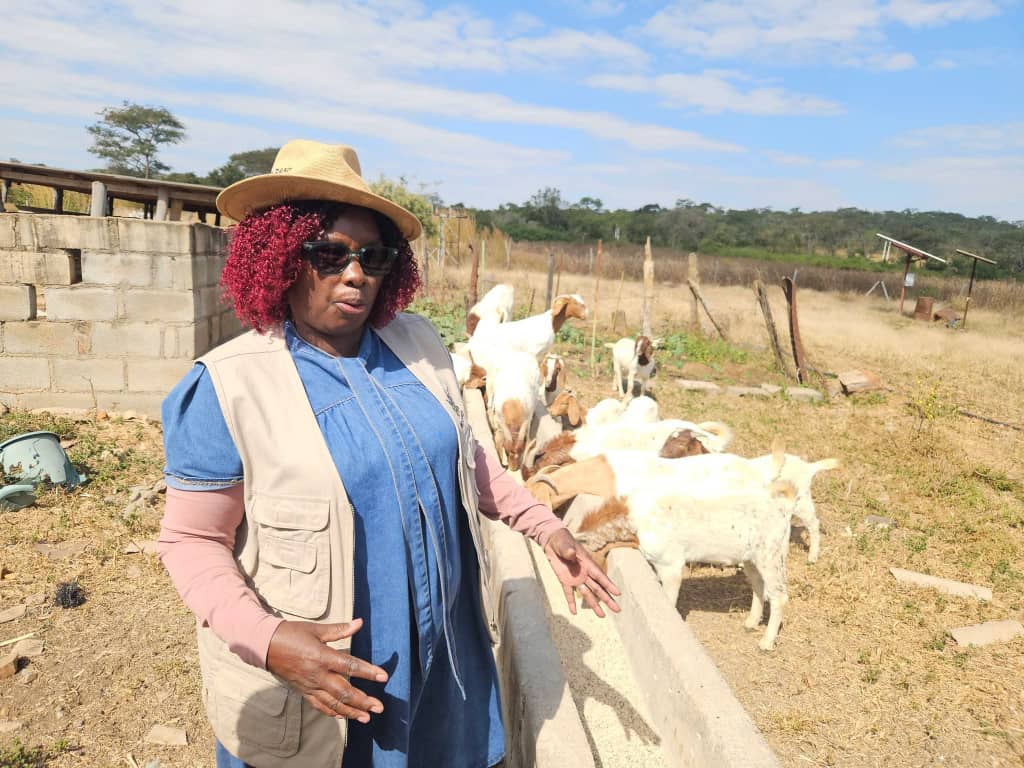
Sikhulekelani Moyo, [email protected]
PUREBRED Boer goats are proving well-suited for Masvingo’s dry Region Four and Five conditions, with agricultural officials saying the breed is offering farmers a reliable alternative income stream.
During a tour of Mutendi Farm in Mbungo, Masvingo, Agriculture and Rural Development Advisory Services (ARDAS) Chief Director Mrs Medlinah Magwenzi said Boer goats were outperforming local indigenous breeds due to superior genetics and improved management practices.
“The purebred Boer goats are outperforming local small-framed goats thanks to better genetics and management,” she said.
She said mature Boer goats at the farm are fetching between US$200 and US$300, significantly higher than prices usually obtained from indigenous goats.
Mrs Magwenzi urged farmers to be deliberate in their breeding programmes, stressing the importance of selecting quality breeding bucks rather than random mating.
She said improved genetics could be introduced into local herds without farmers needing to replace entire flocks, helping to gradually upgrade production levels.
“Introducing improved Boer genetics through quality bucks could rapidly upgrade local herds without farmers needing to replace entire flocks,” she said.
Mrs Magwenzi said Masvingo, already a leading beef-producing province, has strong potential for small stock production due to its natural vegetation, particularly acacia trees, which provide suitable browse for goats in dry conditions.
She noted that acacia feed resources help reduce production costs, making Boer goat farming viable even in low rainfall areas.
The ARDAS official also called on the Provincial Directorate of Agriculture to consider scaling up Mutendi Farm’s model of distributing quality breeding bucks to surrounding communities.
She said this approach would allow smallholder farmers to access improved genetics at lower cost compared to purchasing full stud animals.
Mutendi Farm’s performance, she said, strengthens the case for a shift towards high-value, climate-smart livestock production as Zimbabwe continues to push for agricultural transformation from resilience to competitiveness.