admin
admin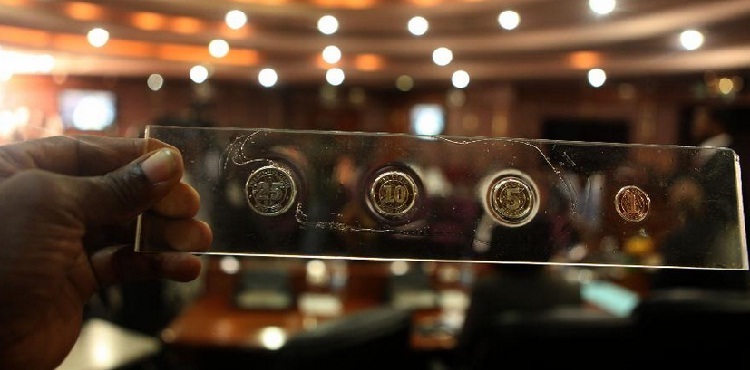
Reserve Bank of Zimbabwe Governor Dr John Mangudya should be congratulated for his wisdom and bravery in introducing bond notes as part of a strategy to address cash shortages.
The notes, just like the bond coins already in circulation, will be at par with the United States dollar, and can be transacted through USD-denominated bank accounts.
However, they are not a currency per se.
The “public outrage” reported by the private Press and amplified by social media was misinformed, ill-advised and unwarranted.
In The Sunday Mail of April 17, 2016 I penned an article (“Illiquidity in the national economy”) which pushed the following to address cash shortages:
Short-term measures (April to December 31, 2016)
1. The Reserve Bank of Zimbabwe should finalise the facility it is arranging with Africa Export-Import Bank to close the money market’s liquidity gap.
2. The US$50 million that has already been secured from Afreximbank for bond coins should be fully utilised. US$10 million worth of those coins are circulating.
3. The RBZ should immediately circulate the Zimbabwe dollar coins that are in its vaults, setting them at par with bond coins and USD cents.
This will help improve liquidity and address change problems.
Medium-term measures (January 2017 to December 31, 2018)
1. A gold reserve bank should be set up as a separate corporate entity.
2. In late 2018, introduction of a regional and continental currency should be finalised.
Three-phased approach from January 2019
1. The local currency should be introduced in the first phase to work with Zimbabwe dollar coins, having attained our macro-economic fundamental targets to restore the RBZ’s capacity to print our currency, thereby managing liquidity.
2. Introduce a gold currency, if feasible, as a local, regional, continental or global currency of choice.
All my other suggestions still hold good, with this latest piece consolidating them.
The coming bond notes are backed by Afreximbank’s US$200 million facility, with a five percent export incentive in place.
There are also moves to play up use of the South African rand and euro apart from the dominant United States dollar.
The whole package is, in my view, a masterstroke.
It is laden with positive spin-offs: increased production, export generation stimulus and liquidity retention. I venture to add that at least 10 percent of conversion from the US dollar should include the Chinese yuan, given the mega deals Zimbabwe and China have signed.
The Chinese Yuan is already accepted in Zimbabwe under the multi-currency system and also recognised by the IMF’s basket of major international currencies.
Private media and opposition claims that the coming dispensation signifies economic collapse/death indicate serious paucity of thought and ill-information.
I now suspect that such people are either brain dead themselves, or seriously confused. Suggesting nationwide riots over bond notes is the height of buffoonery and mental bankruptcy.
It must be appreciated, though, that some of Zimbabwe’s citizens are yet to recover from the trauma of the 2007/8 hyperinflation.
But that is no reason to hold the nation to ransom.
The public deserves to be educated on the difference between bond notes and bearer cheques.
The notes are not bearer cheques, neither are they Zimbabwe dollars, period! They are more like money transfer instruments like the RTGS, automated teller machines or other electronic money transfer systems that transfer USD values from one local bank account to another.
Cross-border traders can still use bond notes to purchase hard currencies from banks (at some reasonable premium, I suppose) to facilitate international transactions without much hassle.
The Zimbabwe dollar coins I am recommending here should be guaranteed and backed by gold deposits at the RBZ or at the proposed gold reserve bank.
This should allay fears of citizens who are still traumatised by the Zim dollar’s demise in 2008/9.
Increased gold production by small-scale miners plus discoveries of gold and/or platinum deposits near Kariba should make this easily feasible.
Zimbabwe’s natural resources per capita still feature on the Top 10 list of resource-rich nations alongside oil states of the Middle East.
As Dr Mangudya always says, Zimbabwe is too rich to be poor. The RBZ chief is dead right. What remains is exploiting these resources.
This makes a mockery of claims by the opposition and private Press of a collapsed/dead economy.
Dr Mangudya is quoted in various statements as saying that of the United States’ US$15 trillion bank deposits, only US$1,5 trillion is transacted in cash.
Bear in mind that US$15 trillion is pretty close to Washington’s external debt (mostly owed to China), and its Gross Domestic Product is of that sum, too. If we assume this to reflect the common situation internationally and put this in the context of Zimbabwe’s situation back in 2009, are we to believe that our Zim dollars locked in banks at that time were worth a mere US$20 million?
Are we to believe that we then budgeted that US$20 million to compensate for those frozen Zim dollars as shown by the recently-concluded demonetisation?
I certainly do not think this accurately reflects the position then.
Remember, we had initially estimated and budgeted for US$6 million in the infancy of the ill-fated inclusive Government.
There is a strong, compelling case to revisit this whole demonetisation as citizens may have been prejudiced and undercompensated.
This may be a case of gross miscarriage of justice perpetrated unintentionally. Some of the coming bond notes and coins and Zim dollar coins can still be used to settle this domestic debt, which, incidentally, also encompasses money owed to public entities and private creditors.
Zim dollar-denominated prescribed assets like Treasury Bills, municipal stocks and other parastatal papers figure in the matrix.
Paying off these debts comes with increased money circulation and significant fund claw-back to Central Government.
For instance, after settling the Grain Marketing Board debt, the parastatal will clear its tax arrears that now run into millions of dollars.
In turn, the GMB would be able to pay its employees salaries, wages and retrenchment packages, with the taxman and another creditor, the National Railways of Zimbabwe, also benefiting.
Settling intra-parastatal and municipal debt will happen across the board, thereby giving impetus to money circulation.
Finally, news of possible externalisation of US$450 million by Jinan mining company is revealing.
The good news is that money is now traceable and possibly recoverable.
◆ Edmore AM Ndudzo is a chartered accountant, certified public accountant and Harare’s first black city treasurer.


 Online Reporter