Chronicle Editor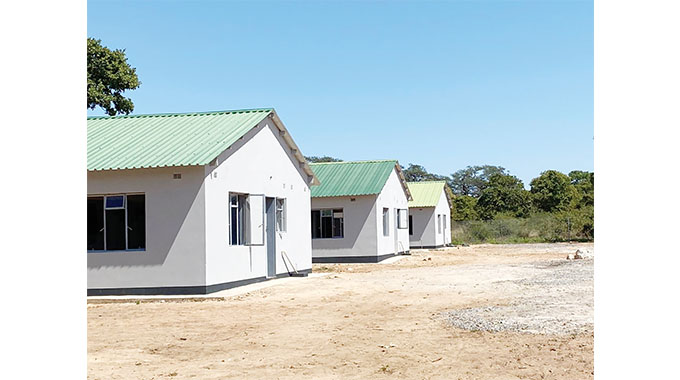
Leonard Ncube recently in Hwange
A PARTNERSHIP between Government and the International Fund for Animal Welfare (IFAW) on wildlife conservation and human wildlife conflict mitigation is bearing fruit following the completion of Makona Ranger Sub-station within Hwange National Park.
The sub-station was built under a US$5 million five-year conservation agreement between ZimParks and IFAW which has so far released more than US$2 million for various projects within the scope of Hwange National Park.
The modernised Makona Camp is located about 95km south west of the Main Camp on the boundary with Tsholotsho’s Pumula area.
It will be used to manage 4 500 square kilometres of the game park.
The road to Makona has also been rehabilitated, making it easy to connect to Main Camp and react to incidents.
At the site administration offices, eight ranger accommodation houses to accommodate 16 families as well as rangers operations offices have been completed.
The camp also has an entertainment centre and water facilities.
A road linking it to the nearby Tsholotsho community was also rehabilitated.
A veterinary unit to diagnose diseases has been upgraded at Mtshibi Camp.
The partnership also saw ZimParks getting service vehicles and partnering the Roman Catholic Church to renovate Dete Old People’s Home which was commissioned on Saturday.
Makona ranger sub-station is expected to go a long way in reducing poaching and human-wildlife conflict cases by increasing the presence of rangers as well as enhance the relationship between Zimbabwe Parks and Wildlife Management Authority (ZimParks) and surrounding communities.
It is a milestone development coming on the backdrop of massive poaching where over 200 elephants were killed through cyanide poisoning between 2013 and 2018.
On September 30, 2019, ZimParks signed a conservation Memorandum of Understanding (MoU) with IFAW.
Matabeleland North Provincial Affairs and Devolution Minister Richard Moyo officially opened the camp on Saturday on behalf of the First Lady, Dr Auxilia Mnangagwa who is ZimParks’ and the country’s wildlife and environment patron.
Speaking at the official handover ceremony of Makona, Minister Moyo said partnerships are crucial in addressing human wildlife challenges.
He said as Zimbabwe is open for business, Government welcomes developmental initiatives that ultimately contribute to the National Development Strategy and Vision 2030.
He said Zimbabwe is proud of its natural heritage and rich wildlife resources.
“Hwange National Park elephant population is over 45 000 which is complex to manage and requires strategic partnership support to achieve conservation goals for people and nature.
“IFAW came at the right time when the conservation sector was ailing from the wounds of Covid-19. Since signing of the agreement in 2019, the Hwange National Park has received the much needed technical, financial and material support whose monetary value is now close to US$3 million,” he said.
Minister Moyo said the demand driven support has targeted investment towards crucial conservation areas including infrastructure development, law enforcement, game water management, community engagement, human wildlife conflict mitigation and tourism development.
Minister Moyo said through such partnerships, Zimbabwe is poised to become a leader in nature conservation.
Since 2020, no elephant has been poached in Hwange National Park rubber stamping the positive fruits of the partnership.
“We need such partnerships to ensure we address critical issues. I am very grateful to the collaboration of ZimParks and IFAW for the great work accomplished.
“The infrastructure of Makona will enhance conservation and management of Hwange National Park to sustain wildlife resources for the benefit of present and future generations,” he said.
Speaking at the same event, ZimParks director Dr Fulton Mangwanya said conservation work is facing numerous challenges but with efforts of dedicated rangers and help from IFAW, some successes were scored.
“We are thrilled to announce the successful completion of the construction project at Makona field station which has been under continual development for the past five years.
“Unity and collaboration have been key to the successful completion and we are grateful to the support rendered by our partner as wildlife has a huge bearing on the socio-economic development,” he said. — @ncubeleon


 Online Reporter