Online Reporter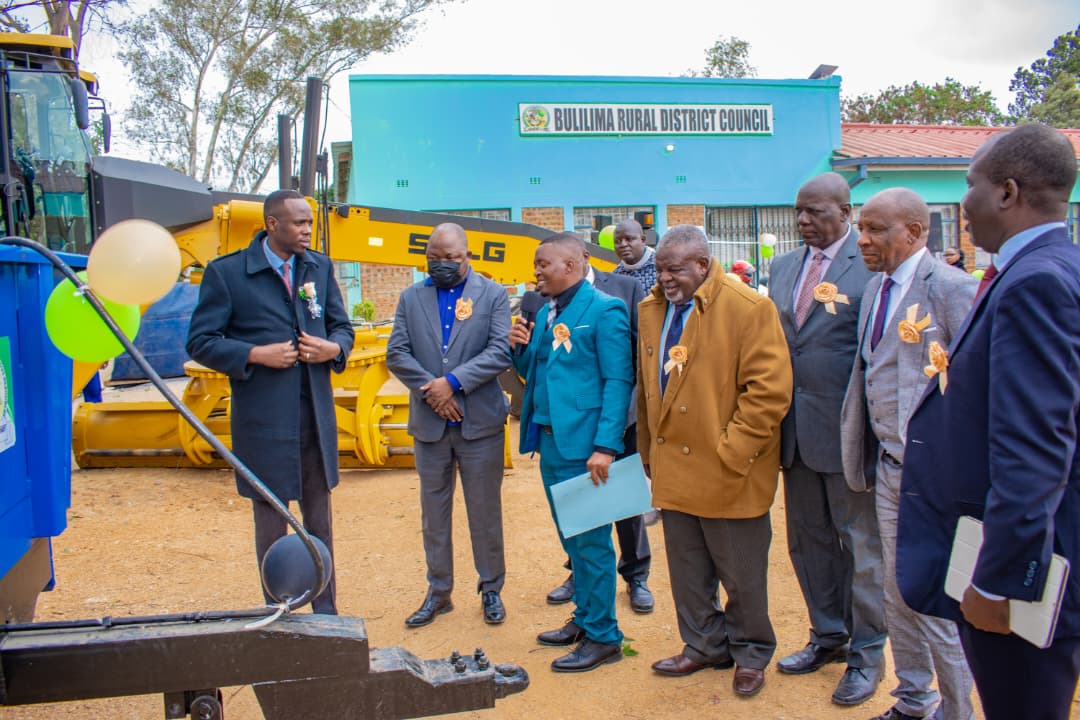
Mthabisi Tshuma and Ronald Mpofu
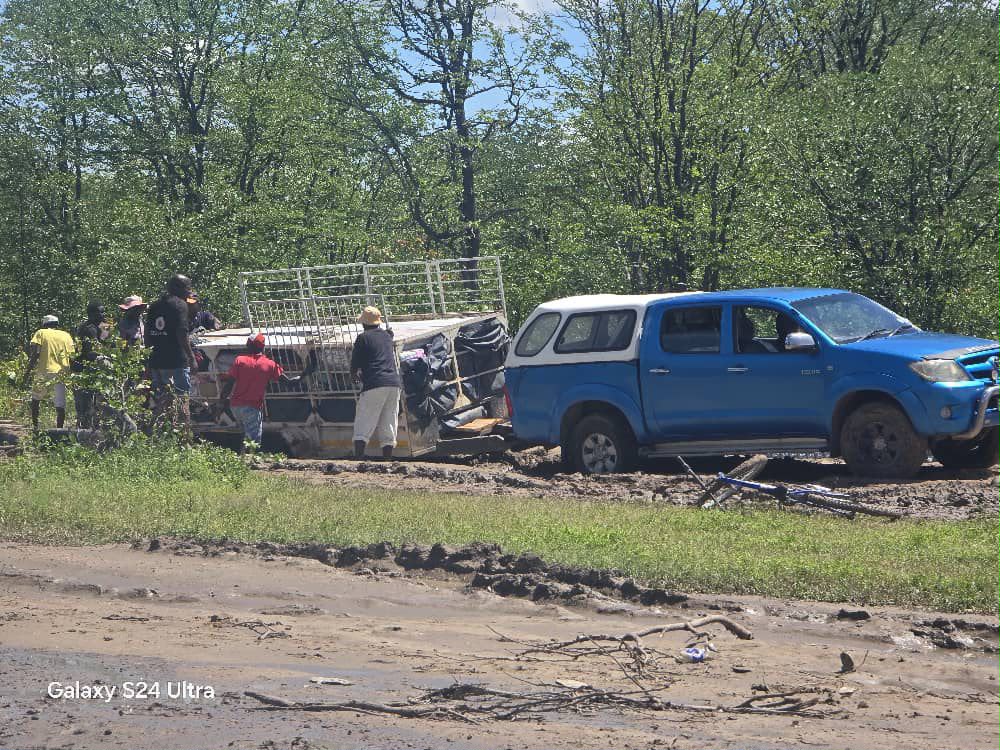
FOR years, poor roads have been one of the biggest obstacles standing between Bulilima’s rural communities and essential services. During the rainy season, some routes became almost impossible to use, cutting off villages from clinics, schools and markets. Transport operators struggled to keep vehicles on the road, farmers battled to move their produce and families often found themselves isolated when they needed help most.
That situation could soon begin to change.
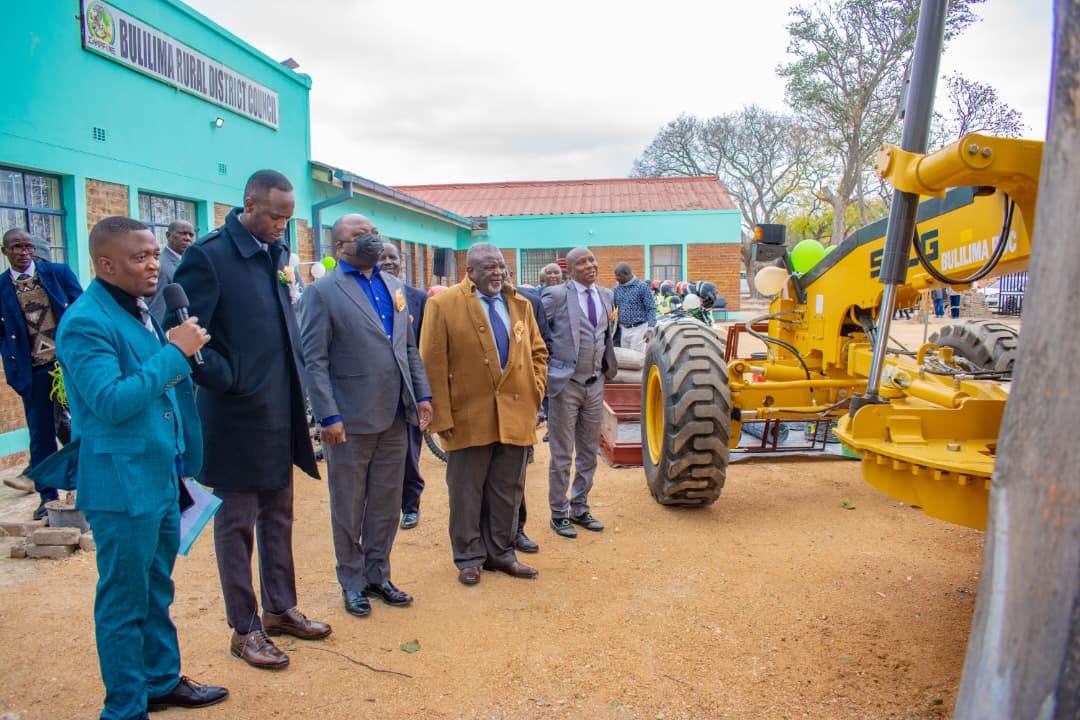
Bulilima Rural District Council has taken delivery of a new grader, a development expected to significantly improve the district’s road network and strengthen access to health services, education facilities and economic opportunities across the border district.
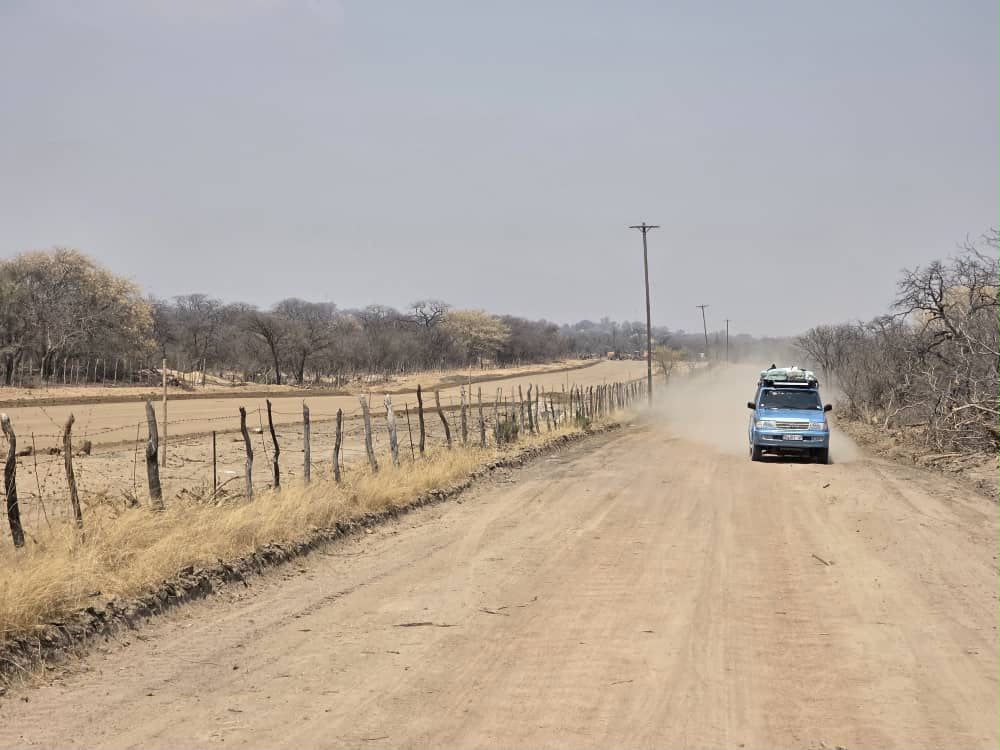
The arrival of the grader marks an important step in efforts to improve infrastructure in one of Matabeleland South’s most remote areas. It also reflects a broader drive by Government and development partners to equip local authorities with machinery and resources needed to deliver services more effectively.
For nearly a decade, residents, farmers, traders and transport operators have endured deteriorating roads characterised by potholes, deep erosion gullies and overgrown sections. Many roads became difficult to navigate after heavy rains, often disrupting travel and commercial activity.
In some cases, communities were left virtually cut off. Ambulances struggled to reach patients, children faced difficulties getting to school and transport operators were forced to take longer routes or cancel journeys altogether.
Among the hardest hit routes has been the strategic Plumtree-Maitengwe Road, an important corridor linking
Zimbabwe with Botswana and providing access to South Africa. The road plays a vital role in regional trade, yet its poor condition has for years been a source of concern for motorists and businesses.
The deterioration of the route has affected trade between Plumtree and Francistown, while high transport costs have made it more expensive to move agricultural produce, groceries and other goods into and out of the district.
Other major roads, including the Plumtree-Ndolwane, Plumtree-Tsholotsho and Plumtree-Somnene routes, have also suffered from years of limited maintenance. The same applies to numerous feeder roads that connect villages to schools, clinics, dip tanks and business centres.
The situation was made worse by the fact that the council’s only grader had long ceased to function. Parked in Somnene Ward for years, the machine had become a symbol of the district’s infrastructure challenges and left the local authority unable to carry out routine road maintenance effectively.
With the new grader now commissioned and ready to begin operations, council officials believe a major turning point has been reached.
The local authority plans to embark on regular road maintenance, reshape damaged surfaces and rehabilitate feeder roads across the district. The goal is to create an all-weather road network that remains accessible throughout the year.
Improved roads are expected to reduce travel times, lower vehicle maintenance costs and improve the movement of both local traffic and cross-border haulage trucks.
For ordinary residents, the benefits could be felt in their pockets. Better roads generally translate into reduced fuel consumption, less wear and tear on vehicles and lower transport costs, savings that often filter through to the prices of groceries, building materials and farming inputs.
Beyond economic benefits, the impact on public services could be even more significant.
Health workers and ambulances are expected to gain better access to rural clinics and referral centres such as
Ndolwane Hospital, particularly during the rainy season when delays have previously put lives at risk.
Teachers, agricultural extension officers and other Government workers will also find it easier to reach remote communities and deliver services more consistently.
For many residents, the arrival of the grader represents a long-awaited breakthrough.
A villager from Sabasi in western Bulilima, Mr Nicholas Ndlovu, welcomed the development.
“The arrival of the grader has restored hope that transport fares will become predictable and that medical assistance will no longer be out of reach when emergencies strike,” he said.
“For several years fares have fluctuated wildly depending on weather and holidays. The inability of ambulances to get through in time has been a recurring source of anguish.”
Cross-border transport operator Mr Reason Gumede, who regularly travels between Zimbabwe, Botswana and South Africa, believes attention should first be directed towards one of the district’s most important roads.
“Priority attention should be given to the Plumtree-Maitengwe Road because a consistently good road surface will attract more haulage,” he said.
“It will increase volumes of trade and ultimately boost the district’s gross domestic product, while also creating opportunities for small businesses that depend on border traffic.”
The grader was not the only asset handed over to the council.
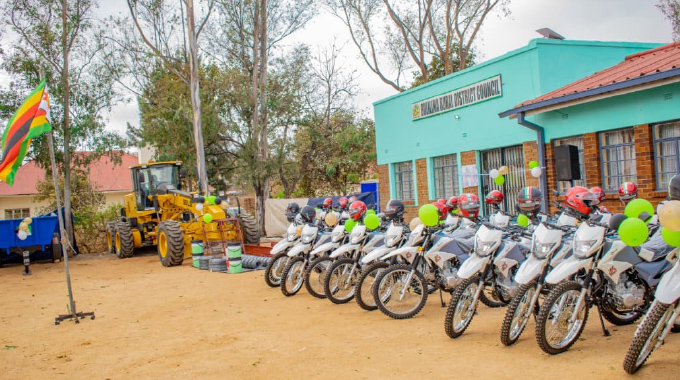
The commissioning ceremony also saw the delivery of 28 motorbikes for councillors, a six-tonne tipping dumper trailer and newly extended council offices. The combined value of the assets stands at US$212 140.
Funding for the acquisitions came through a combination of council revenue, devolution funds, support from the Zimbabwe National Road Administration (ZINARA) and partnership funding from Mvimi Safaris.
Mvimi Safaris also donated building materials worth US$20 000 towards community development projects across the district.
Speaking on behalf of the Minister of Local Government and Public Works, Deputy Minister Albert Mavunga said the motorbikes would improve councillors’ ability to serve communities spread across a vast rural district.
“The motorbikes are critical for a vast rural district characterised by scattered settlements and challenging terrain.”
He continued: “They will enable councillors to visit wards regularly, engage communities, monitor projects on the ground and ensure that citizens’ concerns are fed directly into council planning and decision-making.”
Bulilima legislator and Deputy Minister of Information Communication Technology, Postal and Courier Services,
Cde Dingumuzi Phuti, also pledged continued support for development initiatives in the constituency.
“My office will continue working closely with the RDC to ensure development cuts across constituency boundaries,” he said.
“Key priorities include reducing the distance children travel to school, improving access to health care, providing clean water and bridging the digital divide.”
Bulilima Rural District Council chief executive officer Mr Biliati Mulauzi said the investments aligned with the council’s broader development agenda.
“The investment reflects the council’s commitment to infrastructure-led development and to the Minimum Service Delivery Standards,” he said.
“The model requires local authorities to provide efficient, transparent, reliable and citizen-centred services while upholding sound corporate governance and financial prudence.”
He said the council’s 2026-2030 Strategic Plan places strong emphasis on social infrastructure aimed at improving health and education outcomes.
Mr Mulauzi added that partnerships remain central to the district’s development strategy, bringing together Government ministries, communities, development partners and Zimbabweans living abroad.
“The visible involvement of Members of Parliament through the Constituency Development Fund and other initiatives has been instrumental in unlocking projects that would otherwise have stalled,” he said.
The developments taking place in Bulilima reflect a wider trend across Matabeleland South, where local authorities have been strengthening their fleets of graders, utility vehicles and other machinery with support from Government and development partners.
Officials say these investments are helping councils improve their capacity to monitor projects, rehabilitate roads and oversee infrastructure development programmes.
“The biggest challenge for rural councils has been the inability to reach project sites, inspect works and respond timeously to community needs,” said another council official.
“This new capacity is already translating into faster road rehabilitation, better supervision of clinic and school construction and more accountable use of public resources.”
For Bulilima, the combination of a working grader, a functional trailer and councillors equipped with motorbikes is expected to transform the way the local authority operates.
“For the first time in years, the council can plan maintenance schedules with confidence,” added the council official.
“We can respond to emergencies without waiting for external hire, and ensure that devolution and ZINARA funds are converted into visible roads, accessible clinics and functional markets rather than being eroded by logistical constraints.”
As the grader prepares to roll onto the district’s roads, expectations are high.
Residents want smoother journeys, lower transport costs and quicker access to healthcare. Farmers want easier access to markets. Businesses want improved trade links. Parents want children to reach school safely and on time.
For a district that has endured years of infrastructure challenges, the new grader represents more than just a piece of machinery. It is a symbol of progress and a reminder that development is most meaningful when it reaches the communities that need it most.
At its core, that is the promise of devolution: bringing services closer to the people and ensuring that no community is left behind. For Bulilima, that journey may have just taken a significant step forward.