Online Reporter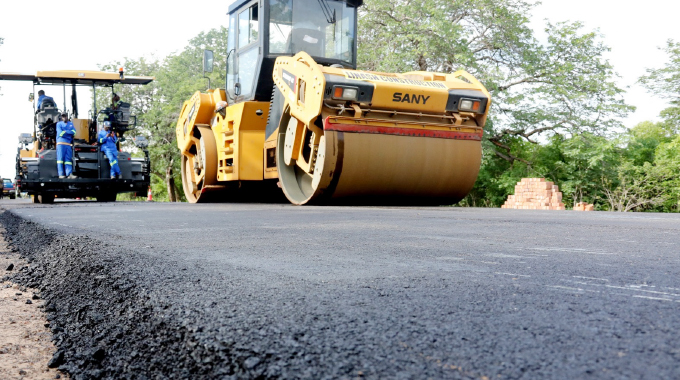
Sikhulekelani Moyo, [email protected]
THE Government will continue to reserve major road projects for local contractors and ring-fence the Zimbabwe National Road Administration (Zinara) funds for road construction to ease legacy debt and funding constraints.
Transport and Infrastructure Development Deputy Minister Joshua Sacco said this during a recent Construction Industry Federation of Zimbabwe (Cifoz) AGM and Congress plenary session chaired by Urban Development Corporation chief executive officer Mr Joey Shumbamhini.
Mr Shumbamhini had asked what specific target the Government had put in place for local contractor participation in major infrastructure projects such as highways and border posts.
Deputy Minister Sacco said a conscious decision was made in 2019 when the Emergency Road Rehabilitation Programme (ERRP) was launched to prioritise local contractors for key infrastructure projects.
“I think in 2019 a conscious decision was made when the ERRP was launched that contractors for the emergency rehabilitation programme should be local contractors. And I think the house can bear testimony that this has brought capacitation and proliferation of many local contractors,” Deputy Minister Sacco said.
Zimbabwe is executing extensive public-funded and public-private partnership (PPP) construction this year backed by a national budget allocation exceeding ZiG26 billion, a new US$400 million road infrastructure fund and a US$500 million kitty to reboot stalled developments.
“We have contractors in this house who started with one grader, contractors who hired equipment and did not have even one piece of machinery and are now tier one contractors.
“Contractors who have built their capacity. So we as a ministry are very proud of this initiative being guided by His Excellency President Dr ED Mnangagwa.”
Deputy Minister Sacco made reference to the Harare-Beitbridge Road as an example of local capacity, for which an Austrian company had quoted US$2,5 billion and US$2,6 billion, but is nearing completion after US$550 million was spent using contractors.
“The decision was made: let’s do it ourselves. It is a success story with its own challenges, but as a Government we can do it ourselves.
“So our position going forward is, for ERRP2 going forward, we are still dealing with local contractors. We have avoided bringing in foreign companies to do most of the major highways,” he said.
Deputy Minister Sacco said airports are an exception, where the Government has brought in Chinese investors because of financing models, including the planned expansion and upgrade of
Charles Prince and Mutare airports.
“For roads, this remains a preserve of local contractors,” he said.
On supply chain resilience amid macroeconomic volatility and fluctuating material costs, Deputy
Minister Sacco said volatility comes from factors beyond Zimbabwe’s control, including the Russia-Ukraine war impacting fuel prices and a phenomenal construction boom causing cement shortages.
“The amount of construction going on in Zimbabwe is phenomenal, leading to cement shortages, which is also pushing the price up. Several investors are coming in to put up new cement plants across the country,” he said.
To mitigate the cement shortages, contractors can apply for permits from the Ministry of Industry and Commerce to import cement.
Deputy Minister Sacco expressed hope that the de-escalation of the Russia-Ukraine conflict and local oil discoveries would reduce fuel costs going forward.
On balancing rapid high-quality delivery with building local capacity, Deputy Minister Sacco said the country now has the capacity.
“If you listen to what the players are saying, we are all now resourced. Local contractors that we have are actually over-resourced and over-capacitated in some instances,” he said.
“Because of the state of our roads and the condition of disrepair, the scope of work is massive. We are constrained by funding.”
Deputy Minister sacco revealed that the Government has tabled a proposal to Cabinet to ring-fence Zinara funding for road construction and not channel it into the consolidated revenue fund.
“This will allow us to have access to, say, US$400 million a year from Zinara. And we can also borrow on this money. So it will solve a lot of the problems that we’re in at the moment where we rely only on the fiscus,” he said.
Deputy Minister sacco said the private sector must also come in with out-of-the-box financing solutions, in line with President Mnangagwa’s mantra of leaving no one and no place behind.
Praz representative Ms Tinotenda Chipangura said that while public procurement was the responsibility of accounting officers, Praz had issued guidelines for local procurement.
She cited Section 29 of the Public Procurement and Disposal of Public Assets Act (PPDPA), which recommends domestic preference and Statutory Instrument 215 of 2023, which reserves certain construction works for domestic contractors to support devolution.
“In public procurement now, there is a sector that has been reserved to say these procurements can only be done with local contractors. Where they engage foreign contractors, they need to demonstrate participation of local contractors, their contribution, and the documentation must be submitted to us,” Ms Chipangura said.
“Duties that are given to international contractors have to be duties that local contractors cannot perform.”
She said Praz has also developed affirmative procurement guidelines for previously marginalised groups like women, youth, war veterans, the elderly, people living with disabilities and SMEs.
The measures are also designed to avoid big players crowding out small players. These have been crafted with input from the ministries of Industry and Commerce and Women Affairs.
Ms Chipangura acknowledged the issue of some women being used as fronts for male-owned firms and companies that register multiple shelf companies to abuse women quotas, saying the Government was tightening verification.
On capacity building and prohibitive requirements like three-year audited statements and bid securities, she said registration categories for SMEs and reservation of low-value works for local contractors in provinces like Bulawayo are meant to reduce barriers.