Online Reporter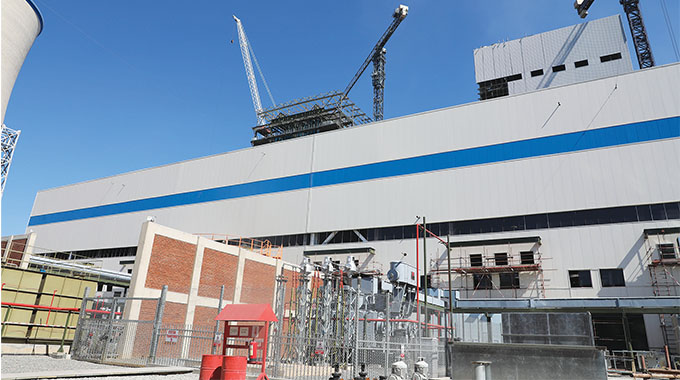
Rutendo Nyeve, [email protected]
ZIMBABWE’S more than 200-day run without power load shedding has improved industrial productivity, reduced reliance on generators and given businesses greater confidence to plan long-term investments, Government and industry leaders have said.
The improved electricity supply has helped companies reduce generator fuel and maintenance costs, equipment damage, production stoppages and raw material wastage, while enabling them to redirect resources towards maintenance, technological upgrades, expansion and employment.
Improved power supplies and growing solar investments are some of the key milestones delivered under the Second Republic led by President Mnangagwa, whose administration is now seized with revamping industrial manufacturing growth, among other sectors of the economy.
This marks a major shift for businesses that previously faced frequent power interruptions, which disrupted manufacturing processes, affected stock and increased operational costs.
The improved power supply follows a period of acute power shortages, worsened by a severe drought that reduced water levels at Kariba South Power Station, Zimbabwe’s largest hydropower facility.
Ageing infrastructure and rising electricity demand associated with increased economic activity and industrialisation further compounded the situation.
The Government responded by commissioning Hwange Power Station Units 7 and 8, which added 600 megawatts to the national grid. Following its commissioning by President Mnangagwa,
Hwange now leads national generation at 1 079MW as of yesterday, followed by Kariba at 415MW and independent producers at 49MW, giving a total of 1 543, according to the Zimbabwe Power Company daily report.
The additional generation capacity, coupled with private-sector investment in captive power generation, rehabilitation of existing power plants, increased solar energy adoption and electricity imports through the Southern African Power Pool, has helped improve supply stability.
Confederation of Zimbabwe Industries (CZI) chief executive officer Ms Sekai Kuvarika said the
relative stability of electricity supply during the first half of the year had positively affected business operations.
“For small and medium-sized enterprises, the improvement has reduced dependence on generators, lowered fuel and maintenance costs, extended productive operating hours and reduced the risk of losing stock, customers and production time.
“These businesses are disproportionately affected by power interruptions because many cannot afford alternative energy systems,” she said.
Ms Kuvarika said larger firms had also recorded significant gains from more predictable electricity supply.
She said improved power availability had enhanced production planning, plant utilisation and delivery performance, while reducing generator costs, equipment damage, production stoppages and wastage during interrupted manufacturing processes.
“It also allows firms to redirect resources from emergency power provision towards maintenance, technology, expansion and employment.
“The wider effect is an improvement in productivity, competitiveness and confidence across industry,” said Ms Kuvarika.
She, however, warned that businesses needed more than temporary stability, saying long-term investment and production commitments depended on confidence in future electricity supply.
“However, the experience also demonstrates the importance of sustaining reliable and predictable electricity supply. Businesses require more than temporary stability, they need sufficient confidence in future supply to make long-term investment and production commitments,” said Ms Kuvarika.
The improved power supply comes as the Government seeks to accelerate industrialisation, value addition and beneficiation under its broader economic development agenda.
Industry and Commerce Minister Mangaliso Ndlovu commended private-sector players for investing in captive power generation, which he said had contributed to the progress made in expanding energy generation capacity.
“I wish to commend the private sector for its significant investments in captive power generation, which have contributed immensely to this progress. However, we recognise that reliable and affordable energy remains a critical enabler of industrialisation and economic growth,” he said.
Minister Ndlovu said the Government was addressing the cost of energy, which directly affected the competitiveness of local industries and the wider economy.
“This matter is receiving active Government attention and appropriate measures will be taken to ensure that energy costs support, rather than constrain, our industrialisation and investment ambitions,” he said.
Energy and Power Development Minister July Moyo said the country’s energy agenda should be considered alongside its industrialisation and mineral beneficiation ambitions.
He said Zimbabwe’s deposits of lithium, platinum, chrome, nickel and graphite presented opportunities for the development of value-added industries.
“Government is moving away from the export of raw materials and is promoting value addition and beneficiation so that Zimbabwe captures a greater share of the economic value generated from its natural resources.
“We, therefore, seek investment in areas such as the production of battery-grade lithium chemicals, electric vehicle components and other mineral-based products,” he said.
“This is not simply a mining opportunity. It is an industrialisation opportunity and industrialisation requires reliable energy.”
Minister Moyo said the development of a modern and increasingly renewable energy system would help create the conditions needed for mineral beneficiation, manufacturing and the establishment of new value chains.
“Energy investment and mineral beneficiation are consequently not separate agendas. They are mutually reinforcing components of our Vision 2030 programme,” he said.
The minister said agriculture, mining and manufacturing all required reliable and affordable electricity, citing Government-supported solar-powered irrigation projects and embedded solar generation by mines as examples of climate-responsive investment.
He said the severe regional drought, which significantly reduced water levels at Kariba South, had exposed the vulnerability of the country’s energy system to climate-related shocks.
“The severe drought experienced in the region resulted in significantly reduced water levels at Kariba South, our largest hydropower station, sharply affecting electricity generation at a time when demand was increasing because of economic activity and industrialisation,” said Minister Moyo.
“This experience has reinforced an important lesson: our energy system must not only generate sufficient electricity; it must also be resilient to the effects of a changing climate.”
Minister Moyo said Zimbabwe needed additional generation capacity and a diversified energy mix, supported by the rehabilitation of existing infrastructure, development of new hydropower projects, expansion of utility-scale solar generation and increased investment in captive and distributed power generation.
He also highlighted the need to invest in battery energy storage systems and strengthen transmission and distribution networks to support a more reliable electricity supply.