
Theseus Shambare-Features Writer
For Ms Chenai Mutuma, a mother of two, the morning that changed everything did not arrive with sirens or shouting. It came quietly.
Men in reflective jackets stepped onto the soggy ground behind her Glen View 7 Extension home in Harare, unfolded maps and spoke in measured tones. They pointed, took notes and finally delivered words that landed heavier than the rain-soaked soil beneath her feet: this land is a wetland, and development here is illegal.
“I just stood there,” she recalled.
“I did not know what to say. This has been my home for years.”
Like thousands of others across Harare’s high-density suburbs and peri-urban settlements, Ms Mutuma has learnt that the ground she built her life on is no longer just earth.
It is law, policy and environmental science — colliding with human survival.
When Rains Turn Streets into Rivers
Heavy rains have once again transformed parts of Harare into raging waterways, leaving residents stranded, frustrated and counting the cost of years of neglected infrastructure.
What should be ordinary streets and footpaths quickly became dangerous rivers, exposing the city’s long-standing challenges with drainage, urban planning and land governance.
In areas such as Retreat in Waterfalls, residents were forced to wade through flooded pathways, while in Glen View 7 and St Mary’s in Chitungwiza, gates and yards disappeared beneath muddy water. Homes were cut off, daily routines disrupted and safety put at risk as water levels rose within minutes.
“What should we do with the Harare City Council, which is now exposing us to Noah’s times?” one resident asked bitterly, as videos circulating online once again showed familiar scenes of flooding.
Each rainy season tells the same story — and still, lasting solutions remain elusive.
Unplanned Settlements, Predictable Disasters
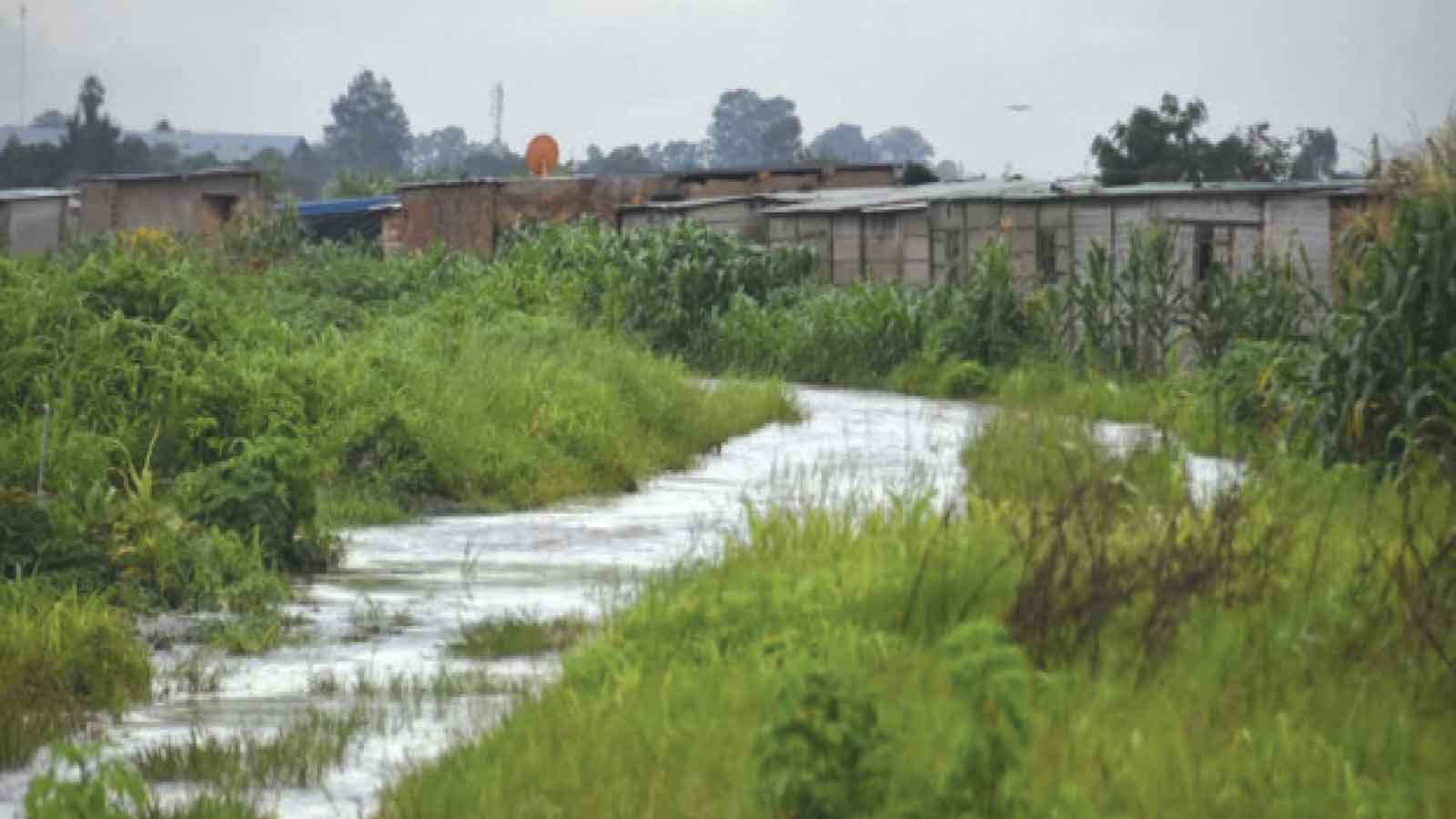
Behind Ms Mutuma’s two-roomed house, water glistens most mornings, forming shallow pools that never quite dry, even after weeks without rain.
Her experience mirrors that of residents in Budiriro, Glen View, Epworth and parts of Harare South — communities built on land never intended for housing, but settled anyway by desperate home-seekers squeezed out of the formal housing market.
Flash floods have damaged homes, destroyed furniture and, in tragic cases, claimed lives.
Yet flooding is only the visible symptom of a deeper problem — the steady encroachment onto wetlands that quietly perform life-sustaining functions.
Wetlands recharge underground aquifers, regulate river flows and absorb floodwaters.
When they are built over, water does not disappear; it simply finds another path — often through people’s homes.
Law Versus Lived Reality
The clampdown confronting residents like Ms Mutuma follows the formal declaration of mapped wetlands as ecologically sensitive areas, enforced by the Environmental Management Agency (EMA) under Section 113 of the Environmental Management Act.
EMA has adopted a zero-tolerance stance towards unlawful wetland development, issuing stop-work orders, compliance notices and opening court dockets against offenders.
From a policy perspective, the rationale is clear: wetlands must be protected to secure water supplies, reduce flooding and strengthen climate resilience. On the ground, however, enforcement often feels abrupt and unforgiving.
“People say we are breaking the law,” said an Epworth resident whose half-built extension now stands roofless under a stop-work order.
“But we were shown this land. We paid for it. Where do they want us to go?”
EMA acknowledges the complexity of “legacy developments” — structures erected before strict enforcement or under weak oversight. In some cases, residents even hold title deeds to land later confirmed as wetland.
The Developer Gap
Beyond individual hardship lies a deeper systemic failure. While local authorities distance themselves from illegal developments, the spread of unplanned settlements points to a regulatory vacuum exploited by land barons and unscrupulous developers.
Residents accuse some developers of selling non-serviced land while assuring buyers that council approval or regularisation was imminent.
“We were told the council was coming to survey. That is why people built,” said a Budiriro resident whose home was damaged by floods.
When enforcement finally arrives, it is ordinary citizens, not land barons, who face loss, prosecution or displacement.
Borrowed Ground, Uncertain Futures
As the sun rises over Glen View 7 Extension, the water behind Ms Mutuma’s house begins to evaporate, leaving dark stains on the soil — reminders that it will return with the next rains.
She has stopped improving her home, afraid of investing in a future that feels increasingly uncertain. Like many others, she lives on borrowed ground — suspended between environmental necessity and human need, between what is written in law and what is lived on the city’s margins.
Yet even as communities grapple with uncertainty, Zimbabwe is attempting to chart a clearer path forward.
Following the country’s leadership in the adoption of the Victoria Falls Declaration at Ramsar COP15, EMA has set out concrete “Year 1” wetland restoration priorities for 2026, marking the first delivery phase of the post-COP15 implementation programme.
Under these targets, EMA plans to place between 35 000 and 40 000 hectares of degraded wetlands under active restoration and assisted natural regeneration in 2026, as part of the broader national goal to restore 250 000 hectares by 2030.
Priority will be given to urban and peri-urban wetlands, headwater and riverine systems critical to water security, as well as degraded Ramsar-classified and candidate sites.
Community-based restoration initiatives will be scaled up, recognising that long-term protection depends not only on enforcement, but on local participation and shared responsibility.
For residents such as Ms Mutuma, these commitments offer cautious hope — that the protection of wetlands will no longer arrive only as stop-work orders and demolitions, but alongside solutions that address housing needs, planning failures and historic injustices.