admin
admin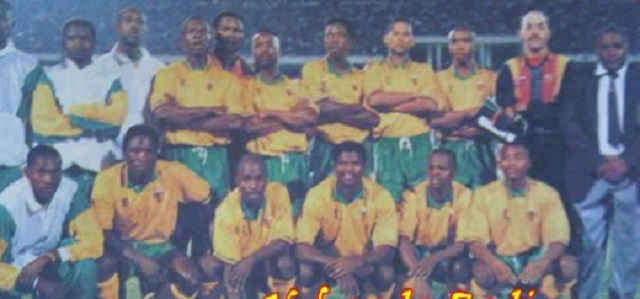
Bruce Ndlovu
While the foundation of a strong national team remains a sound grassroots structure and strong local league, over the last few years sports analysts have noted how the best national soccer teams seem to feed off the strength of one dominant side in a local league.
While most national team coaches prefer to pick the cream of the crop available to them at any given moment, some choose their eggs from one basket, making the best side that they can with ingredients they know and trust.
The strongest example of this in recent times has been former world champions Spaina��s dominance using players picked from the successful Barcelona side of the past decade.
Using players from the cluba��s famed La Marcia academy, Spain passed other world soccer powers of the park with their Tiki Taka style of play popularized by the Catalan giants.
Another country that has used a similar philosophy to devastating effect is Egypt which ignored foreign based flare for the steel of players from Al Ahly, a side that bullied teams around the continent on their way to being named the African side of the century in 2000. The Egyptian side went 46 games unbeaten in 2005, with that invincible side providing the backbone of the side that went on two win the 2006, 2008 and 2010 AFCON tournaments.
Closer to home, South Africaa��s triumph in the 1996 AFCON has also been attributed to the success of Orlando Pirates in the 1995 African Champions League.
In Zimbabwe the most fondly remembered national team since the dawn of Independence was built off similar ideals.
The Dream Team has become such a highly regarded team that despite not qualifying for any major tournaments and being regarded as the continenta��s a�?nearlya�? men, the team occupies a special place in the minds and hearts of Zimbabweans.
While other sides have gone on to break the countrya��s jinx on the continent, none of them are regarded as highly as the Reinhard Fabisch side that became the stuff of lore.
But a close look at the composition of the side reveals that the team, whose dream was turned into a nightmare first by a late Kalusha Bwalya header for the African Cup of Nations at home and a blitz by Cameroon away from home in YaoundA� in 1993, came to being because of a fortuitous turn of events in Bulawayo years earlier.
A group of senior players had left the Bulawayo giants Highlanders FC in 1986, after falling out with the executive over money. Up stepped novices from the cluba��s junior ranks to pick up the mettle with the likes of Rahman Gumbo, Mercedes Sibanda, Willard Mashinkila-Khumalo, Madinda Ndlovu, Dumisani Ngulube and others taking their opportunity to shine.
When Fabisch came to Zimbabwe to assemble his side, these players and other present and former Highlanders stars like Peter Ndlovu, Bruce Grobelaar and Benjamin Nkonjera had matured and were ready to take on the world.
With a proven champion in Grobelaar in goals in defense, Nkonjera, Khumalo and Gumbo conducting the orchestra in the middle of the park and the still sprightly Ndlovu brothers running circles around defenses from South Africa all the way to Egypt, Fabisch built a team that allowed a country to dream of glory.
While local club allegiances often cloud the objectivity of local fans when it comes to team selection, Fabisch assembled a rare breed of players that managed to win the support of fans across clubs lines.
The reign of the Dream Team is not a trophy on Bossoa��s cabinet, but it is still nonetheless a proud and important part of the history of the countrya��s oldest club.



 Online Reporter