Online Reporter
Bruce Ndlovu, Bruce [email protected]
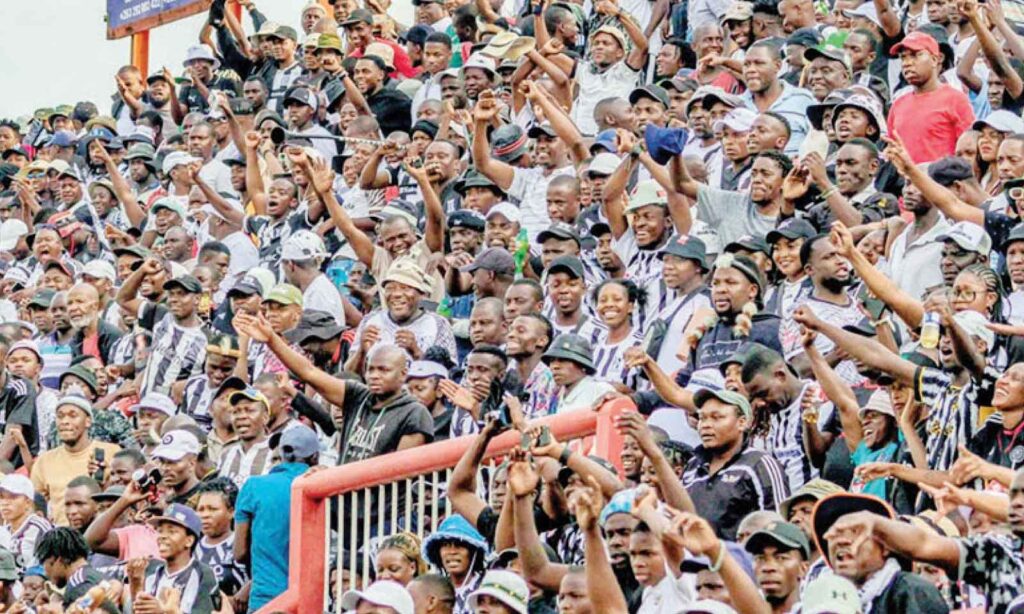
ON the stroke of 67 minutes, the boos rang out across Barbourfields Stadium. There is nothing unusual about that at Emagumeni. Bosso supporters, in both good and bad times, have never been shy about making their feelings known. Referees, coaches, opposition players — and even their own — have all felt the sting of the Bosso faithful at one time or another. To be booed or whistled at BF is almost a rite of passage, something reserved for both friend and foe alike.
What made the jeers and whistles on Sunday afternoon stand out was who they were aimed at. With thousands packed into BF and the match delicately balanced at 1-1 against rivals Bulawayo Chiefs, the frustration of the crowd was directed squarely at Mongameli Tshuma.
Known to some supporters as “The President” since joining the club, Tshuma had just made an error that few expected from him. He received the ball, turned, and then did something that, only weeks ago, would have seemed unthinkable.
In what many immediately saw as a careless moment in midfield, Tshuma passed the ball straight to a Bulawayo Chiefs player. The pass itself was crisp and clean — almost too perfect — as if it had been intended for the man in lime green. For a brief moment, it looked like he had forgotten which side he was playing for.
Had anyone suggested to Bosso supporters not long ago that their midfield maestro was capable of such a mistake, they would have dismissed it outright.
Then came the reaction.
A wave of whistles and boos rose from the Soweto Stand and quickly spread around Barbourfields. It was loud, clear and unmistakable. The same supporters who had, only weeks earlier, celebrated Tshuma were now turning on him.
Yet, in truth, the signs had been there.
Even in the first half, small groans and murmurs followed some of Tshuma’s misplaced passes and loose touches. There was already a feeling among sections of the crowd that his recent performances had not met expectations. By the 67th minute, frustration had reached a breaking point.
For some, this moment simply confirmed earlier doubts.
A few months ago, when Tshuma entertained the crowd with flashes of showboating, some supporters warned that he needed to stay grounded. They felt that a lack of respect for the basics of the game could eventually catch up with him.
Now, with the same fans who once cheered his flair turning against him, it felt, to some, like football had come full circle.
At the time, critics believed his rapid rise could easily be followed by a fall. Whether that is now the case remains to be seen.
What matters most is how Tshuma responds.
As already noted, being booed at Barbourfields is almost a tradition. Many gifted players before him have gone through it. Names like Thulani “Biya” Ncube and Johannes Ngodzo also faced the sharp side of the crowd despite their talent.
When Bosso supporters begin to question their own, it often signals the end of the honeymoon period.
Tshuma struggled on Sunday, looking inconsistent and out of sorts. But there is also a pattern at Highlanders — players are adored when they are new, when their talent feels fresh and exciting. Once they gain wider recognition, expectations rise, and the judgement becomes harsher.
It has happened before. It happened to Siza Khoza. It happened to Ngodzo. It happened to Biya.
What set those players apart was not just their skill, but their response during difficult periods. They found a way to win back the supporters, producing performances that could not be ignored, even when the cheers were no longer as loud.
At Barbourfields, once the honeymoon ends, a player is often judged on what he does next.
Now, attention shifts to the upcoming clash against Dynamos.
Tshuma will be reminded of how quickly fortunes can change. It was against the same opponents only months ago that he captured the imagination of Bosso supporters. On that day, he took risks, dribbled through defenders, and left fans in disbelief.
Now, he finds himself under heavy scrutiny.
His style of play — built on risk, confidence and bold decision-making — is now being closely watched and criticised. As a national team player, expectations are even higher. He is no longer just another player; he is one expected to set the standard.
And with that comes pressure.
As the next big match approaches, the question is simple: how will he respond?
That answer will go a long way in deciding whether Mongameli Tshuma can turn this difficult moment into a stepping stone — or whether it marks the beginning of a more challenging chapter in his journey with Bosso.