Online Reporter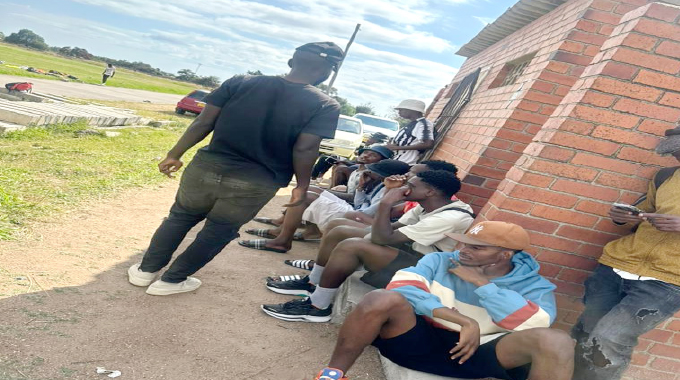
Innocent Kurira, [email protected]
SUNDAY’S Castle Lager Premier Soccer League clash between Highlanders and Triangle United at Barbourfields Stadium is no longer just about football. For Bosso, it has become a defining moment that goes beyond chasing three points.
This match arrives at a time when the club is battling serious off-field problems. Questions of survival, credibility and leadership are now hanging over one of Zimbabwe’s biggest football institutions.
The players’ decision to down tools this week over two months’ unpaid salaries has exposed a deeper crisis within the club. What started as a salary dispute has revealed the weaknesses of a football business model that is struggling to keep up with the demands of the modern game.
For most of the week, Highlanders players either boycotted training completely or reported for duty but refused to take part. Their protest over unpaid wages and allowances brought preparations to a standstill.
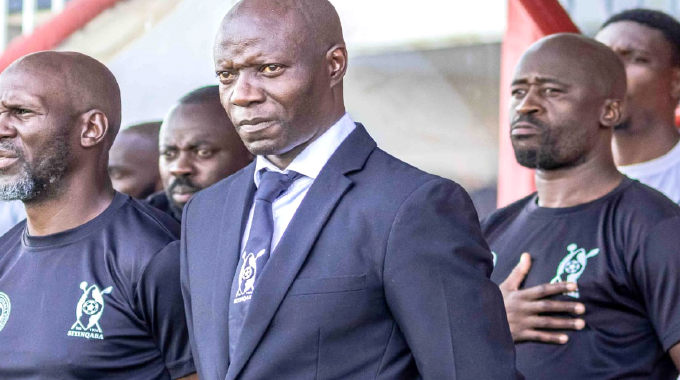
Scenes at White City Stadium’s B Arena reflected the growing tension. Players stood in small groups while no proper training took place. Head coach Benjani Mwaruwari appeared increasingly isolated on the touchline, while team manager Zenzo Moyo worked behind the scenes trying to calm the situation.
For a club preparing to celebrate 100 years of existence, it was a worrying picture that sharply contrasted with Bosso’s proud history and large national following.
However, the real concern goes beyond the immediate issue of unpaid salaries.
Highlanders’ problems once again highlight the dangers of relying too heavily on a single sponsor without broadening income streams. Football has changed, and clubs that fail to adapt are being left behind.
Today, football clubs cannot survive on gate takings alone. Around the world, successful teams depend on a mix of income sources such as merchandise sales, digital content, commercial partnerships, memberships and diverse sponsorship deals.
Despite having one of the biggest and most passionate fan bases in Zimbabwe, Highlanders still appear to rely largely on sponsorship and match-day revenue to keep running.
Reports that the club is depending on Sunday’s gate takings to help pay outstanding salaries show just how serious the cash-flow situation has become. Even a full stadium is no longer enough to sustain a modern football club.
Bosso supporter Keith Sibanda believes the current crisis should push fans to rethink their role.
“We cannot only claim to love Bosso when we are buying a ticket on matchday. Big clubs survive because supporters contribute consistently through memberships and other structures. Thousands come to Barbourfields, but very few actually become active members who help shape the club’s future,” said Sibanda.
Another fan Themba “Mjox” Siziba said: “Honestly by now you would expect the leadership of the club to have acted on this situation. As it stands we seem headed for a defeat against Triangle while a mid-week game against Hardrock is also looming. It’s not looking good at all,” said Siziba.
Ironically, Highlanders remain one of the best-supported teams in the country. Large crowds regularly fill Barbourfields Stadium, yet only a small number of supporters are active members who attend meetings and take part in decision-making.
This raises difficult questions.
Can a club of Highlanders’ size continue to operate properly when key decisions are influenced by only a few hundred people, while thousands simply watch from the stands?
Should supporters who demand accountability also play a bigger role through structured membership rather than just attending matches?
In modern football, loyalty cannot end at the turnstiles.
At the same time, concerns over transparency are growing. Attempts to get official comment from the club leadership this week produced little information, increasing frustration among supporters.
In today’s game, silence often makes a crisis worse.
Fans want clear answers about the club’s financial position, its long-term plans and how the situation has been allowed to reach this point again.
Because this is not the first time Highlanders players have gone on strike over unpaid wages.
The repeated nature of the problem suggests deeper structural issues rather than simple delays.
One player, who chose to remain anonymous, admitted that the situation is affecting morale in the dressing room.
“We love the club and we understand what Bosso means to the supporters, but players also have families and responsibilities. It becomes difficult to fully focus on football when the same problems keep happening,” said the player.
On the pitch, Highlanders’ season has already been frustrating.
The team has won just one of its 10 league matches, drawing eight times.
Despite this, performances have not always been poor. Under Mwaruwari, the team has shown organisation and some improvement going forward. However, defensive mistakes and missed chances have cost them valuable points.
Now, the instability off the field threatens to overshadow everything happening on it.
The biggest challenge ahead of Sunday’s match may not be tactical, but mental. Can players dealing with financial uncertainty stay focused?
Can the squad remain united under pressure? And can the club regain control before things get worse?
For Triangle United, the timing could not be better. They travel to Bulawayo to face a team dealing with emotional, financial and administrative problems.
For Highlanders, however, this match is about much more than football.
It is a moment that reflects the consequences of slow change, weak financial planning and a club now being forced to face hard truths about its future in the modern game.