admin
admin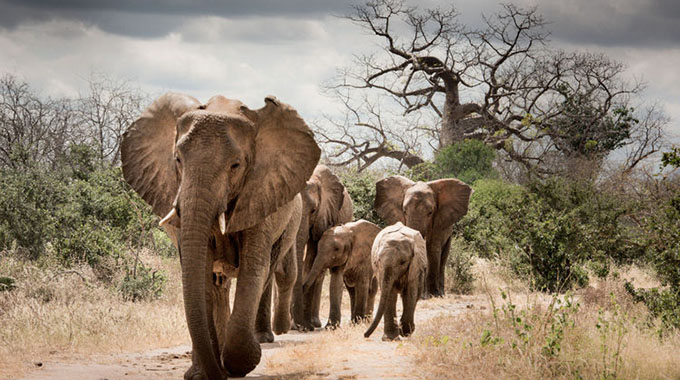
Sifelani Tsiko in Maun, Botswana
Moves by the UK and other European countries to ban the importation of trophy hunting products will bring untold hardships to local communities and collapse all wildlife conservation efforts in southern African rangeland countries.
Botswana local communities, wildlife producers, academics and other key players told journalists from the SADC region on Friday that a ban on the products must be halted to ease human-wildlife conflict and incentivise wildlife conservation.
Botswana’s Ngamiland Council of Non-Governmental Organization (NCONGO) official Letlhogonolo Kamuti said the SADC region needs to unite and speak with one voice to fight the trophy hunting bans.
“lt’s very critical to amplify our voices on this matter. We need to speak with one voice as local communities, players and as a region as a whole,” he said.
“In 2014 when we had a moratorium banning trophy hunting here in Botswana, we saw first-hand the devastating effects of the trophy hunting ban here in our local communities.”
The moratorium was lifted in 2019 and for five years local communities in Botswana were disenfranchised and left in the cold.
Prof Richard Fynn, of the Okavango Research Institute under the University of Botswana said the ban on trophy hunting products by Europe will hit local communities hardest in Botswana and the whole southern African region.
He said the ban would have a collateral negative impact on neighbouring countries such as Namibia, Zimbabwe, South Africa and Zambia.
“Local communities are often disenfranchised by wildlife conservation. They lose land, they get huge human-wildlife conflicts and this a very unjust system.
“This happens throughout Africa. Conservation has a colonial legacy with a top-down approach. Western countries strongly enforce this approach which is animal rights-based rather than people rights-based. This causes problems.”
The veteran rangeland ecologist said when local communities get benefits they are very effective at protecting and conserving wildlife resources.
“African countries working with their local communities can stop runaway poaching. The West is still pushing for Western ways of doing conservation,” he said.
“lt is very unjust. They are still trying to control how African governments do their wildlife conservation.
“This undermines efforts to undertake wildlife conservation for the people by the people. Communities can play a critical role.”
Prof Fynn also allayed fears that trophy hunting has an impact on animal populations.
“Trophy hunting has a critical role to play in making sure that it brings benefits to locals,” he said.
“The hunting quotas are nothing compared to the large animal populations we have. Here in Botswana, we have about 130 000 elephants which increases by about 5 percent yearly and the quota is around 250.
“This is totally insignificant and animal rights activists should only worry if it was about 10 000.”
Debbie Peake, a Botswana Wildlife Producers Association representative in Maun, said a ban on trophy hunting products could lead to the loss of about 3000 jobs in their area alone.
“About 3000 people are likely to lose their jobs here. These are marginal areas with little potential for photography and agriculture. The hunting option is the only viable one,” she said.
Hunting is a major revenue generator for the southern African rangeland countries and this has faced fierce opposition from animal rights and welfare activists in Europe and North America.
Proceeds from trophy hunts in Botswana, Zimbabwe, Namibia, South Africa, Tanzania and Zambia help to reduce the impact of human-wildlife conflicts on community livelihoods.
Countries like the UK and France are in the process of considering legislation which prohibits hunting trophies from entering their territories while others like Canada and Belgium have even gone as far as to completely ban the import of hunting trophies.
“If the bill goes through in the UK, we are concerned about the knock-on effect in Europe. France and Finland are considering it and Belgium has done it. In Italy it is possible,” Peake said.
“Our market space is under a lot of pressure. The bans are being done without consultations with us. There is no consultation and the science behind the decisions has not been explained. About 70 percent of the information given to politicians is incorrect.
“The House of Commons is using this misinformation to push for the Bill. It’s very astonishing. The British people wouldn’t support a bill that hurt people and conservation.
“lt hurts the people who carry the burden of conservation. It will hurt Zimbabwe’s Campfire project, hurt Zambia, hurt Namibia and South Africa.”
Peake said the Bill was fundamentally flawed and with no sound advice.
Prof Joseph Mbaiwa of the University of Botswana said the hunting trophy ban would hurt conservation efforts by local communities and bankrupt them.
“Conservation will be hurt. You conserve because you see the benefits. If you don’t benefit why should you conserve,” he said.
“We need to market the benefits of trophy hunting more aggressively. We must tell the world as a region that trophy hunting is for development.
“We must join hands as Sadc and let our presidents speak with one voice on this. We need to market our case aggressively.”
Botswana relies on the American market which brings in 70 percent of the revenue and 30 percent is from Europe.
The UK, Finland and Belgium have thriving hunting industries which African countries do not interfere with.
“lts against our sovereign right as a country to decide what works for us. UK, Belgium and Finland have thriving hunting industries and why is it ok for them and wrong for us,” said Peake.
“Why do they dictate things for us when we do not dictate things to them.”
Southern African countries argue that a blanket ban overlooks their role in sustainable wildlife management. They say they want a more inclusive approach that considers their perspectives and needs.
Southern Africa is home to half of Africa’s elephants (230 000) and Zimbabwe’s population of more than 84 000 against a carrying capacity of 40 000, is only second to that of Botswana in the world.



 Online Reporter