Chronicle Editor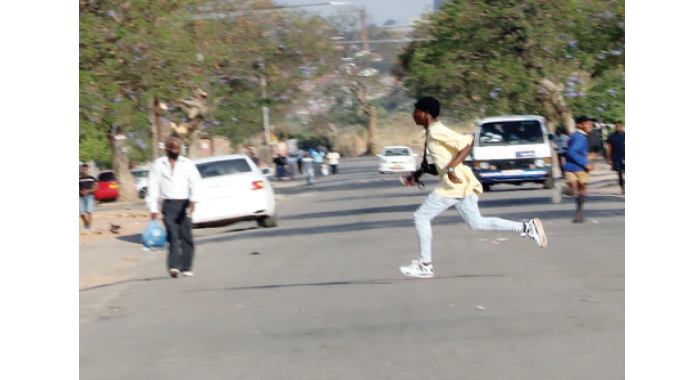
Gender Correspondent
OVER the past few weeks, headlines have been bloody with stories of violent skirmishes of schoolboy terror gangs fighting among themsevles, terrorising teachers and other pupils.
Msiteli High School was turned into a battle field recently, as schoolboy gangs fought, leaving a trail of destruction.
Gangsterism among youths is not a new phenomenon in Bulawayo. Schoolboy fights are common, and at some point, the central business district was a battlefield especially on school closing days, when pupils from schools such as Milton, Gifford and Hamilton wanted to settle mid-term scores and fought in town. For some years police would have to be on standby on closing days, and all schoolchildren would be forced out of the central business district.
While it was effective to some extent, it did not stop the territorial wars and the gangs still fought.
Talking to middle-aged to elderly city dwellers will yield spine-chilling accounts of some of the most-feared terror gangs that once ran the streets in the city. Most of these gangs were run in townships.
The gangs often had a main wing of senior youths in their thirties, recent school leavers as well as new recruits who were still in training.
Terror gangs have terrorised residents for decades in the city. Star Force, Inkatha, Terror Ten, Inkabi and Ngostingo are some of the most notorious gangs that walked the streets of Bulawayo.
Many stories are told about how brutal the boys were and how they sometimes forcibly recruited new members, especially boys still in school. To some the gangs were admired, the violence became township culture, leaving them in awe, while others just saw criminals and bullies who waged territorial wars and pounced on innocent victims.
Gangsters do not just sprout from nowhere. There have to be social conditions and a culture that makes it possible for gangs to be born and to thrive.
Communities and civil society organisations have called for action on the matter.
The Covid-19 pandemic is cited as having worsened the situation as some boys have been left idle, with others having ended up joining dirty gangs.
Gender activists say this is partly due to the fact that the boy child has been left alone and there have been few programmes to groom and nurture young men. Communities have called for the identification of new role models who can inspire school-going youths to emulate them and shun crime and rogue activities.
Organisations that deal with boys and young men posit that new approaches are needed in order to reach out to boys and help them make better choices.
Padare/Enkundleni Men’s forum on gender programmes manager Mr Zphongezipho Ndebele said there was a need for interventions in order to teach young men about non-violent means of resolving conflicts. He called for communities to lead by example and to provide spaces for counselling and conversations, to allow young boys to speak out.
Men’s Conference executive director Makhosi Sibanda said a multi-sectoral approach was needed to get to the bottom of the matter on violent behaviour among boys.
“Our society right now needs a strategic shift in terms of thinking of means to address issues of violence in young boys such as capacitating them to address harmful social norms. An all-inclusive approach is needed to rehabilitate the boy child.
The home and the school and other social actors need to rethink the best approaches to dealing with violence. There should also be legislation that relates to children and families, creating opportunities and a firm foundation to eliminate violence,’’ he said.
There is growing consensus among development practitioners especially those within the gender field that the boy child has been sidelined from the development agenda, and that ongoing empowerment and development efforts offer nothing much to our boys.
This has spurred debates, with some saying that boys need no holding hand as the world is still a men’s world anyway, while others are saying it’s a men’s world for the very few but the rest of the male population is not necessarily connected to those empowered few in privileged positions.
Boys are falling behind and are becoming more vulnerable.
In Zimbabwe it is encouraging to see the works done by organisations such as Padare/Enkundleni men’s forum on gender, and the podcast programmes by Men’s Conference.
It shows that there is hope in ensuring that there are spaces for the boy child and men, and that they are included in the development agenda. Without such programmes, our boys risk being ‘‘umhlambi kazalusile’ or a shepherd-less herd.
They also need grooming, role models and mentors.
Just because the world is still being run by men and there’s so many of them in leadership does not automatically mean that these boys have leaders guiding them.
How is society reaching out to boys and helping fight drug and substance abuse? It’s not only men who should be responsible for the welfare of the boys, empowered women and girls can also involve their brothers in this journey.
For Zimbabwe today, the varied needs of both the boy child and the girl child need to be catered to so that they are able to make the most of their potential.
Empowerment, celebration and support of one gender does not mean shrinking of the other as both genders can progress individually and thus together.
We will truly reach a place of equality when we can stop thinking in terms of ‘boy child’ or ‘girl child’, rather just value a student for what they are, a child.



 Online Reporter