Online Reporter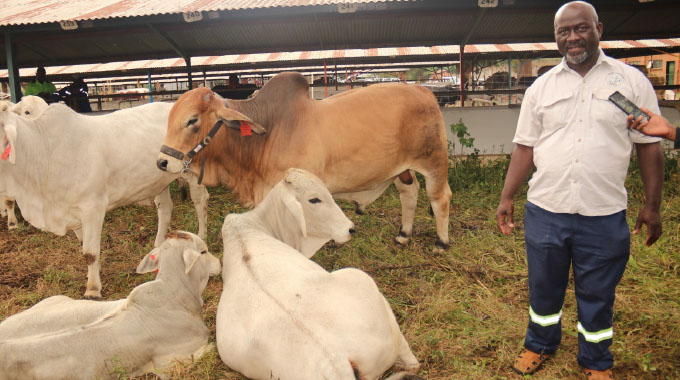
Obey Sibanda, [email protected]
PROMINENT Umzingwane-based farmer, Mr Jairos Mahlangu, who built an impressive herd of 400 Brahman cattle after starting with just one cow at the age of 14, is set to host a free two-day field training school to equip aspiring farmers and church members with practical agricultural skills.
Matabeleland South Minister of State for Provincial Affairs and Devolution, Albert Nguluvhe, will be the guest of honour at the training programme that will focus on Brahman breeding, cattle management, livestock nutrition and sustainable farming practices.
Participants will also learn how to produce affordable supplementary stock feed, reducing reliance on costly commercial feeds.
According to organisers, the programme kicks off on Thursday with the first session targeting villagers, emerging farmers and tertiary students interested in agriculture.
In an interview, Mr Mahlangu said the programme seeks to demonstrate how farmers can maximise production and generate income from small pieces of land.
“Farmers will be taught precision farming. Many people believe one needs vast tracts of land to succeed in agriculture, but we want to show them how to maximise productivity and profitability on the land they already have,” he said.
In addition to livestock management, participants will receive training in crop production and poultry farming.
“Many people think farming requires huge capital outlays, but it is possible to start small. We will demonstrate affordable poultry housing and practical methods of keeping chickens profitably,” said Mr Mahlangu.
The second day of the field school will be dedicated to members of the Seventh-day Adventist Church in a session dedicated to emphasising the importance of combining faith with hard work.
“Being a Christian does not shield anyone from poverty. As believers, we must work diligently because nothing comes for free,” said Mr Mahlangu.
He added that the initiative aims to empower church members to become self-reliant and support less privileged families within their communities.
Mr Mahlangu’s journey into farming began with commercial beef production before he transitioned into pedigree Brahman breeding.
Recognising the shortage of quality pedigree bulls, he invested heavily in improving his herd and eventually became a supplier of high-quality breeding stock.
By 2008, he had grown his herd to about 30 cattle, using profits from his furniture business to purchase heifers and expand operations. Today, his herd numbers around 400 cattle.
Despite operating from a communal area, Mr Mahlangu has expanded his grazing operations to Shangani in Matabeleland South and Nyamandlovu in Matabeleland North to accommodate his growing herd.
To maintain animal health, he has established a dedicated dipping facility at his homestead and follows a strict disease control programme involving weekly spraying and dipping.
“Brahmans require careful handling. They are intelligent animals that respond well to calm environments and gentle treatment,” he said.
To ensure feed security, Mr Mahlangu also produces fodder crops, including sorghum, Bana grass, maize and sunflower, which he processes into silage and hay bales.
The devastating El Niño-induced drought has reinforced the importance of self-produced feed, prompting him to invest further in fodder production.
“Sunflower is rich in protein and plays a key role in livestock nutrition. Producing our own feed has helped us reduce costs and build resilience during drought periods,” he said.