Online Reporter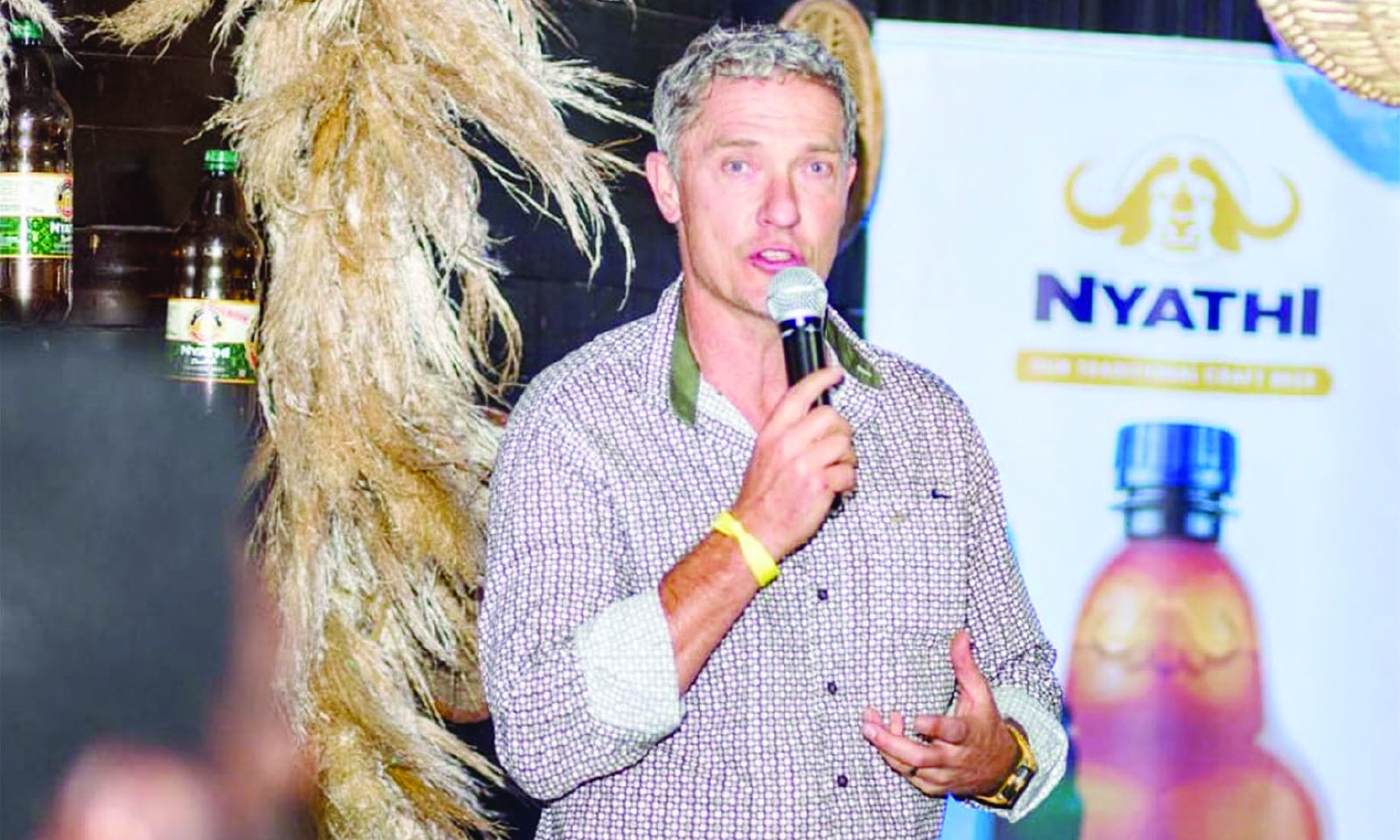
Michael Tome
Business Reporter
AFTER experiencing the bright city lights of the United Kingdom and the United States, would you ever think of coming back to Zimbabwe?
For Mr Richard Mann, he had to make such an unexpected decision in pursuit of peace, comfort and self-discovery.
Born in the mid-1970s in Bulawayo, Matabeleland province, he left the country in the early 1980s for Namibia and then South Africa, where he completed his primary, high school and tertiary education.
“I completed my junior school and went straight to a government school called Sutherland High School in South Africa for my high school between 1988 and 1993,” said Mr Mann.
He was not born with a silver spoon in his mouth, as his parents were mere civil servants.
This, however, gave him the willpower to work harder. It was during high school that he settled for accounting as his path to success, despite it not being his strongest subject.
“Accounting was one of my weakest subjects, but by my very nature, I am often attracted to the most difficult things in life. I like to go for a challenge, and eventually, I settled for accounting as a career. I felt like I would be interested in business. I wanted to go into business.”
It was not only the zeal that drove him to accounting, but also a charismatic accounting teacher who inspired him as a young man.
“I will be honest with you, I am not a great accountant, but at some point in time, I had a very good accounting teacher whom I loved. He was a great guy, and he was funny, and we got on very well, and that is when I fell in love with accounting because of who he was.”
Mr Mann’s mother was a teacher and his father just another government employee.
The young man thus had no great business acumen, but he convinced himself that he wanted to get into business.
“Business was not something that ran in our family, nor ran in our blood. My parents were civil servants, but I felt if I wanted to go further, I had to go for a business degree; thus, I did a bachelor’s degree in accounting.”
He went on to study for a master’s degree in accounting and finance between 1994 and 1999 at the University of Pretoria.
Menial jobs
Due to limited finances at home during his university days, Mr Mann would do some menial jobs to sustain himself and sometimes finance his tertiary education.
“So, while I was at university, I had to do a lot of odd jobs in the evening or during the day. One of my first jobs was in the entertainment industry. I worked as a barman and waiter to make money. I even paid part of the university fees,” he said.
“I think it is important to know that if you can’t necessarily afford university, it shouldn’t be a stumbling block in your life; there are many ways to go about it. My parents obviously supported me, but they supported me where they could.”
After university, he worked as a shares trader.
Although this shaped his character and business acumen, he described it as brutal.
“That was a brutal job because it required me to live on commission only, and I had to travel around the whole of the Johannesburg area, convincing people to part with their savings and their pensions and allow us to be able to invest that money on their behalf,” he added.
“The job gave me good experience because it gave me the confidence to talk to people.”
Becoming a chartered accountant
Even when he was at university, Mr Mann always aspired to be a chartered accountant (CA).
“I said, ‘Why don’t I go for one of the most difficult roads?’ and I challenged myself to become a chartered accountant. So, the natural progression from university was to do articles and become a qualified chartered accountant.”
He finally qualified as a chartered accountant with BDO Spencer Steward in 2003 and immediately left for the UK, where he worked in investment banking and insurance.
He worked as a financial controller at Syncora Holdings, a monoline financial guarantee insurance provider. The company provides credit enhancement for the obligations of debt issuers worldwide. During this period, he had the chance to travel and periodically stay in Europe and the US.
“Once I qualified as a chartered accountant, I left South Africa, and I went and spent seven years working and travelling through Europe and a little bit of the United States.”
Homecoming
It was not until 2010 that Mr Mann decided to come back to Zimbabwe after more than three decades.
“I realised that, although the big cities are exciting, I really felt like coming back to Zimbabwe. I had a young family at that stage and my daughters then were both under two years of age, and we appreciated the fact that, in Zimbabwe, there is a lot of sunshine, a lot of outdoor life, a great place to come and live, bring up kids, and we came back to Zimbabwe in 2010.”
After relocating to Zimbabwe, Mr Mann embarked on a distinguished career, joining Bindura Group as managing director from April 2010 to June 2015.
He then switched to National Foods Limited, where he served as group operations director from July 2015 to September 2018.
After the stint at National Foods, he decided to venture into business, providing consulting services from October 2018 to November 2020. In 2020, he took on the role of managing director at The Buffalo Brewing Company (TBBC), leading the company’s operations and growth.
TBBC is the manufacturer of Nyathi sorghum beer.
It was established in 2021 as Innscor Africa’s first manufacturing investment in the broader alcoholic category.
It entered the opaque beer market with the Nyathi brand in December 2022, introducing 1,25-litre regular sorghum beer.
Mr Mann said establishing TBBC was far from easy, given existing competition in Zimbabwe.
“Multiplication of energy comes from having people around you working with you towards a purpose and towards a similar and common goal. And so our biggest success at TBBC has been putting together one of the best teams that I have ever worked with.”
Asked about the short- to medium-term plans, he indicated that he is confident about Zimbabwe’s huge opportunities.
TBBC, he said, plans to expand beyond Zimbabwe’s borders to reach other segments and markets.
“In our five-year plan, we are very confident about Zimbabwe. We think Zimbabwe has a huge opportunity. We want to grow within Zimbabwe and even outside Zimbabwe. There is opportunity to get into all other segments in alcohol.”
Mr Mann said his experience as a CA had moulded his character in running a business.
“Being a CA set me up in the sense that it is a highly respected qualification in the business field,” he continued.
“I think it creates a wonderful platform and background. To this day, I am very grateful for my experience as a chartered accountant because it helps me to understand and run my business better.”
He encourages budding entrepreneurs and managers to be passionate about what they do.
“I am so passionate about my job that I could literally work 20 hours a day, and love it. I don’t just like what I do; I absolutely love what I do.”
Work-life balance
Asked about work-life balance, Mr Mann said time was the most valuable thing and it needed to be used wisely, giving priority to all critical areas of life. Life, he believes, is rooted in five streams that include work, family, friends, sports and spirituality.
“You know, money can always be generated, but time you can never get back. My wife Sarah and my daughters — Kate and Ray — are hugely supportive from the very first day.”
He expressed heartfelt gratitude to his family for their unwavering support, particularly during the challenging early years of establishing TBBC, when their presence and encouragement made a significant difference.
“My wife is my best friend and my biggest supporter, and she has been brilliant in that sense, allowing me to consistently talk about beer. She’s not a beer drinker. She doesn’t like drinking beer, but she is always prepared to listen about it.”
He highlighted the importance of spirituality in his life, saying it is his source of guidance, strength and inspiration, which helps him to navigate life’s challenges and make meaningful decisions.
In terms of staying fit, he said: “I play a lot of sport, I love my running, I love staying at the gym. I love my golf. I do as much as I can, but I am not good at many of them. I am very average at everything, but it is hugely important for me to stay physically active as much as I can.”