admin
admin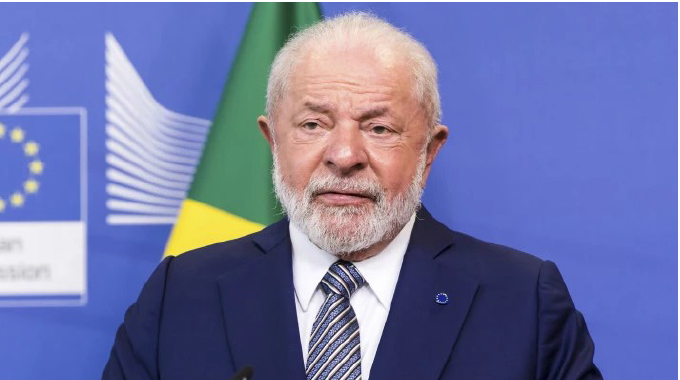
BRASILIA, Brazil. — Brazilian President Luiz Inácio Lula da Silva said on Wednesday that he supports more countries joining the BRICS group of large developing nations, which currently includes Brazil, Russia, India, China and South Africa.
The group will hold a summit in Johannesburg from August 22 to 24. The meeting will have in hand a list of others desiring to join ther group.
“Possibly, in this meeting, we can already consensually decide which new countries can join BRICS,” Lula told international journalists in the capital, Brasilia. “I am of the opinion that as many countries want to enter, if they are in compliance with the rules we are establishing, we will accept the countries’ entrance.”
Around 20 countries have formally applied to join the bloc, Brazilian Foreign Affairs Minister Mauro Vieira said after Lula’s session with journalists. AMong them are Argentina, United Arab Emirates, Saudi Arabia, Indonesia, Iran and Venezuela, he said.
Vieira said that all BRICS members are interested in making an effort to accept other countries, but parameters still need to be discussed and there needs to be mutual agreement among leaders.
Since taking office, Lula has repeatedly bucked the existing Western-dominated international structure.
He has rejected the US and EU’s shared position of supporting Ukraine in its fight against Russia’s invasion, refusing to provide arms to Ukranian forces and pushing for peace talks to bring the war to an end.
He has called for an end to the dominance of the US dollar in international trade and supported a common currency for commerce within the South American bloc Mercosur and for trade among BRICS nations. He has also taken swipes at the International Monetary Fund.
Lula repeated those positions Wednesday.
“Why does Brazil need the dollar to trade with China or Agentina? We can trade in our currency,” he said.
He went on to hail the prospects of the Chinese-backed New Development Bank, commonly known as the BRICS bank, which is funding infrastructure projects in Brazil and elsewhere in the developing world.
“The BRICS bank must be effective and more generous than the IMF. Which is to say, the bank exists to help save countries and not to help sink countries, which is what the IMF does many times,” he said.
Lula also criticized the UN Security Council, saying its members have been responsible for starting wars despite the body’s stated mission of maintaining peace and security.
There have recently been some voices from Western media attempting to hype that divergences among BRICS members will impact the unity and development of the organisation in the future, but these noises have been refuted by the relevant countries.
Chinese analysts said yesterday that different opinions are very normal in an organization that upholds multilateralism and democratization of international relations, but if anyone tries to exaggerate the differences between members and downplay the significance of the BRICS cooperation mechanism, it only exposes the jealousy and nervousness of some Western elites, especially those who want to preserve US hegemony and a unipolar world order, when they see the unstoppable cooperation and development among non-Western countries or emerging economies.
Some Western media outlets, including Bloomberg and Reuters, have recently released reports frequently hyping some so-called problems of disunity among the BRICS members with the summit approaching.
However, President xLula da Silva said on Wednesday that he has high expectations for the 15th BRICS Summit, which will be held in South Africa at the end of the month, noting it is “extremely important” that countries like Saudi Arabia, Argentina and other large developing countries join the bloc, the Xinhua News Agency reported.
Li Haidong, a professor at the China Foreign Affairs University, said yesterday that it’s very normal to see different opinions within an international organisation, and “we can see many arguments and even conflicts within NATO and the G7,” while the US is always trying to keep its allies obedient or at least united by “provoking new threats” and “creating new enemies,” and also “sharing US troubles with US allies.” To some extent, the West is much more disunited than emerging economies.
Using rumours and groundless reports to exaggerate the differences among BRICS members only shows the mindset of some Western elites who wishfully hope that BRICS becomes paralyzed and falls into dysfunction caused by internal struggles, but even this kind of expectation is far from the facts, Li said.
In addition to Reuters, Bloomberg also published an article on Wednesday saying that BRICS “isn’t big enough for both India and China,” as it tried to say that tensions between the two countries “will likely prevent the BRICS bloc from ever posing a coherent challenge to the West.”
India’s Foreign Ministry spokesman Shri Arindam Bagchi has slammed ‘baseless’ speculation and untrue reports in some media that the country is against BRICS expansion.
“We have seen some baseless speculations…that India has reservations against [BRICS] expansion. This is simply not true,” he said at a briefing on Thursday, responding to a TASS request to comment on the issue of the association’s expansion.
Lin Minwang, a professor at the Institute of International Studies of Fudan University, told the Global Times that although China and India have some disagreements, it’s unrealistic and unfair to exaggerate their differences and say that China-India competition is hindering the development of BRICS.
“China and India are two major developing countries, so in many issues on development and the cooperation within the Global South, they share common interests, and this is why the BRICS mechanism has been able to develop successfully in recent years,” Lin noted. — Agencies


 Online Reporter