

 admin
admin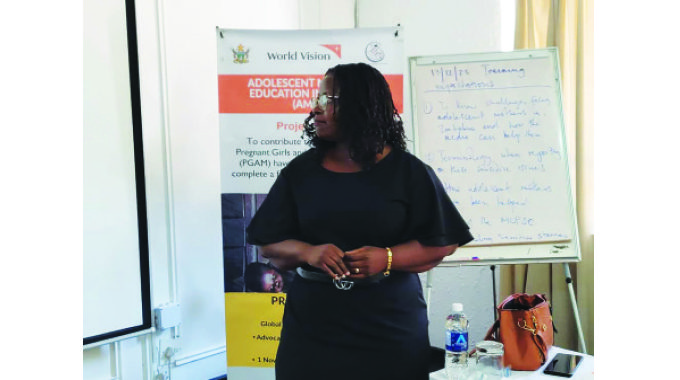
Gibson Mhaka
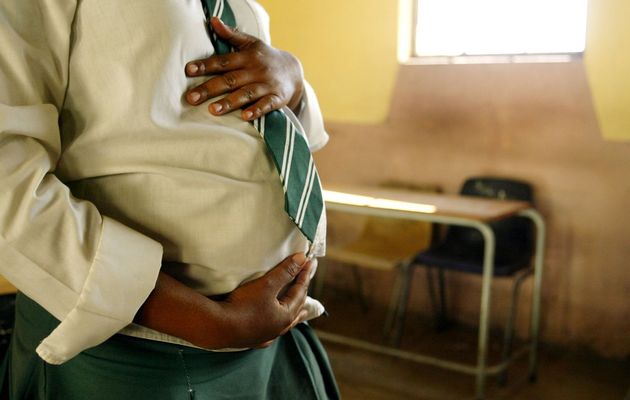
WHEN schools open their doors for the new year on January 9, Siphiwe Moyo (15),* a learner at Sivomo Secondary School in Nkayi district in Matabeleland North province is not going to turn up for classes, due to disturbing circumstances.
She is pregnant and she is afraid that she is going to be the subject of jokes and gossip in a community not accustomed to seeing a pregnant girl in a school uniform.
Cruel teasing, bullying, and social exclusion can make school a daily nightmare for her.
Siphiwe’s story is not an isolated one; it echoes the plight of countless girls and teenagers across Zimbabwe and other southern African countries who have seen a sharp rise in pregnancies, particularly during the Covid-19 pandemic.
The pandemic’s lockdowns disrupted education and support systems, leaving many girls vulnerable. School closures deprived them of crucial sex education and access to contraceptives, while economic hardship and increased poverty may have pushed some into transactional relationships or early marriage.
Zimbabwe has long struggled with such pregnancies and child marriages. According to a Unesco 2018 report Zimbabwe had over 6 000 teenage girls who dropped out of school due to early and unintended pregnancies.
Unicef (2020) report also estimates that around the world, 129 million girls are out of school, including 32 million of primary school age and 97 million of secondary school age.
Unintended pregnancy has a negative effect on their education since most pregnant and parenting adolescent girls drop out of school with limited prospects of returning to complete their education.
Studies have shown that pregnant girls and young mothers face high levels of stigma from their peers at school, from school officials and from their community.
A lack of gender-sensitive instruction and discriminatory attitudes in the school setting contribute to students dropping out and discourage students from re-enrolling.
While the other girls face the uncertainties of returning to regular school, Siphiwe stands on different grounds. Sivomo Secondary, her school, is one of the eight chosen in the district for the Adolescent Mothers’ Education Initiative (AMEI).
The overall objective of the AMEI project which is being funded by the Global Partnership for Education and implemented in partnership with the Education Coalition of Zimbabwe (ECOZI) is to contribute to ensuring that all Pregnant Girls and Adolescent Mothers (PGAMs) have access to continue and complete a free, safe, quality and inclusive education.
This initiative could be the key that unlocks the door to education and a brighter future for her and other pregnant girls in Nkayi District.
The other schools in Nkayi district where the project is being implemented include Guwe, Hompane, Mpumelelo, Nkayi High, Sagonda, Setshanke and Mateme secondary schools.
According to Memory Sibanda, project co-ordinator of AMEI under World Vision Zimbabwe the project which started on 1 November 2021 and will end on 30 March 2024, is being implemented in Nkayi District as it was identified as one of the districts in the province with marginalised girls who were out of school.
The AMEI project in Zimbabwe was designed soon after the Covid-19 pandemic following the realisation that several girls fell pregnant and were not able to return to school due to a number of barriers.
“The project aims to ensure all pregnant girls and adolescent mothers have access to education, in line with the constitutional right to education for every child. Section 75 mandates the Government to ensure that every citizen, poor or rich, black or white, partly-abled or not, female or male accesses affordable and quality education. Educating pregnant girls and adolescent mothers is an investment, not an expense,” said Sibanda.
She said the project aims to foster a more supportive environment for PGAMs by promoting more positive attitudes and behaviours towards and increasing support of PGAMs continuing their education among local stakeholders, including families, communities, and school officials as well as influencing the development and implementation of national-level policies, plans and programmes that prioritise and streamline continued education for PGAMs.
“By the end of the project regional and global development priorities and plans foster an enabling environment for supporting the continued education of pregnant girls and young mothers. Communities, faith leaders, PGAMs themselves, service providers and Local Government authorities now have more positive attitudes and behaviours towards the continued education of PGAMs and are capable of collaboratively formulating an agenda towards supporting PGAMs,” she said.
She said PGAMs in their pursuit of education face a lot of challenges such as long distances to school, failure by parents to meet their educational needs due to poverty and limited or non-existent sexual and reproductive health education in schools which leaves many PGAMs vulnerable to misinformation and unsupported decisions..
Full article on www.bmetro.co.zw
Adding to the burden, many schools also fail to provide PGAMs with essential learning catch-up material while they are on maternity leave. This creates a knowledge gap that further hinders their return to studies, deepening the sense of alienation and discouragement.
As part of recommendations for addressing the challenges faced by PGAMs, Sibanda said the Government should support schools to establish low cost boarding facilities with breastfeeding rooms.
“Government should also support free education for PGAMs, policies should also include support to PGAMs with learning material during maternity leave and policies should clearly state or guide schools on how they handle re-entry or re-integration of PGAMs in the school system. There is also a need for the Government to support capacity building of teachers on guidance and counselling,” she said.
Other barriers to school re-entry must also be addressed. These barriers include the lack of financial resources for fees and other school-related expenses and the lack of childcare support.
Provision of comprehensive sexuality education is also necessary to prevent repeat pregnancies among adolescent mothers.
It is important to note that early motherhood can negatively impact health, educational, and socio-economic outcomes for adolescent mothers and their children.
Hence, supporting adolescent mothers’ educational attainment and timely return to school, may be key to interrupting intergenerational cycles of adversity.
A teacher who preferred anonymity for professional reasons said while pregnant girls and adolescent mothers’ post-partum return to school offers long-term benefits, returning too early in the absence of sufficient support may impede the healthy development of their children.
Having policies and programmes instituted to support the readmission of young mothers will go a long way in providing an enabling environment to empower adolescent mothers.
Nkayi District Remedial Tutor in the Ministry of Primary and Secondary Education Amos Sibanda hailed the PGAMs programme calling it a “game-changer” for pregnant girls and adolescent mothers.
“Partnering with World Vision and its partners, we’ve made significant strides in turning the tide for pregnant girls and adolescent mothers in eight secondary schools in the district. Through dedicated awareness campaigns and targeted outreach, we’ve overcome initial resistance and successfully welcomed PGAMs back into the schools.
“Previously, some PGAMs hesitated, questioning the benefits of enrolling back to school fearing that they are going to face ridicule. But thanks to our sensitisation programmes they are now enrolling back to school.
“We’ve also addressed concerns and fostered understanding among key stakeholders which include traditional leaders (chiefs and village heads), child protection committees, school personnel, students, and most importantly, the PGAMs themselves,” he said.
He said the ministry was utilising existing policies and legal frameworks as potent tools for their campaigns in supporting PGAMs’ educational journey.
“As a ministry we operate within prescribed policies and circulars which we use to roll out campaigns or this programme. Some of the policies that we use are the Constitution of Zimbabwe and the Education Amendment Act 2020.
“Our work with PGAMs in eight schools is just the beginning, not the end. We believe every child deserves the chance to shine, so we’re taking the knowledge from these campaigns to illuminate other schools across the province so that every child benefits.
“Teachers also provide extra tutorials to PGAMs to catch up on lost learning time. Communities once hesitant are now appreciating the programme’s impact and advocating for its expansion and even teachers themselves witnessing the positive effect, have even begun replicating the programme in neighbouring schools,” he said.
He said as a ministry they also believe that each school should have its own child protection committee clearly stating what measures they have to put in place to protect every learner not only the PGAMs.
*Not her real name


 Online Reporter