Online Reporter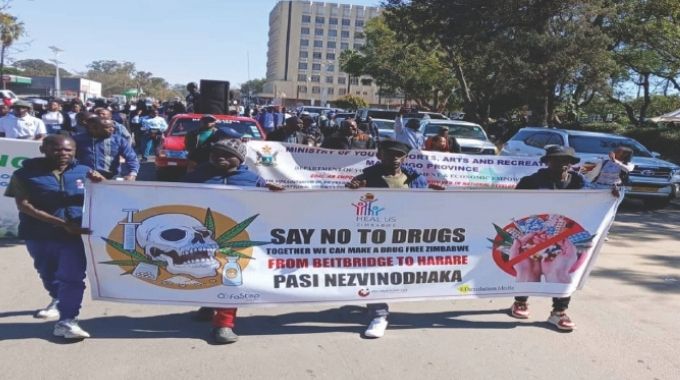
Mqemane Tshababa
Drug and substance abuse among Zimbabwe’s young people continues to rear its ugly head, stubbornly defying efforts by both the Government and non-governmental organisations to curb the crisis.
Despite visible strides in awareness campaigns and rehabilitation initiatives, the scourge shows no sign of abating. From crowded urban townships to remote rural villages, the menace is spreading, leaving countless youths vulnerable and exposed. Many are drawn into drug use for reasons ranging from peer pressure to the desperate search for escape, yet the outcome remains tragically uniform. It is a mounting threat to the health, safety, and future of the nation’s next generation.
Among the most commonly abused is cannabis, also known locally as dagga or mbanje. It is the oldest and most widely consumed drug among young people. Cannabis contains a psychoactive compound called THC (delta-9-tetrahydrocannabinol), which binds to CB1 receptors in the brain’s endocannabinoid system.
This interaction produces the euphoric “high” that makes the drug appealing. More recently, youths have succumbed to the lure of crystal meth, known on the streets as mutoriro, guka or dombo. This cheap but highly potent stimulant is driving a public health crisis. Its active chemical, methamphetamine, enters the bloodstream almost instantly, reaching the brain within five to 10 seconds when smoked — the most common method of use, though it can also be swallowed.
Another worrying trend is the abuse of codeine-based cough syrups, particularly Broncleer or Bronco. Often smuggled from neighbouring South Africa, these prescription medicines are prized for their ability to deliver “cheap highs”.
Illicit alcohol, such as njengu, are also widely consumed, while other substances remain poorly classified but are nonetheless popular among youths due to their affordability. In addition, some young people resort to inhaling industrial chemicals such as glue, further compounding the crisis.
The common denominator across these substances is their low cost and easy accessibility, making them especially attractive to vulnerable youths. Despite ongoing interventions, the persistence of drug abuse underscores the urgent need for stronger community-based strategies, education, and rehabilitation initiatives.
Drug abuse brings devastating consequences — not only for the individual but also for the community at large. These effects can be grouped into three major categories: physical, psychological, and social-cultural.
On the physical side, abusers risk damage to vital organs such as lungs, liver, kidneys, and heart. Drugs also disrupt the brain and nervous system, leading to memory loss, poor decision-making, and slowed reactions.
Continued use often interferes with sleep patterns, resulting in insomnia, while careless behaviours linked to drug abuse increase vulnerability to infections. The psychological impact is equally troubling.
Substance abuse is strongly associated with mental health conditions such as depression and anxiety. Drugs interfere with brain chemicals like GABA and serotonin, which regulate stress and mood. This disruption can trigger chemical imbalances; worsening existing mental health problems or sparking new ones.
Behaviourally, drug abuse is tied to poor judgement and reckless actions. This can manifest in irresponsible behaviour, including risky driving caused by blurred vision and impaired decision-making.
Curbing drug abuse among youths requires collective action. Government agencies, non-governmental organisations, the private sector, and communities all have a role to play. One key driver of youth drug abuse is a lack of knowledge about the harmful effects of these substances.
Addressing this gap through youth-led awareness programmes could be transformative. Peer-driven initiatives resonate strongly with young people, who respond better when they feel empowered rather than judged. Campaigns such as roadshows, already piloted by local authorities and stakeholders, need to be scaled up to reach more communities. By ensuring that youths are fully informed about the dangers of drugs, these programmes can help break the cycle of abuse and offer hope for healthier futures.
Another promising strategy to reduce drug abuse among Zimbabwean youths is the creation and expansion of safe recreational spaces. These centres provide young people with constructive alternatives to idle time, replacing vulnerability with productivity.
As the saying goes, “An idle mind is the devil’s workshop.” By keeping youths engaged in meaningful activities, recreational spaces help shut the door on destructive habits.
Beyond offering leisure, these centres serve as hubs for mentorship and skill development. Through coaching, young people can discover talents in performing arts, music, or sports such as soccer skills that not only build confidence but can also open pathways to earning a livelihood.
Equally important, recreational centres help reshape mindsets. Instead of focusing on drugs and other social ills, youths are encouraged to redirect their energy towards socially engaging, approved activities that reduce boredom while fostering community spirit. In this way, recreational spaces become more than places of play, but are powerful tools for empowerment, prevention, and long-term change.
The fight against drugs and substance abuse is a shared responsibility that none of us can afford to neglect. The fight calls for a united front where individuals, families, communities, government institutions, non-governmental organisations, and the private sector work hand in hand to mitigate the effects.
*Dr Mqemane Tshababa (Ph.D) is a mental health advocate, senior lecturer and Community Psychology intern.