Online Reporter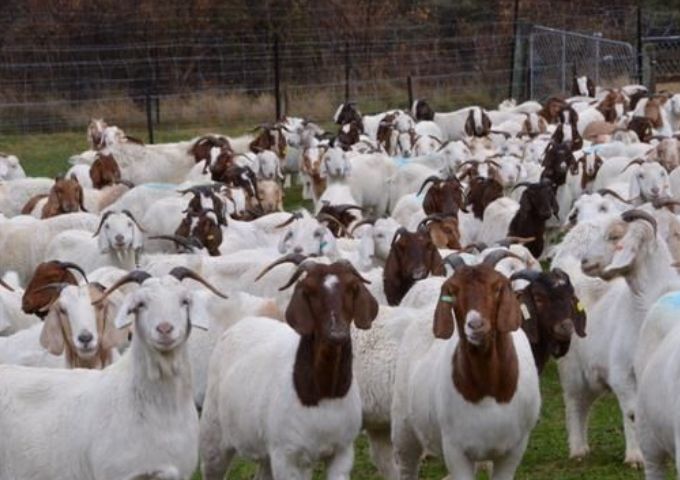
Talking Farming, Sifiso Ndlovu Agbetorwoka
DROUGHT has always been part of farming in our country, but prolonged dry periods, poor grazing conditions and unpredictable rainfall are forcing farmers to rethink how they produce livestock.
For goat farmers in particular, the question is no longer simply, ‘Which goat produces the most but also, which goat can continue producing when conditions become difficult?’
This is the thinking behind this year’s Goat Indaba, which will be held in Masvingo on 30 and 31 October under the theme “Breeding Resilience.”
The theme speaks directly to one of the biggest challenges facing Zimbabwe’s livestock farmers: how do we build goat enterprises that can survive drought while remaining commercially productive?
Genetics matter, but adaptation matters too
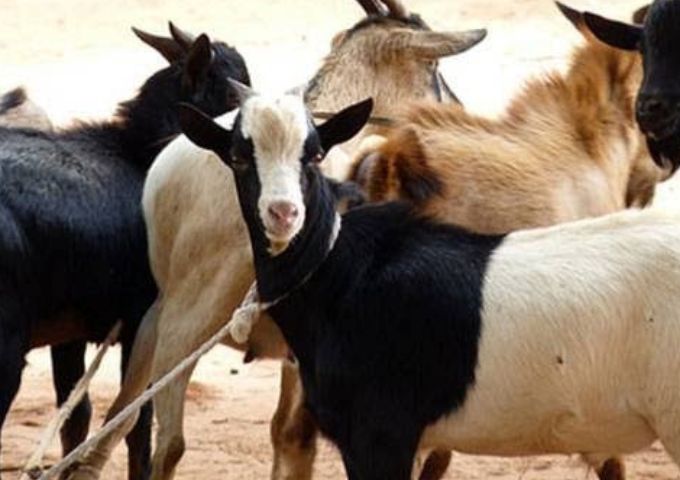
Zimbabwe has a wide range of goat breeds and types, each with different characteristics. Boer goats are well known for their meat production and growth potential, while indigenous breeds such as the Matabele and Mashona goats have developed under local conditions over many generations.
There are also breeds such as the Kalahari Red and Savanna, which have become increasingly popular among commercial breeders because of their meat-production characteristics and ability to perform under extensive conditions.
However, farmers should be careful about assuming that a particular breed will automatically perform well simply because it comes from a dry environment.
The best breeding programme is one that considers the farmer’s environment, available feed, management system and market.
A goat that requires intensive feeding to maintain production may not necessarily be the best animal for a farmer operating in a drought-prone communal or extensive farming system.
This is where indigenous genetics can be extremely valuable. Rather than viewing indigenous goats only as a traditional type of livestock, farmers should recognise the traits they bring to a breeding programme: hardiness, adaptation, foraging ability, reproductive performance and survival under local conditions.
Crossbreeding can also play an important role when it is done deliberately. The objective should not simply be to produce a bigger goat. We should be asking whether the resulting animal can survive, reproduce and put meat on its frame using the resources available to the farmer.
Drought preparation starts before the drought
One of the biggest mistakes farmers make is waiting until grazing has deteriorated before starting drought management.
By then, many animals have already lost body condition, breeding performance has declined and the farmer is forced to make difficult decisions.
Drought management should therefore begin while animals are still in good condition.
Farmers need to monitor body condition, pregnancy status, pasture availability and herd numbers. Decisions about which animals to retain, sell or cull should be made before the farm reaches crisis point.
Nutrition is equally important.
A drought does not necessarily mean that every goat must receive expensive commercial feed. Farmers should explore locally available feed resources, crop residues, browse, hay and other appropriate supplementary feeds while maintaining proper mineral and protein nutrition.
Most importantly, supplementation should be planned rather than reactive.
Health and nutrition go together
A poorly nourished goat is also more vulnerable to disease.
During difficult seasons, farmers must pay particular attention to parasite control, vaccination programmes, access to clean water and general herd health.
However, indiscriminate use of dewormers is not a sustainable strategy. Farmers need to monitor animals and use appropriate methods to identify those requiring treatment.
The same principle applies to nutrition. Not every goat in the herd has the same nutritional requirement. Pregnant does, lactating does, growing kids, weaners and breeding bucks require different levels of attention.
Good records can help farmers identify which animals are performing and which are consuming resources without contributing sufficiently to the enterprise.
We must breed for the environment we actually have
Perhaps the most important lesson from our changing climate is that farmers must stop breeding purely for appearance.
A large-framed animal may look impressive, but if it cannot maintain condition, reproduce or survive when feed becomes scarce, its economic value to an extensive farmer may be limited.
We need to place greater emphasis on functional traits.
Can the doe conceive and kid regularly?
Can she raise her kids successfully?
Can the offspring survive?
Can the animal maintain reasonable body condition under local conditions?
Can it walk long distances in search of browse and water?
And, importantly, can the animal generate a profit?
These are the questions that should increasingly influence our breeding decisions.
Building a resilient industry
The future of Zimbabwe’s goat industry will depend not only on individual farmers but also on our willingness to share knowledge, improve genetics and learn from one another.
The Goat Indaba in Masvingo provides an opportunity for farmers, breeders, researchers, veterinary professionals and other stakeholders to have these conversations.
The focus should not simply be on which breed is “best”. There is no single goat breed that will be perfect for every farmer and every environment.
Instead, we should be asking how different genetics, nutrition, health management and production systems can be combined to create enterprises that remain productive when conditions become difficult.
Breeding resilience means breeding animals that can survive, reproduce and produce within the environment we have — not the environment we wish we had.
For Zimbabwe’s goat farmers, that may be one of the most important breeding decisions we make in the years ahead.
Goat farmers’ take-away
1. Breed for your environment, not just appearance. A productive goat must be able to survive and reproduce under the conditions in which it is kept.
2. Prepare for drought before it arrives. Monitor body condition, grazing, water, herd numbers and feed resources early.
3. Indigenous genetics have value. Hardiness, adaptability, foraging ability and reproductive performance are important traits.
4. Crossbreeding must have a purpose. Do not cross breeds simply to produce a bigger animal. Have a clear production and market objective.
5. Nutrition and health work together. A well-nourished goat is better positioned to withstand disease and environmental stress.
6. Keep records and select your best animals. Breeding decisions should be based on performance, not only on looks or pedigree.
7. Resilience is a breeding goal. The ultimate question is not simply how much a goat can produce in a good year, but how well it can continue producing when the season turns against us.
n Sifiso Ndlovu Agbetorwoka is the Director of Bulembe Livestock Centre Plot 20, Fort Rixon, Insiza District, Matabeleland South, Email: [email protected] or WhatsApp: +263775369910.