malvernmugadzikwa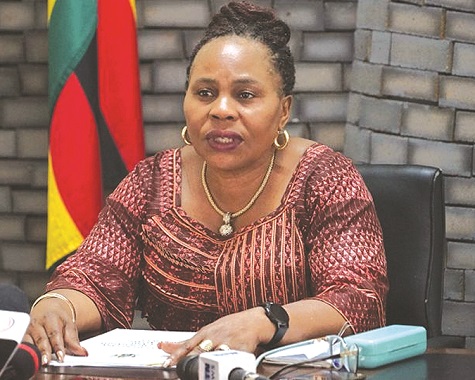
Lovemore Chikova in JOHANNESBURG, South Africa
BRICS is the best foot forward for Africa, and especially Zimbabwe, considering that the realisation of the country’s dreams has been made possible through relationships it has with countries that are part of the grouping.
This was said by Information, Publicity and Broadcasting Services Minister Monica Mutsvangwa while addressing the Sixth BRICS Media Forum in Johannesburg, South Africa, yesterday.
The forum was attended by media practitioners from countries that form BRICS — Brazil, Russia, India, China and South Africa — and several of their colleagues from various African countries.
The forum comes ahead of the 15th BRICS Summit, which starts on Tuesday in Johannesburg.
BRICS, Minister Mutsvangwa said, should continue to expand because of the imperative of extricating the Global South from the clutches of predatory trade systems.
“We must exhaust all avenues for creating lasting bonds,” she said.
“The prospects of accelerating growth under BRICS are bright and remain the most promising alternative route through which we can attain the vision of a prosperous Africa.
“Zimbabwe is seeking to deepen ties with each of the BRICS member countries as presently composed.”
Minister Mutsvangwa was recently at the Zim Ministerial Gala, which culminated in the True Zimbabwe African Journalists Tour that was mostly subscribed by top-billing South African media practitioners and celebrities.
“This engagement boldly affirmed the collegial diplomatic ties between Harare and Pretoria,” she said.
With Russia, a joint memorandum of understanding was signed in mass media at the just-ended Russia-Africa Summit.
“I allude to these most recent trails of diplomatic initiatives to substantiate Zimbabwe’s proactive commitment to strengthening exchanges optimal growth. This is informed by the Second Republic’s engagement and re-engagement policy, which is anchored in consolidating the cordial relations we have with our friends, including those under the BRICS multilateral conglomerate, namely, Brazil, Russia, India and our dear neighbour South Africa.
“I am happy to reproclaim to you all that under the astute diplomatic genius of His Excellency, President Cde Dr Emmerson Dambudzo Mnangagwa, Zimbabwe is realigning her existential interests to those of progressive global political economy giants.”
Minister Mutsvangwa said the refurbishment of the Robert Gabriel Mugabe International Airport was a dividend from the relationship with China.
The victory recorded by Zimbabwe against Covid-19 largely owed to the support received from China and Russia, while the growth in the pharmaceutical industry was a result of good relations with India, she said.
In the same vein, the growth of Zimbabwe’s textile industry could not be discussed in isolation of trade with Brazil.
The media in developing countries, she added, had to play a big role in challenging stereotypes being imposed on their countries by the Western media.
“Our nations must know each other and the media has a franchising effect to that cause,” she said.
“The media helps to curate the interwoven connections of our cultures, politics and economies. In the SADC, we share a political soul that shapes the values of economic integration; BRICS forms that benchmark of a shared economic future.
“It will be recalled that the Third World is designated as ‘developing’ specifically on account of the oppressive global order that has inhibited genuine economic independence. Such stereotypes and framings are media discursive outputs. Inversely, they invite a new telling of our story and reimagination of the Global South, and the media is the relevant driver to that agenda.”
Minister Mutsvangwa said this year’s edition of the BRICS Media Forum was reigniting the Global South’s media solidarity against the monopoly of linear imperialist narratives.
She commended the theme of the forum, “BRICS and Africa: Strengthening Media Dialogue for a Shared and Unbiased Future”, which she said offered a rethink on the oligopoly fixations of power.
“It re-emphasises the very existence of BRICS as an emerging multilateral alternative that seeks to humanise politics and give incentive to reciprocal multilateralism.”
Minister Mutsvangwa bemoaned the negative effects of the illegal and unilateral sanctions imposed on Zimbabwe for the past 23 years by the United States.
The BRICS Media Forum was launched in 2015 at the initiative of Xinhua News Agency of China, in partnership with leading media outlets in Brazil, Russia, India and South Africa.
Over the past eight years, the BRICS media have made full use of this platform to promote exchanges, mutual learning, practical cooperation and common development.


 Online Reporter