Online Reporter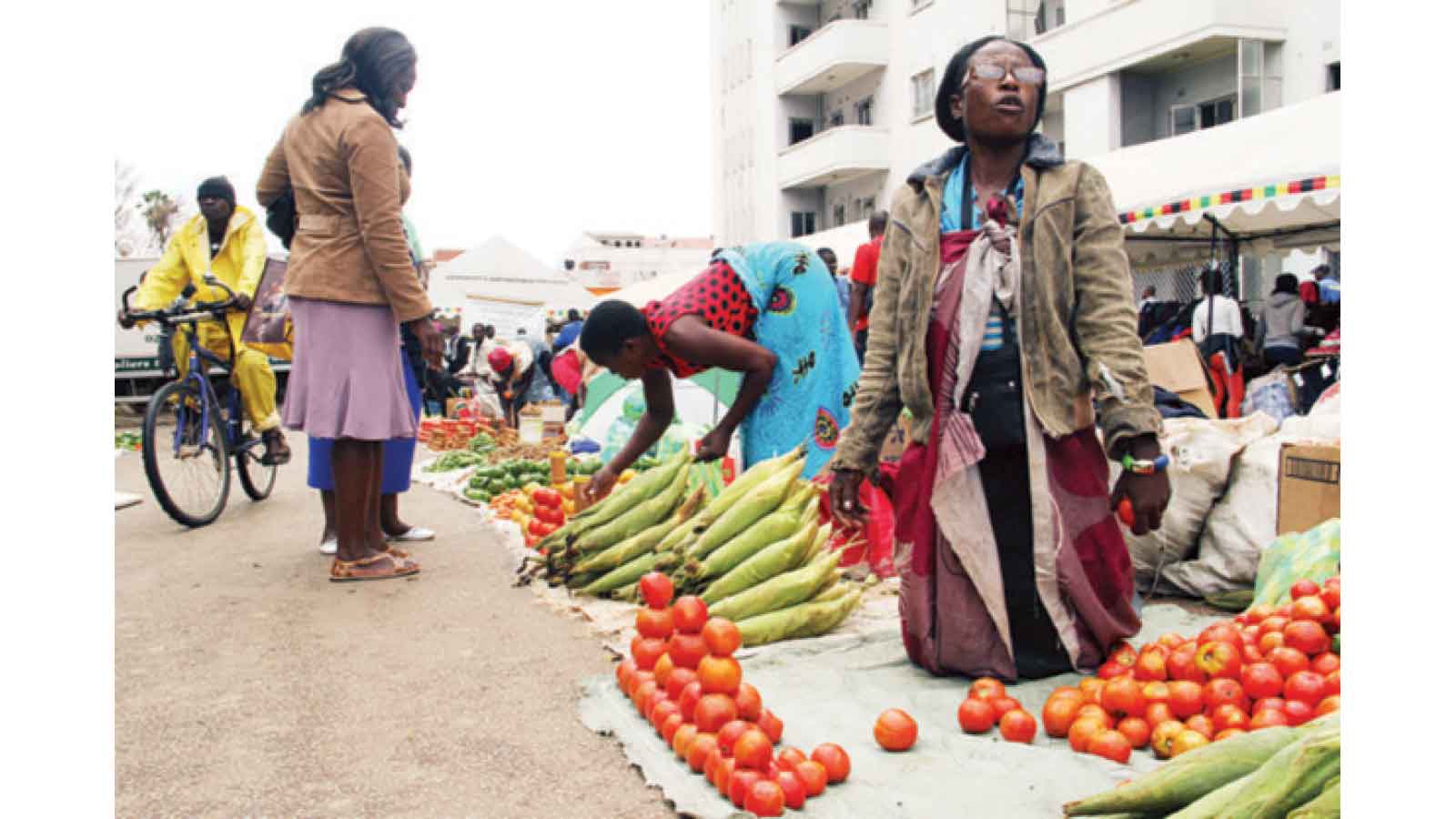
Rumbidzayi Zinyuke-Health Buzz
At 3am, while much of the city is still asleep, women are already on the move to Mbare Musika. Wrapped warmly against the early morning chill, they navigate the dark streets to buy vegetables and fruits for resale.
By sunrise, they are back in their neighbourhoods, arranging tomatoes, covo and onions on makeshift tables, calculating margins that are often painfully small. For many, this daily ritual is not just about entrepreneurship, it is about survival. After all, school fees must be paid, rent settled, and food placed on the table.
After hours of vending, these same women return home to cook, clean and care for children and the rest of the family.
If illness strikes in the family, they are the first responders. If drought pushes food prices up, they stretch meals to feed everyone. Their resilience is extraordinary, yet it is built on navigating systems that often disadvantage them.
Across the African continent, women carry the dual burden of economic provider and primary caregiver, frequently without adequate support structures.
This lived reality provides a powerful lens through which to view International Women’s Month, which began yesterday as a global celebration of women’s social, economic, cultural and political achievements.
The 2026 focus is on the disparities being felt in healthcare, climate and the economy, recognising that these three spheres intersect in ways that shape women’s everyday experiences.
Healthcare sits at the heart of women’s wellbeing and, by extension, national development. Before discussions of economic opportunity or climate resilience can bear fruit, women must first survive childbirth, access essential medicines, and receive preventive care.
Globally, progress has been made in reducing maternal mortality, yet far too many women, particularly in low- and middle-income countries, still face life-threatening complications during pregnancy and delivery.
Access to sexual and reproductive health services remains uneven, and gender-based violence continues to leave both physical and psychological scars.
Governments and development partners have consistently emphasised universal health coverage as a pathway to equity. However, universal coverage must be gender-responsive to be meaningful.
User fees, long travel distances to clinics, and shortages of skilled health personnel disproportionately deter women from seeking care. In many communities, women delay treatment for themselves while prioritising children or spouses, often worsening preventable conditions.
Addressing healthcare disparities globally requires sustained investment in primary healthcare systems. Governments must allocate adequate budgets to maternal health, cancer screening and mental health services.
Financing mechanisms can also prioritise women’s health programmes, ensuring that funding commitments translate into accessible services on the ground.
Locally, strengthening rural clinics, expanding community health worker programmes and guaranteeing consistent supplies of essential medicines are critical. Integrating screening and support for gender-based violence survivors into primary healthcare settings can offer a lifeline to women who might otherwise suffer in silence.
Digital health innovations, from telemedicine consultations to mobile appointment reminders, which Zimbabwe has begum moving towards, can also bridge access gaps, particularly for women in remote areas.
Economic inequality, the second pillar of this year’s focus, is intricately linked to health outcomes. A woman who earns a stable income is more likely to afford nutritious food, transport to clinics and school fees for her children.
Yet women remain overrepresented in informal and low-paying sectors, with limited social protection. The traders who rise at 3am to buy produce at Mbare often operate without health insurance, pension contributions or affordable loans to boost those businesses.
Globally, closing the gender pay gap demands enforcement of equal pay legislation and stronger labour protections. Social protection systems such as maternity benefits and health insurance must be robust enough to cushion women during economic shocks, whether triggered by pandemics or inflation.
At national and local levels, women’s economic empowerment requires deliberate policy shifts. Informal traders need secure vending spaces, access to clean water and sanitation facilities, and inclusion in digital financial ecosystems. Skills development initiatives should target women for participation in emerging sectors such as renewable energy and technology, positioning them not only as market vendors but as innovators and entrepreneurs in high-growth industries.
Thirdly, climate disparity compounds both health and economic vulnerabilities. When drought strikes, smallholder farmers face crop losses that threaten household food security. When floods contaminate water sources, the burden of caring for sick family members often falls on women.
Climate change intensifies vector-borne diseases and heat-related illnesses, placing additional strain on already stretched health systems.
Under global frameworks and agreements such as the United Nations Framework Convention on Climate Change, countries have committed to adaptation and mitigation strategies. Yet gender considerations are not always systematically integrated into climate financing and planning.
Women must be recognised not merely as victims of climate shocks but as agents of change with invaluable local knowledge.
Globally, gender-responsive climate financing can support women-led adaptation projects, from water harvesting schemes to sustainable agriculture initiatives. Access to climate-smart technologies and early warning systems should prioritise women farmers.
Disaster preparedness committees in various communities must include women in leadership roles, ensuring response plans reflect the realities of care-giving and household management.
It is clear that healthcare, economic empowerment and climate resilience are not isolated silos. They form a web of interdependence. A healthy woman is better positioned to participate productively in the economy. A stable income enables investment in climate adaptation measures. Effective climate strategies reduce disease burdens and protect livelihoods.
Breaking one link weakens the entire chain.
Education and leadership remain the necessary foundations across all three areas.
Ensuring girls’ access to quality education equips the next generation of women with tools to navigate complex global challenges.
Increasing women’s representation in decision-making spaces, from local councils to national parliaments, ensures policies are informed by lived experience. When women who have walked to Mbare at 3am sit at policy tables, discussions about informal trade, healthcare access and climate resilience acquire urgency and authenticity.
International Women’s Month is therefore more than a calendar event. It is a call to interrogate whether global commitments are filtering down to the women who wake before dawn to keep households and economies running.
It is a reminder that celebration must be matched by structural reform.
As the month unfolds, governments, development partners, civil society and communities have an opportunity to align rhetoric with action. Budgets must reflect gender priorities, health systems must place women at the centre, economic policies must dismantle barriers, climate strategies must integrate gender from design to implementation.
For the women across the globe, equality is not an abstract ideal. It is the difference between life and death in childbirth, between profit and loss at the market stall, between resilience and ruin when the rains fail.
Honouring their contributions means confronting disparities head-on and committing to a future where women not only endure but thrive.
Feedback: [email protected]