


 Vusumuzi Dube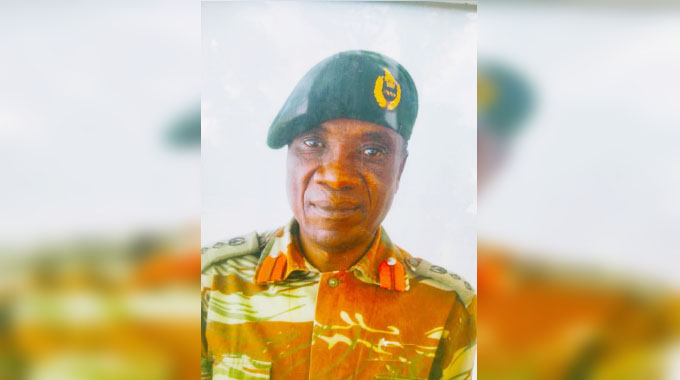
WE continue our interview with Brigadier-General (Rtd) Brave Matavire pseudonym, Cde Ncengani Gumbo. Brig-Gen (Rtd) Matavire during the armed struggle trained at Morogoro in Tanzania, after, which he was sent for further training in the then Soviet Union. On his return to Zambia, Brig-Gen (Rtd) Matavire was deployed to the ZPRA training camps in Zambia where he rose through the ranks to become Chief of Staff (CSO) at Mazowe Training Depot (MDT). In today’s interview with our Assistant Editor Mkhululi Sibanda (MS), Brig-Gen (Rtd) Matavire, the former commander of One Infantry Brigade speaks about his deployment as an instructor and the role he played during that time. Below are excerpts from the interview. Read on . . .
MS: Brig-Gen (Rtd) Matavire, last time you were talking about your return from the Soviet Union. May we resume the conversation from there?
Brig-Gen (Rtd) Matavire: When I returned from training in the Soviet Union I was deployed as an instructor at Mwembeshi Training Camp in Zambia ,where trainees were, in their last phase of training. I was to teach tactics and physical training. The trainees were almost fully trained and apparently very fit. I was also very fresh from training and in tip-top condition which made my job enjoyable. This group had a sizeable number of female cadres about 20 thereabout if my memory serves me right.
When training was winding up, a new training facility, Camp Guerilla Training (CGT) was established further to the east. Most of the instructors were moved to CGT and I remained with this trained group which was now ready for deployment, into
Rhodesia. It was now early 1978 and threats of attacks from Rhodesia were now very frequent.
MS: How did you react to the Rhodesian threats of the attacks?Brig-Gen (Rtd) Matavire: We were then instructed to move north of Chipata Road and establish a base at a place that we called Foxhole because of its shape as it was surrounded by hills.

We established a well-fortified camp with artillery utility and an air defence battery. Air Marshall Moyo was the Air Defence Battery Commander. I was given some trained Battalion commanders like Barnabas Sibanda, now a former Lieutenant-Colonel in the Zimbabwe National Army. Cde Barnabas is the same guy who once tried to design a helicopter in Bulawayo and made headlines in the mid-90s. Other battalion commanders were Silas Chenjerai and Jack Matiwaza. The “Old Man” “Big Josh”, as we affectionately called Dr Joshua Mqabuko Nkomo came and graced the pass-out parade of this group. Thereafter some of the troops were sent to Mlungushi for training into conventional warfare. The enemy, the Rhodesian forces had now intensified bombardments to several of our camps. Myself, Velaphi that is Binoni Benjamin (BB) Dube, Magedlela (Tennyson Thambolenyoka Ndlovu) and Mabhara were tasked to go and reconnoitre a suitable place for a holding camp as well as a training camp towards the Zambian border with Angola. We then established a suitable holding camp at Maheba and a training camp near the town of Solwezi. The training camp was named MTD (Mazowe Training Depot). Women were also brought into the same general area and stationed in a camp called MTD 2.
MS: What was happening to the old camps?
Brig-Gen (Rtd) Matavire: The cadres were being removed from areas near and around Lusaka to Maheba Holding Camp. Some were sent to Angola for training and we took the bulk for training at MTD. I was to be the camp Chief-of-Staff. My camp Commander was Busobenyoka (Cde Hou). We had a team of very professional instructors and our trainees totalled plus or minus 2 000.
MS: What did your role as the Chief of Staff entail?
Brig-Gen (Rtd) Matavire: As the Chief-of-Staff, my duties included among others organising, planning and supervision of the conduct of training in the camp. My other administrative duties included the entire security of the camp.
MS: How was your training manual like?
Brig-Gen (Rtd) Matavire: The training syllabus comprised a wide range of subjects divided into phases as follows:
Phase one: Was predominantly indoctrination and hardening. You will appreciate that our cadres came from varying backgrounds. Some were from schools, some from their homes either in rural areas or towns, some from workplaces that’s different professions and some from as far afield as Wenela in South Africa. Firstly, we had to break them down to the same level. That is what we were doing under Phase One of our training programme. This was achieved by overlapping into phase two.
Phase 2: Is individual training. That is your weapon handling, camouflage and concealment, crawling, rolling with a strong bias on physical fitness.
Phase 3: This was predominantly minor tactics. This encompassed ambushes, booby traps and demolitions.
Phase 4: This phase encompassed mostly training of formed up groups like sections, platoons and up to Battalion operations, endurance marches and survival techniques. After training, we formed the group into battalions. We also received a sizeable number of trained cadres from Libya and we fused them into our group.
The Battalions that we formed were commanded by commanders who had been trained in the Soviet Union. I allocated the first Battalion to Smile Madubeko (now late) and the other commanders were Butholezwe Nkomo, Dresden Nyoka and Mike Tyron to mention but a few. Note, these battalions were based at MTD. During the duration of the training, we were bombed several times. We lost a number of our men. By now, I had risen up in rank notably. It was not a surprise to me to be part of the first group who accompanied Umdala Wethu to Rhodesia on December 24th, 1979 after the announcement of the ceasefire.
MS: You left Kwekwe for the war with with Cde Mzheri, did you by any chance meet during the armed struggle?
Brig-Gen (Rtd) Matavire: Brig-Gen(Rtd) Mzheri was deployed to the ZW House that is the Zimbabwe House in Lusaka in the accounts department and we always met each time I went to Lusaka more frequently so when I was the Chief Of Staff (CSO) at MTD. I frequently went to our HQ Lusaka to give training updates. I could sign for my T and S from his office. You can see, we were reasonably organised.
MS: Then, on being chosen to be in the entourage of Dr Nkomo, what do you attribute that to?
Brig-Gen(Rtd) Matavire: How was I nominated to be on the first group with “Big Josh”? Well I think I really worked hard in whatever I was assigned to do. My policy was always precision and attention to detail. I quickly rose in rank and profile. I quickly became very visible to all and sundry.
Paying attention to detail and precision are some of the attributes of a good soldier.
n To be rounded up next week with Brig-Gen Matavire talking about how they arrived in Harare then Salisbury, accompanying Dr Nkomo and his career in the ZNA.



 Bongani Ndlovu
 Online Reporter