admin
admin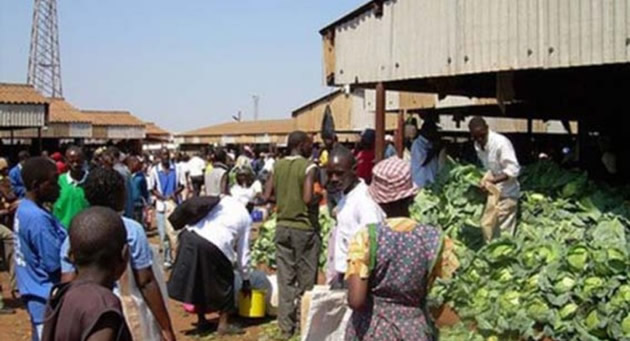
Sarudzai Mupangi Features Writer
Could there be a more apt definition of futility than a bountiful farmer who ends up having nowhere to sell crops to, and the produce goes, literally, back to the dust where they came from after destruction by the elements? Sadly, this is a familiar tale to many farmers in Zimbabwe, especially in the horticulture and small grains sectors as labour, time and inputs go to waste due to the failure by farmers to access markets. There is also a marked lack of value addition and agricultural-centred manufacturing to tap into the primary industry.
While the Agricultural Marketing Authority has achieved much in networking farmers with buyers among other things, some farmers have remained in the dark. They do not know where to sell their produce in case they do not make it to Mbare Musika.
They have not established business relationships with big or serious buyers and they mostly depend on walk-in customers.
Irvine Mutsauki, a farmer in Macheke, says he has had good experiences in farming but once lost two hectares of tomatoes after failing to secure a market for his produce.
“I only started coming to sell at Mbare Musika about a year ago. In my area we used to wait for buyers to come to us. In desperate cases where we did not have enough to pay for transport costs to Harare we would sell to neighbours who would in turn resell our produce at Mbare for better prices,” said Mutsauki.
“There was a time when I lost tomato produce from two hectares of land and it was quite a sad development. We would appreciate it if buyers would come to us.
“It would maximise our profits and we would not be forced to sell after a certain period because of the need to go back home since it is expensive to stay in Harare, getting accommodation and buying food for days on end,” he said.
He wishes there would be many markets such as Mbare around the country.
It has its advantages, too.
“If only markets were decentralised and we had markets in our areas then we would have more influence on the pricing of our goods,” he said.
Victor Nyarugwe of Mutoko said most farmers in his area had mustered the production of quality horticultural goods in large quantities but still no one had considered building a processing plant in the area.
“We should be having companies from Harare coming to small towns to buy our goods. Processing plants need to be established in our areas as this would limit the number of people going into major cities to look for employment,” he told The Herald.
“Agriculture which is the backbone of this country’s economy, should create formal employment for the majority. By centralising most activities in Harare we are limiting ourselves,” said Nyarugwe.
Another farmer, Felistas Kaunye from Maramba, said farmers in her area would appreciate guidance on growing crops that have a wider market and have higher demand. She said every year she has had someone complaining about the “flooding” of commodities on the market thereby reducing the price of the produce.
“This time around people who did cabbages are in trouble; everywhere you look there is cabbage. This is what reduces selling prices.
Farmers would do better with a bit of guidance to avoid such scenarios,” she noted.
Could this innovation come by way of technological advancements?
Knowledge Transfer Africa, an organisation which is stationed at Mbare Musika and in districts around the country, is working towards complementing AMA’s efforts to make farmers’ lives easier by connecting them with buyers.
They run a system of marketing called e-Mkambo, a mobile, physical and web-based market for agriculture and rural development, integrating the use of mobile phones and the internet to share information and knowledge.
Chief executive officer of the organisation Charles Dhewa said they were concerned with ensuring that farmers realise maximum benefits by running their operations like professional business people. He said the electronic system of doing things connected them with buyers and sellers.
“This system was inspired by the need to adapt information and communication technologies to local context and content as an interactive information and knowledge sharing platform for agricultural value chain actors,” said Dhewa.
“We are mostly worried about farmers who are not exposed to the media. They use their instincts to decide on which crops to grow. Our business is to give farmers pointers on what to grow and where to sell for maximum profitability.
“We have since developed a database on the number of farmers who sell at Mbare Musika and what they grow among other details. This has seen us communicating with growers who now come to the market knowing how much their commodity would be sold for.
“Local processors depend on these small-scale farmers for raw materials in their industries. We organise the farmers who then bring their produce and sell to local companies without wasting time.”
Mr Dhewa said about 70 different commodities are sold at Mbare Musika every day. 2 500 traders, transporters and agro-dealers use the market everyday. Some have been doing business at the popular market for the past 20 years.
A farmer makes a minimum of US$200 up to a maximum of US$15 000 per day depending on their operation. The majority makes around US$2 500 to
US$3 000 per day. Mr Dhewa said because of these impressive figures banks should consider loaning small-scale producers as they have the capacity to pay back.
“Some organisations have stepped forward and are giving farmers some form of training so that they formalise their activities and do not spend profits unwisely,” he said.
Mr Dhewa said the decentralisation of markets was a welcome move among smaller farmers who had little excess for sale. Agricultural marketing covers the services involved in moving an agricultural product from the farm to the consumer.
Numerous interconnected activities are involved in doing this, such as planning production, growing and harvesting, grading, packing, transport, storage, agro and food processing, distribution, advertising and sale.
Transporters have also found big business from farmers as they transport their produce to cities on returning they go back with household goods, pumps, roofing sheets among other goods.
Farmers and transporters have urged Members of the National Assembly to ensure that they engage the Ministry of Transport and Infrastructural Development to repair major roads so that they are not cut off and end up losing out because they are in areas that are difficult to access.
- Feedback: [email protected]



 Online Reporter