Online Reporter
Mbulelo Mpofu
THERE is confidence. There is optimism. Then there is the kind of confidence required to launch a reality television show that everyone immediately compares to the Big Brother franchise — while insisting it is something entirely different.
Welcome to Brother in House Zimbabwe Season One, proudly described on its website as Zimbabwe’s biggest reality experience under the National Excellence Awards banner.
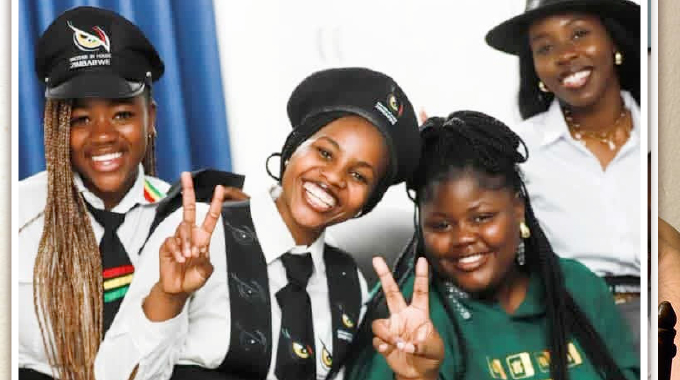
Thirty-five hopeful contestants are battling it out for a US$50 000 grand prize, with viewers voting to determine who survives another week in the house.
If that sounds familiar, that is merely because human nature has been doing the rounds for centuries.
The production has gone to admirable lengths to distinguish itself.
For starters, there is no Diary Room. That would have been far too predictable. Instead, contestants enter the Sacred Room.
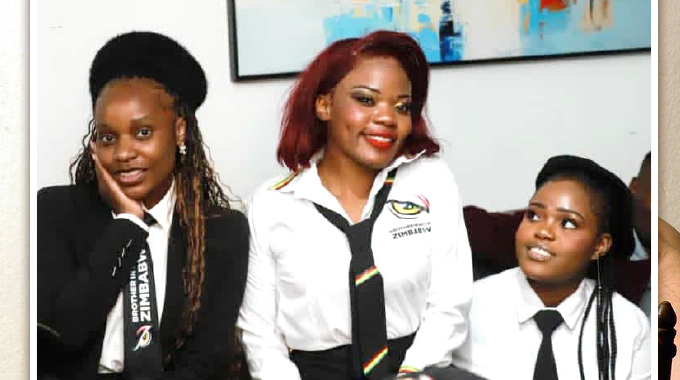
There, they are greeted by Sister in House, whose introduction —“Hi, I’m Sister in House and I will be the sister for you” — has already achieved what every producer dreams of: instant virality.
Whether audiences are laughing with the production or at it remains one of Season One’s biggest cliffhangers.
The Sacred Room also introduces viewers to the show’s most intriguing family dynamics.
Sister in House routinely explains that she cannot protect contestants from Brother in House’s punishments because she must first convince him to show mercy. It is less reality television and more medieval royal court, complete with an unseen ruler dispensing justice through intermediaries.
Then there is Brother in House himself — or perhaps herself.
Unlike the mysterious, omnipresent voice audiences have grown accustomed to elsewhere, Brother in House seems refreshingly. . . guessable.
The voice remains largely unaltered, allowing social media detectives to narrow down the list of suspects before the opening credits have finished rolling.
Mystery, after all, is overrated.
Even the Head of House competition has undergone Zimbabwean localisation.
Why waste precious energy battling through endurance challenges when fellow housemates can simply nominate someone? Efficiency is, after all, the highest form of innovation.
Technically, the production offers audiences another refreshing departure from international norms.
Contestants hold microphones in the Sacred Room instead of wearing discreet wireless ones, creating an immersive experience where viewers occasionally wonder whether they are watching reality television or a community meeting being recorded for posterity.
The audio quality has similarly embraced a minimalist philosophy. Crystal-clear sound has become so mainstream.
Still, credit where it is due. The picture quality is respectable, proving that even humble beginnings deserve high-definition aspirations.
Asked about inevitable comparisons with the global Big Brother franchise, Brother in House spokesperson Ninja 22 remains unapologetically optimistic.
“Brother in House is a Zimbabwean format owned by Zimbabweans,” he said.
“We took inspiration from the same place Big Brother did: human nature under pressure. But the rules, the punishments, the No Drops, the Unprivileged, Sister in House, all original. All ours.”
Fair enough.
After all, humanity invented fire once, but many people now make different brands of braai stands.
On criticism surrounding production quality, Ninja 22 was equally candid.
“Big Brother had 24 years and billions to perfect their house. We had less than two years… We chose not to fake a South African studio or any other studio. We chose to broadcast our humble beginnings… and we are proud that we have started.”
It is difficult to argue with that philosophy. Every successful franchise has an origin story, and no one remembers the polished finale without first surviving the awkward pilot episode.
The organisers are also confident that this is only the beginning, promising viewers that future seasons will become “better and better”.
As for sponsorship, patience is apparently a virtue.
As for sponsorship, patience is apparently a virtue. Several brands have reportedly come on board but prefer remaining anonymous until everything is in place – a marketing strategy almost as mysterious as Brother in House was meant to be.
Perhaps that is the greatest achievement of Brother in House.
In an entertainment landscape filled with polished productions chasing perfection, Zimbabwe has delivered something far rarer: a reality show comfortable enough to let audiences witness its growing pains in real time.
Whether viewers tune in to cheer, critique or collect material for the next viral meme, one thing is undeniable.
Everyone is talking about it.
According to a viewer, the programme, hosted by veteran broadcaster, Oscar Pambuka and airing on ZBCtv and live-streamed on YouTube sees contestants welcomed to the house like, “someone is calling out names at the passport office.”
And in reality television, conversation has always been the first prize.