Online Reporter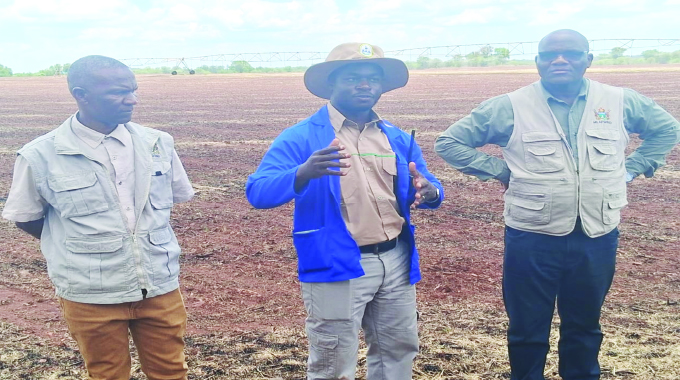
Raymond Jaravaza, [email protected]
SITUATED in Bubi District, Matabeleland North Province, an area that lies in the agro-ecological region IV, characterised by semi-arid conditions, Mary Allen Farm has defied the odds — leading from the front in high production of soya beans in the country.
While the region is best suitable for livestock production, such as cattle ranching and goat rearing, the Bubi farm has demonstrated that determination can generate good cash crop yields.
Soya bean is a critical component in the livestock industry through the production of stock feed, and is also a source of cooking oil for human consumption and nutrition in households. Farmers who grow soya beans view the crop as a key component in crop rotation systems that improve soil fertility.
Mary Allen Farm squared up against 23 other commercial farms around the country, famed for soya bean production, and was awarded the top grower of the crop as adjudicated by the Zimbabwe Agricultural Society (ZAS) in the Best Soya Bean category this year.
The sprawling farm, also known for top quality beef and dairy cattle rearing, as well as winter wheat production, among other crops such as maize for green mealies and silage production, harvested an average of 3,7 tonnes per hectare from 188 hectares that was planted end of last year.
Yesterday, officials from ZAS, led by chief executive officer Mr Rufaro Gunundu, Matabeleland North director for the Agricultural Technical and Extension Services (Agritex), the Agritex Director for Training and Information, Mr Sibangilizwe Dlodlo, officials from the Ministry of Lands, Agriculture, Fisheries, Water and Rural Development and villagers gathered in Bubi to celebrate Mary Allen Farm’s achievement.
The farm was awarded a certificate and handed a tractor for beating other farms around the country for the coveted award.
Assistant manager Mr Bongani Nkwankwa led the gathering on a tour of the farm and a 20 hectare piece of land where another soya bean crop was planted early this month.
“Our yield for the soya bean that was harvested was 3,7 tonnes per hectare and we sell the produce mainly to National Foods (Limited) who are the primary buyer of our crop. Soya Bean has no residual products that we bale or return for our cattle, so we just harvest and sell it,” he said.
“In the past, we have reached a maximum of 4.8 tonnes per hectare and we are pushing for five tonnes with the right conditions, such as weather and other environmental factors permitting,” said Mr Nkwankwa.
“It’s a good feeling to be recognized as the best farm in soya bean production in the country, but it’s important that when we grow the crop, we are not competing with anyone; it’s about doing our best and getting a good yield at the end of the season.
“Resilience, dedication and investing most of our time into what we do here at Mary Allen are ingredients that I think make us stand apart from other farms,” said Mr Nkwankwa.
In a speech read on his behalf by Mr Dlodlo, Permanent Secretary in the Ministry of Lands, Agriculture, Fisheries, Water and Rural Development, Professor Obert Jiri said Mary Allen’s soya bean production success story is a testament to what is possible when farmers in drier regions turn to innovation for maximum crop production.
“Mary Allen Farm has demonstrated that with the right knowledge, determination and application of modern farming techniques, our land can yield bountifully,” he said.
“The farm set a benchmark in soya bean production in drier regions. Soya bean is a cornerstone of our livestock industry through the production of stock feeds, a vital source of cooking oil for our households and a key component in crop rotation systems that improve soil fertility.
“Recognising this, Government, through the Agriculture Food Systems and Rural Transformation Strategy (AFSRTS), has placed a strong emphasis on increasing the production of strategic crops like soya bean,” said Prof Jiri.
He said the country has set a national target to achieve soya bean production of 291,000 metric tonnes with a gross production value of US$328 million by the year 2030.
“This goal is a direct reflection of AFSRTS’s key pillars on Food Security and Food Sovereignty. However, we are acutely aware of the challenges as our current national production stands at approximately 71,000 metric tonnes, which is only about 30 percent of the national requirement of 240,000 metric tonnes,” said Prof Jiri.
“To bridge this gap, the Government has initiated robust programmes such as the Presidential Input Support Scheme, where soya bean is one of the key crops for which inputs are distributed,” he said.
The Government, Prof Jiri said, is encouraged to see development partners and non-governmental organisations that support soya bean farmers, particularly in improving access to hybrid seeds and the provision of critical inoculants.
ZAS CEO Mr Gunundu said the organisation stands proud of its legacy of promoting agricultural development, a role that ZAS started in 1895.
“Over the years, we have evolved from solely an organiser of exhibitions to becoming a strategic facilitator of agricultural development, advancing the cause of agriculture and improving rural livelihoods while connecting farmers to innovation and opportunity,” said Mr Gunundu.
“Our mandate is to provide a platform that drives growth across all agricultural value chains and ensures that farming remains at the heart of Zimbabwe’s economic recovery and prosperity.
“ZAS continues to enjoy a strong and productive partnership with the Ministry of Lands, Agriculture, Fisheries, Water and Rural Development and through this collaboration, we are jointly working to strengthen farmer capacity, expand market access and promote the adoption of improved technologies and climate-smart practices.”