Online Reporter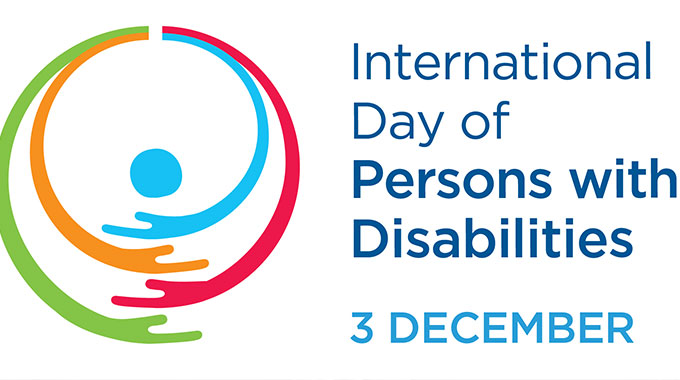
Disability Issues
Dr Christine Peta
ON December 3, Zimbabwe will join the rest of the world in commemorating the International Day of Persons with Disabilities, proclaimed by the United Nations General Assembly in 1992 to promote the rights and well-being of persons with disabilities across all spheres of society.
Each year, the day is observed under a specific theme that reflects global priorities.
This year’s theme is “Fostering Disability-Inclusive Societies for Advancing Social Progress”. The focus is on building societies that fully include persons with disabilities, emphasising that genuine social progress is impossible without inclusion. More than 1,3 billion people worldwide are persons with disabilities — about 16 percent of the global population or one in every six people.
According to the United Nations, persons with disabilities and their households often face significant challenges and barriers in achieving social development goals.
Globally, persons with disabilities are more likely to live in poverty due to persistent discrimination in education and employment. They often receive lower wages and are disproportionately represented in the informal sector. Social protection systems around the world remain uneven and frequently inadequate, especially when additional disability-related costs are considered.
Many persons with disabilities continue to experience care and support systems that undermine their dignity, autonomy and agency. The World Health Organisation notes that some persons with disabilities die up to 20 years earlier than those without disabilities. They also face twice the risk of developing conditions such as depression, asthma, diabetes, stroke, obesity or poor oral health. Inclusion is, therefore, not only a human rights imperative but also essential for sustainable development.
Without addressing disability rights, societies cannot achieve the UN Sustainable Development Goals, whose guiding principle is to “leave no one behind”.
The International Day of Persons with Disabilities serves several important purposes.
It raises global awareness about the challenges faced by persons with disabilities, promotes disability rights and calls for stronger policies and legal protections. It also recognises the achievements and contributions of persons with disabilities in all fields.
The day brings together governments, non-governmental organisations, organisations of persons with disabilities and communities to advance inclusion.
The 2025 theme underscores the need to build societies where persons with disabilities are not marginalised but actively included. This requires greater attention to accessibility, ensuring that physical, digital and social environments are free of barriers.
It also calls for the meaningful participation of persons with disabilities in all areas of life, including decision-making processes.
Addressing systemic inequalities in education, employment and healthcare remains critical.
Way forward
To make disability-inclusive societies a reality, several key steps are essential:
Strengthening legislation: Governments must adopt and enforce disability rights laws aligned with the UN Convention on the Rights of Persons with Disabilities.
Inclusive education: Schools and universities should provide accessible learning environments and materials.
Reduce poverty and dependency.
Accessible healthcare: Health services must be adapted to meet diverse needs, including mental health support.
Technology and innovation: Assistive technologies and accessible digital platforms can significantly enhance participation and independence.
The International Day of Persons with Disabilities is more than a symbolic observance; it is a reminder that inclusion is the foundation of social progress. By fostering disability-inclusive societies, the world can move closer to achieving equality, dignity and opportunity for all.
The 2025 theme reinforces the idea that persons with disabilities are not passive recipients of assistance but active contributors to development. Recognising their rights and potential is essential to building a just, equitable and sustainable future.
Dr Christine Peta is a disability, public health, policy, international development and research expert. She can be contacted on: [email protected]