admin
admin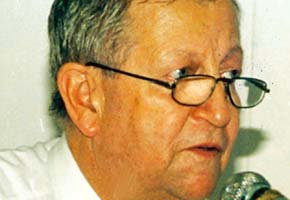
as Finance Minister Tendai Biti has in the past failed to disburse money allocated especially to Matabeleland projects.
Speaking during a budget review meeting at Bulawayo Club yesterday, the residents said huge budget allocations meant nothing as long as the money was not disbursed.
They said for the past three years the Ministry of Finance has not disbursed the full amounts allocated for projects in the region.
“We need to evaluate how the previous budget performed instead of getting excited with the allocations,” said a participant who identified himself as Mr Mlalazi.
“A true budget is not all about allocations but the real disbursement of funds. We have seen huge allocations in the past but the funds have not been disbursed.”
The participants challenged the Government to come up with concrete mechanisms to ensure amounts allocated are quickly disbursed so that they can be used. The residents said it was also important to monitor disbursement of funds to ensure they are not abused.
They made reference to the Constituency Development Fund (CDF), which has been marred by reports of gross abuse by Members of the House of Assembly.
“It does not make sense for Government to continue allocating funds to sectors that are not accounting for such funds as what happened to CDF,” said one of the participants from the floor.
“Minister Biti should ensure that all the funds allocated to Ministries are accounted for and used for their intended purpose instead of enriching individuals at the expense of poor tax payers.”
The residents expressed concern over what they called lack of sufficient funding for outstanding water projects in Matabeleland region.
“We have been hearing the names of these projects in every budget but there is no significant change in their allocations every year.
“Tokwe-Mukorsi Dam is always receiving the lion’s share of the budget yet Gwayi-Shangani Dam is allocated very little amounts every year. This is despite the under-development of Matabeleland and the persistent water problems that have affected Bulawayo for many decades,” said another participant.
The participants demanded that an audit be conducted every year to show how the previous budget performed.
They said this would promote transparency and accountability and ensure that corrupt Government officials were brought to book.
Small-scale businesses complained over the proposal to introduce tax to the informal sector, saying the Government was not being reasonable in doing so.
They said most of those in the informal sector were poor people who lost their jobs and questioned the rationale of hunting them down to tax the little they were realising from their sweat.
Workers complained that the increase of the tax-free threshold from $225 to $250 was not going to bring relief to workers as the figure meant people earning below the Poverty Datum Line will continue to pay tax.
Some said the $20 million allocated towards employment creation was too little given the number of unemployed in the country.
Speaking at the same occasion Bulawayo businessman and renowned economic commentator Dr Eric Bloch said this year’s budget was a mixed bag of positives and negatives.
He applauded the recognition of the importance of agriculture and the proposal to introduce a three-year funding scheme as a positive step.
He also commended the huge allocations to education and health sectors, saying these formed one of the priority areas as they affected people on a daily basis.
However, Dr Bloch said it was shocking that Minister Biti decided to increase the tax free threshold to just $250 when a majority were earning far below the PDL which is estimated to be at $534 for a family of six.
He said the tax-free threshold should at least be $300 to increase disposable income for low-income earners.
“People need to be allowed to have a reasonable spending power which would in turn increase volume of business and support local businesses and create job opportunities,” said Dr Bloch.
He said Minister Biti, instead of complaining of little returns from mining, should incentivise the sector to support its growth.
Dr Bloch said huge levies on mining companies destroyed their potential and discouraged investment into the sector.
He said there was a need for Government to address the issue of ghost workers as part of efforts towards improving the civil service wage bill.
Turning to the Matabeleland projects debate, he said Bulawayo’s water situation was not as biting as it was in the past years.
Dr Bloch urged investors to come to Bulawayo and open businesses, saying the city was a favourable business destination.
The meeting was attended by members of the public, civic society groups, academics and local businesspeople.



 Online Reporter