Online Reporter
Vusumuzi Dube, Deputy Radar Editor
THE amount of money that Bulawayo City Council (BCC) is owed by residents and businesses surged by 83 percent in 2025, from ZiG1,2 billion in January to ZiG2,2 billion in December, leaving a deepening financial pressure on the local authority even as debt collection efforts improved.
The local authority also revealed that by December 2025, total outstanding US dollar-denominated consumer debt stood at US$133,8 million.
The spike in unpaid bills comes at a time when the council is also struggling to implement its Credit Control and Debt Management Policy due to limited resources and persistent challenges within its billing system.
The policy, approved in February 2020, was designed to ensure the timely and cost-effective collection of all revenue owed to the municipality.
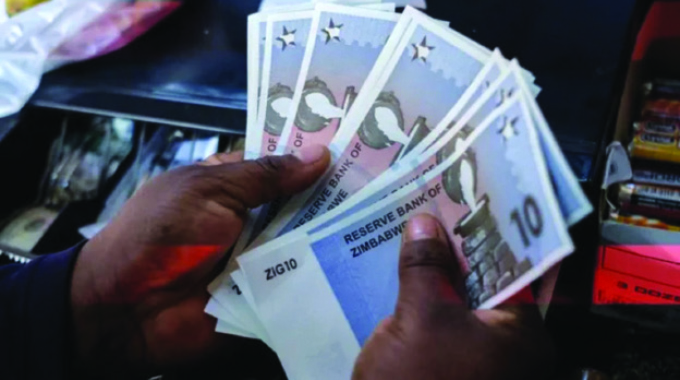
According to the latest council report, the city’s debt stock grew by ZiG1 billion during 2025, although the pace of the increase began slowing towards the end of the year.
“While the debt stock continues to rise, the rate of increase has moderated, from approximately 10 percent in February 2025 to two percent by December 2025, indicating a slowing growth trend.
“Collection efficiency improved steadily from 55 percent in January 2025 to 73 percent by November 2025. The slowdown in the months of July and August 2025 was due to challenges experienced in the billing ecosystem. The improvement in collection efficiency from 55 percent at the beginning of the year to 73 percent at the end of the year is attributed to debt recovery measures instituted by council departments,” reads the report.
“Of the 183 404 billed accounts, 147 440 accounts (approximately 80 percent) are in arrears exceeding 30 days, indicating a high level of payment delinquency and underscoring the urgency for enhanced debt recovery interventions.
“The average debt per account in low density residential areas is above US$1 000. Of the top 10 districts owing the most, high density areas constitute five districts out of 10, low density areas constitute three districts with commerce and industry taking the remainder,” reads the report.
The Central Business District (CBD) tops the list of debtors, owing US$21,1 million, followed by the industrial area with US$20,2 million.
Other districts with high arrears include Mahatshula, Khumalo, Selbourne Park and Parklands (US$13,6 million), Pumula (US$7,2 million), Mpopoma (US$7,1 million), Southern Eastern district (US$7,1 million), Nkulumane (US$6,6 million), Cowdray Park (US$6,3 million), Famona (US$5,6 million) and Mzilikazi, which completes the top 10 with US$5 million.
Meanwhile, council workers have demanded a salary increase and an adjustment to their Cost of Living Allowances (Cola).
Through their representative bodies — the Zimbabwe Urban Workers Council union (ZUWCU) and the Pharmaceuticals and Medical Allied Workers union (Pamawu) — employees submitted their demands for the first quarter of 2026.
ZUWCU requested a 67 percent increase in basic salaries for its members and a 100 percent increase in Cola.
Pamawu proposed that its members’ basic salaries be increased from US$233 to US$600, while their Cola be raised from US$192 to US$300.
However, according to a confidential council report, the local authority said it was currently unable to meet the demands due to financial constraints.
The proposals were submitted to the council’s Human Capital Director, Mr Makhosi Tshalebwa, despite four previous requests by workers going unanswered.
“The financial services department notes and appreciates the structured and detailed manner in which the two unions presented their submissions. These proposals underscore the genuine concerns of employees arising from the prevailing economic conditions, which the department fully recognises.
“Notwithstanding the above, financial services regrets to advise that it is currently unable to accede to the requested adjustments. The operating environment remains severely constrained by limited and unstable revenue inflows, escalating operational costs and the absence of commensurate tariff reviews to adequately support the budget,” reads the report.
The council also disclosed that in recent months it has been facing persistent challenges in meeting its wage bill obligations on time.
“The department remains committed to constructive engagement with all stakeholders and will continue to monitor the economic and financial environment, with a view to revisiting these matters when circumstances permit.
“Given council’s prevailing financial performance as alluded to by the Finance Director, it was advisable to defer collective bargaining for the first quarter 2026 pending both further assessment of the organisation’s financial performance as well as approval of council’s Annual Budget Estimates for 2026 by the parent ministry in the near future,” reads the report.
During deliberations on the matter, councillors suggested that there was a need to set a timeline for when the two parties would convene for collective bargaining. They also sought clarity on how projected revenue inflows would be quantified.
“In response, the Human Capital Director explained that the Financial Services Department had devised several strategies to boost revenue inflows. Notable improvements in revenue collection were anticipated.
“The Finance Director further explained that the strategies that had been developed to enhance revenue inflows included the installation of prepaid water meters, which would ensure that consumers paid for services before use,” reads the report.