admin
admin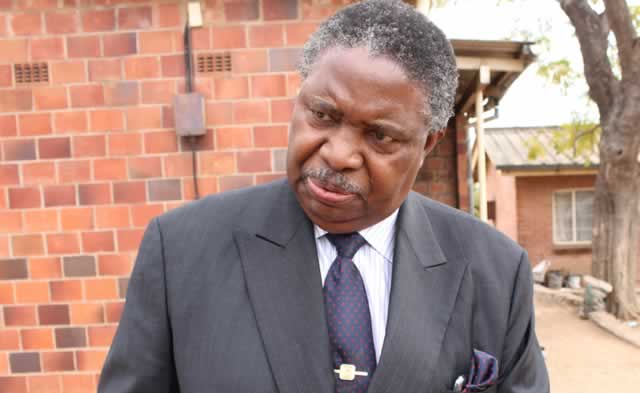
Vincent Gono, Features editor
THE tottering demise of the industry in Bulawayo whose signs started showing almost a decade ago got into quick motion in the past few years following the dollarisation of the national economy.
The shift from local currency to use of foreign currency left many companies labouring under heavy depth and swimming in the murky waters of bank loans that they could no longer service. In the years that followed, some of the companies were placed under judiciary management and employees were affected in a great way.
The city lost its previous lustre as the country’s industrial hub and the name Kontuthu ziyathunqa, loosely translated to mean the smoke that ascends, also lost its meaning as the city became a mere shadow of its former glorious self.
But the recent visit and tour of the city’s industries by one of the country’s second in command – Vice-President Cde Phelekezela Mphoko is likely going to see some companies in Bulawayo coming back to life. Sunday News is reliably informed that the tour was not only a show of Government’s commitment to revive Bulawayo but was going see some strategic companies receiving funding for recapitalisation to get the city to its splendid industrial opulence that was characterised by better standards of its people’s lives.
Yes, there was life in Bulawayo and people used to come from as far afield as Mutare, Mashonaland Provinces and everywhere in the country intent on seeking employment in the bustling industry of the city. Bulawayo was “the Johannesburg of Zimbabwe” where even those of Zambian, Malawian and even Mozambican origin used to work.
In short it was a city that was full of life where smoke could be seen being released into space as one approaches the city from any direction, a sign of the booming industry that never went to sleep. And the city was strategically positioned to supply much of its products to the regional markets through a vibrant rail and road transport system, something that explains why the country’s only railway company NRZ was and is still headquartered in Bulawayo.
It being in the natural ecological Region Five where there is no much rainfall for intensive crop production, Bulawayo and its surrounding environs became an area well known for cattle ranching where meat and its products were fairly cheap and of the highest quality.
The country and specifically Bulawayo became a net exporter of the best grade of meat to the EU countries and even the America earning the country the much needed foreign currency and it further explains the state-of-the-art abattoir at the Cold Storage Company (CSC) whose headquarters are also in the city.
That of-course was before the West conspired against Zimbabwe in the sanctions regime that further sank the country’s economy into oblivion.
The city had an expansive industrial area in Belmont, Kelvin, Thorngrove and other areas and they were expanding at a rate that was likely going to see the city being viewed as a competitive industrial hub of Southern Africa.
The infrastructure in the industrial areas was state-of-the-art. The clothing industry was booming and the steel and engineering industry was flourishing, so was the manufacturing industry with companies as Gold Star Sugar, Dunlop, United Refineries, David Whitehead Textiles, Archer Clothing, Merlin industries, Ascot Clothing, Datlabs, Kango and many others.
The long and short of it all is to say the city had the capacity to sustain itself as it had an overwhelming investment potential. It needed no deliberate policy to provide a red carpet to investors as they were easily attracted by the market, its unique business ambience and the lack of red tape that provided an easy and ready environment of doing business.
The transport industry was also vibrant. There were buses that ferried workers to various industrial sites right from the locations during the day and even at night. Termini were built and most of them have been vandalised due to neglect and no one seems to care as they no longer served the purpose as the city’s once lively industrial sites quickly turned into ruins.
The only business that one can talk of now that has taken over the city by storm is the “church industry”. Warehouses where companies used to keep their stock have been converted into church halls while the food industry has somehow lasted the test of the economic weathering that has hit Bulawayo. And the city’s description as the sadza city is just apt as it has just become that.
The busy Lobengula Street is where one can get a wholesome picture of what Bulawayo is now. And most of the people who are now informal traders in the streets selling an assortment of goodies that range from rat and cockroach poison to repackaged amathumbu enkukhu (chicken intestines). They used to work in the industries and the church could not absorb them as most churches are not known to employ but to demand offerings. Yes, offerings from the proceeds of that little business.
And the long and short of it economically is that as more and more people are forced out of formal employment, Government is affected in a big way as it is left with a little base from where to collect tax. The closure of industries en masse in the city that threw thousands of workers out of employment and exposed them to the vagaries of the harsh economic conditions was met with frustration and anger by the majority. And Government was blamed.
In the minds of many, there seemed to be no political will whatsoever as those that were expected to superintend and possibly arrest the closures that became more apparent during the dysfunctional Inclusive Government era that was characterised by a tug-of war seemed to be looking aside.
They were glib intellectual misfits who could only be remembered for the promises and lies, yes, they lied to avoid accountability as the Distressed Industries and Marginalised Fund (Dimaf) was somehow politicised and beneficiaries remained unexplained and mostly unknown. But that is not the end of the Bulawayo story.
A ray of hope flickered recently after the visit and tour of Bulawayo’s industrial areas and companies — those that are operating and those that are closed by Cde Mphoko. His mission was to get first hand information on how the country can get Bulawayo industries on track — to get it on the mend.
Such a gesture by the Vice-President aroused a lot of genuine hope in the minds of the industrialists both in the private and public sector as well as the people of Bulawayo as a whole and they are now convinced that there is a lot of political will to resuscitate the companies in Bulawayo.
One of the business tycoons in the city Mr Delma Lupepe who is the Zimpapers Board Chairman said in an interview that the visit and tour of industries by Cde Mphoko should be read in the light of a renewed Government commitment to get the city working again.
“At first we thought there was no political will in the revival of Bulawayo, but let me say I am now totally convinced that it is there. We have politicians who are committed to see Bulawayo getting back to its former status, and it’s quite encouraging,” said Mr Lupepe.
He added that Merlin that is currently under judicial management was likely going to be operational soon after some investors committed $28 million into the business. Once it gets operational, he said most of the workers were going to be called back to work, a situation that would be sweet news to the now jobless employees.
He added that banks were not very difficult but rather quite responsive and willing to engage businesses on talks on how to settle the loans.
Fort Group Enterprises director Mr Ernest Marima said any visitation by an important guest next to the political summit in the political structure of the country should be taken seriously. He said even if there was no money, the words of encouragement alone were enough to get people to realise that they were not alone in their struggle for economic survival of Bulawayo and the country as a whole. He said the engagement made those that were in business realise that there was potential to re-double their efforts.
“Any visitation by a person next to the real pinnacles of power should be taken seriously, even if there is no promise of us getting money, the encouragement is enough to get us working. That political will and the simple realisation that we have a Government that is responsive and that lends a listening ear is all but soothing.
“The visit renewed the Government’s commitment to provide a platform of engagement with businesses on how we can revive, revamp, renovate and revitalise our efforts and we noticed a serious political will and we applaud the efforts,” said Mr Marima.
He said new ideas came up highlighting that it was during the tour where ideas came up about United Refineries not confining itself to cooking oil alone but to start making washing powder, more bar soaps and other products that were in line with its business.
“There is really no justification why United Refineries should let people import powder soap and bar soap when it could as well manufacture those products. The sharing of ideas that encourage business growth is important,” he said.
He said if all the business ideas were implemented and supported by flexible funding mechanisms for recapitalisation more jobs were going to be created in the country and ease unemployment while at the same time getting the economy to tick.



 derick.khumalo