


 admin
admin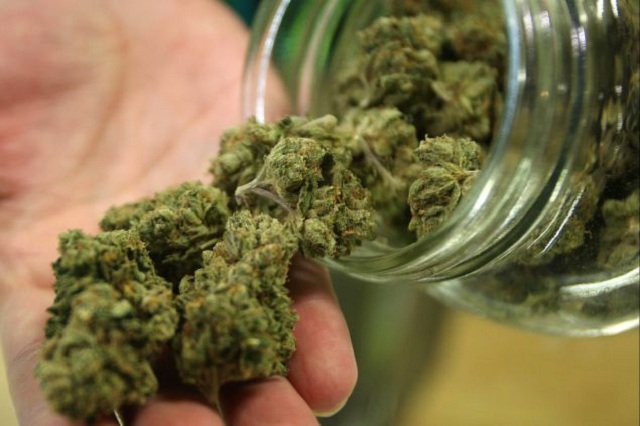

Vusumuzi Dube, Features Reporter
WHEN one travels to Chiredzi, people will request the traveller to bring back sugarcane, to Egypt people would bid you to come home with the Egyptian traditional clothing; the gallibaya, while a visit to Scotland will result in friends and relatives begging you to bring them the best Scottish whisky.
These are some of the souvenirs or artefacts which people always request when you travel because they are unique and are often not found in any other area besides the one visited.
However, tell anyone you are going to Zimbabwe’s Binga District, all that is said by those fascinated by the illegal drug; “Don’t forget to bring us the highest grade.” Even when coming from this district, before even people ask about your travel the first thing they say is; “Did you bring us the mbanje?”
Located just over 412 kilometers from the country’s second largest city, Bulawayo, Binga District in Matabeleland North is largely dominated by Tonga-speaking people. It is located south of Lake Kariba at the shores of the mighty Zambezi River which borders Zimbabwe with Zambia.
However, apart from its known strong Tonga traditional values and its tsetse-fly and mosquito infestation which makes malaria endemic, Binga and the Tonga people have been identified with the inhalable drug; mbanje, which is also known as marijuana or dagga.
A number of stories have emerged regarding Binga’s Tonga-speaking people and their relation to mbanje. These range from allegations that women pastime smoking mbanje in pot-like pipes called nchelwa or ndombondo.
Others have even alleged that the Tonga feed the mbanje leaves to rabbits and then crush the droppings, which they then smoke. Further, it has been claimed that the district is littered with traditional, secret mbanje plantations, known only to village elders.
All these beliefs have seen even tourists travelling to the district all with the hope of purchasing the so-called “high grade” or spotting bare breasted women sitting in a shade and getting dazed from smoking marijuana.
To top this up, despite possessing and smoking mbanje being illegal in Zimbabwe, efforts have been made, from various circles to have the drug legalised in the country, some even calling for it to be considered on medical grounds.
Sunday News last week took the great expedition to Binga with the aim of finding out whether the long standing myth of the Tonga and their relationship with mbanje is just a myth or has some truth behind it.
While traditional leaders in the district vehemently distanced themselves from their association with the “holy leaf”, individual villagers confirmed that this was a part of their culture further alleging that it was responsible for their physical well-being.
Chief Saba said the mbanje myth was similar to the witchcraft myth which over the years had been attached to people of Binga. He said it was unfortunate that this unscrupulous myth had been allowed to go on for a long period noting that it was about time that something was done to rebrand the district.
He said the drug was as illegal as it is in all other parts of the country and those that smoke it face the same punishment when arrested.
“It also surprises me how this myth has gone for all this time unaddressed. I grew up here, herded cattle here and now I am a chief of this very area but what I can tell you is that never in my lifetime have I seen a mbanje plant or a mbanje plantation.
“Maybe they might be there but they are all illegal and if anyone is found with such they will surely be arrested.
“However, I feel something has to be done in terms of rebranding the district because as traditional leaders if we sit back and allow people to say such of our area then we surely are not going anywhere,” said Chief Saba.
He said it was because of these myths that the district was largely underdeveloped because people considered them as mbanje smokers who were not serious with life.
Chief Saba further claimed that when he grew up they were actually being told that the best mbanje grade came from across the Zambezi River, further alleging that these were the people who were smuggling the drug to the district.
“When some say you are a mbanje smoker it is far from being a celebratory title but is more of a derogatory term hence I think it is about time we fight this. The way people label us is now as if when you take a walk in the district you come across people freely walking and smoking mbanje but this is not the case.
“At times it really angers me that people can look down at us like that. We are a cultured people who strongly abide by the laws of the nation and we know that mbanje is illegal in the country,” said Chief Saba.
Another chief, Pashu explained the phenomenon of the use of “nchelwa” or “ndombondo” saying people will be smoking tobacco not mbanje.
“What happens is that people put water into the clay pot to help purify the tobacco from the nicotine, the pot is actually changed every day, there is no mbanje at all which is smoked in the district, to be fair all this is defamation and should not be allowed to continue.
“As for beliefs that mbanje is smoked in the district on medical grounds it is also shocking because in my entire life I am still yet to come across a local healer who actually prescribes mbanje for his or her patients,” said Chief Pashu.
Senior headman Tembo from Saba village concurred with the two traditional leaders saying each village had in place traditional police officers who were tasked with weeding out any individual who dealt in mbanje in a bid to cleanse the district’s image.
“We know that people look down upon us by spreading such myths therefore in a bid to solve this we have increased our monitoring mechanism, we can’t have people spreading unfounded myths,” said Headman Tembo.
However, ordinary villagers interviewed said if it was up to them, they would openly smoke mbanje as most of them had been brought up using the drug.
“I have never smoked any of these tobacco generated cigarettes, I don’t even drink alcohol, I only smoke mbanje, I was brought up smoking mbanje and I don’t see myself stopping any time soon, it is part of our culture and tradition.
“It is rather surprising that our traditional leaders are distancing themselves from mbanje while in actual fact they know that even our ancestors used to engage in this. We were even advised that mbanje strengthens our immune system, why then should it be wrong today,” said a villager from the Siachilaba area.
Other villagers further claimed that mbanje was a “good” medicine for diseases such as cancer, headaches and high blood pressure.
“I come from a family of traditional healers and I can tell you that both my father and grandfather taught me that mbanje is a cure for a number of ailments which include cancer, headaches and high blood pressure.
“They further taught me that this drug also strengthens our bones hence naturally due to this knowledge I won’t hesitate to prescribe mbanje for any of my patients, even my children are now mbanje smokers considering all these health benefits,” boasted the 72-year-old man.
Medicines Control Authority of Zimbabwe (MCAZ) spokesperson, Mr Richard Rukwata said mbanje was unlikely to be regarded as a possible medicine for these ailments and would remain banned in the country.
“Talking of Binga you will realise that unlike their claims, mbanje is largely used for recreational purposes instead of medical. It therefore makes no logic for the Government to consider their pleas to legalise it.We shall wait and see but I doubt that mbanje would be legalised any time soon,” said Mr Rukwata.
Health and Child Care Minister David Parirenyatwa said the Government had no immediate plans to legalise mbanje.
“It would be very premature to act on that because of these debates and researches,” said the Minister.
Several researches by reputable scientific journals such as the British Journal of Cancer and the US National Library of Medicine have published evidence showing that mbanje can cure different types of cancers, including brain cancer, breast cancer, lung cancer and prostate cancer.
South Africa is among many developing countries that have proposed laws pushing for the legalisation of mbanje for medical and economic purposes, but Zimbabwe remains resolute that the drug remains banned.
In January 2014, Colorado State in the United States made $2 million in tax revenue in the first month of mbanje sales after it was legalised, according the US newspaper The Telegraph.
Colorado became the first State in the world to vote in favour of ending mbanje prohibition in 2012. Under the law, mbanje consumption is permitted in a manner similar to alcohol. A couple of years ago the Uruguayan parliament also approved a bill to legalise its sale.
In 2011, then Zanu-PF legislator, Cde Simbaneuta Mudarikwa called on the Government to legalise mbanje saying it had medicinal values. Cde Mudarikwa’s calls were immediately rejected by his fellow legislators, including Agriculture Minister Cde Joseph Made who said the drug was dangerous to society.
Despite alleged evidence on the health and economic benefits of mbanje, the raging debate on its legalisation remains a contentious issue. Recently, the International Narcotics Control Board (INCB) labeled changes to mbanje laws in Uruguay and Colorado a “very grave danger to public health”.
In its annual report released earlier this month, the INCB warned that “alternative drug regimes” could lead to higher levels of addiction.


 Bongani Ndlovu
 Online Reporter