Zimpapers Business Hub
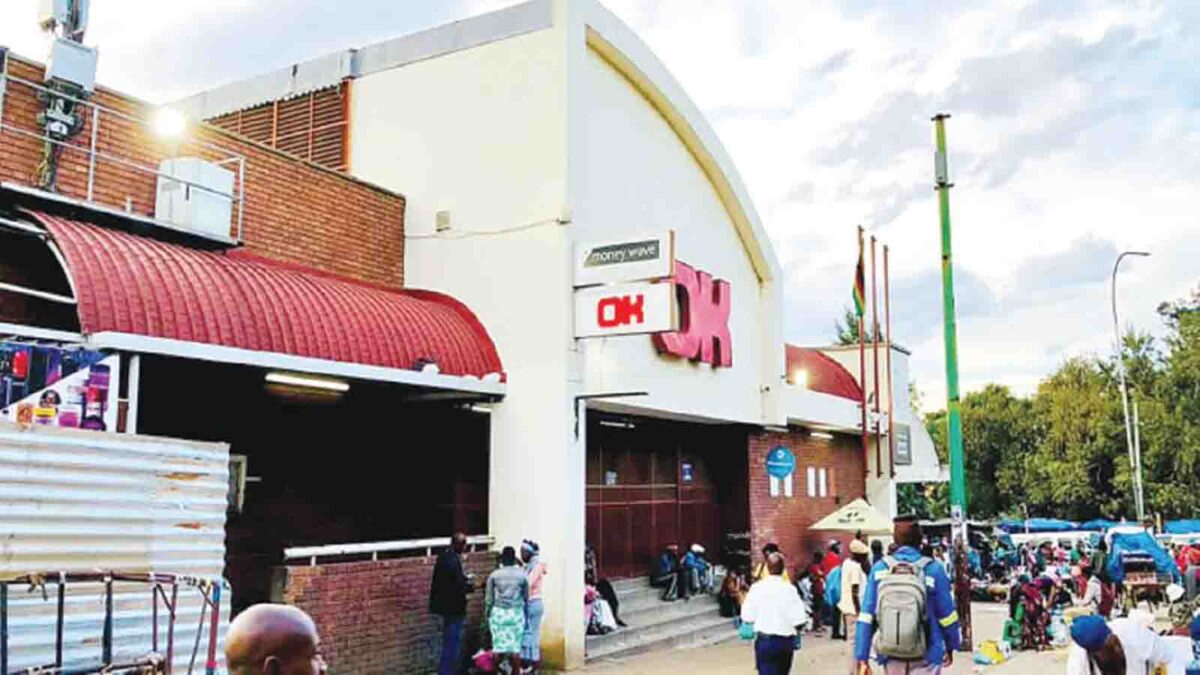
THE building that used to house retail chain OK Zimbabwe along Lobengula Street in Bulawayo has been partitioned into small shops, but this is no longer an isolated case.
Across Bulawayo’s central business district, large commercial buildings are increasingly being subdivided to accommodate dozens of small-scale traders.
Chairperson of the Estate Agents Council of Zimbabwe Mr Desire Dube said the shift is a classic signal of the real estate trends following the business cycle in the economy.
“It signifies a lot. The real estate cycle, the real estate industry, or the real estate market, rather, follows a cyclical pattern in response to the business cycle,” said Mr Dube.
“So, when you see certain behaviour, certain trends in the real estate market, it tells you what is happening in the economy. Gone are the days when we had large retail occupiers. The economy now supports small-scale occupiers.”
According to Mr Dube, the economy is now dominated by small-scale operators who are competing fiercely for prime commercial space — and outbidding the large retailers who once anchored buildings like OK along Lobengula Street.
“So, there’s a lot of small-scale operators; you then find that it becomes expensive for the large-scale retailer to occupy that property because there’s demand coming from a large number of small players,” he said.
“What happens in real estate, particularly commercial real estate, is occupiers of space compete to locate themselves at a particular point.”
“You’ve got a large volume of small players, small retailers, competing to occupy that space.
“Therefore, they offer higher rentals and the large occupiers cannot afford that higher rental.
“The small ones, they afford that rental because it’s an agglomeration of 50 to 100 people at one point contributing to the rent versus one tenant.
“Therefore, that big tenant moves out, or rather is kicked out by the forces of demand and supply because other people are demanding that space. That is exactly what is happening.”
For property owners, the trend is profitable.
Mr Dube said instead of relying on one tenant, they now collect rent from many tenants housed in the same building.
“It’s a good thing in the sense that property owners get to realise higher rentals,” he said.
“Also, for the local authority, it then means that even the rents themselves, they will be able to get payment because when you’ve got tenants who pay rent on time and who pay a large amount of rent, payment of rates becomes easy,” he said.
Mr Dube warned that there is a cost to the transformation.
“The only disadvantage is that it marks the death of large-scale retailers,” he said.
The disappearance of big retail chains from prime Central District Buildings changes the character of the city centre, from large formal stores with wide product ranges to a dense network of small
shops, many selling similar goods in close competition.
Despite that, the employment impact is significant: where a single large retailer may have employed 15 to 20 workers, a partitioned building can now host 100 small businesses.
“The other positive thing about it, when you look at the economy, is in a space where there was one occupier, one tenant who had a say 15 to 20 workers, you now have 100 small operators. So we have 100 companies in that space,” said Mr Dube.
“With 100 companies, if each one of the companies employs an assistant, a single assistant, then there are 200 people employed. And that’s a big contribution to the economy, assuming that all those people pay taxes.”
The partitioning of the former OK Zimbabwe building along Lobengula Street is, therefore, not just a property story.
It is a snapshot of an economy where small-scale enterprise is now the dominant occupier of commercial space, driving rents up and creating hundreds of small jobs in the process.