Online Reporter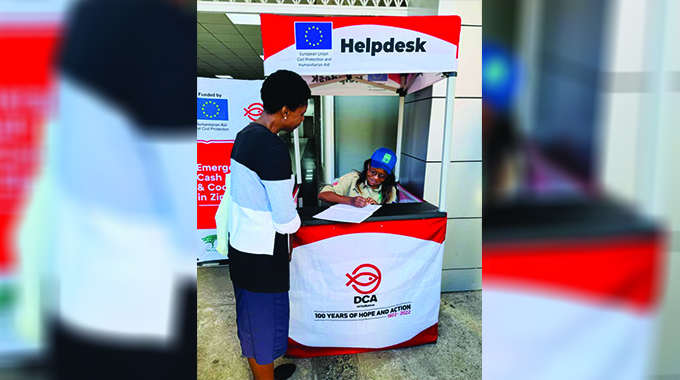
Faith Ndlovu, Sunday News Reporter
AT least 12 000 people in Bulawayo are set to benefit from the urban resilience projects meant to cushion vulnerable communities against both economic and climate-related shocks through a US$3m fund which is being advanced to them by DanChurchAid Zimbabwe.
The projects, implemented in partnership with local civil society organisations (CSOs) is meant to address poverty and marginalisation by building local capacity to implement programmes.
The initiative comes at a critical time when the Trump Administration’s decision to cut USAID funding has left aid workers without jobs and vulnerable communities without support.
The impact initially felt by hundreds of aid workers who now find themselves without jobs, will soon trickle down to vulnerable communities who will no longer benefit from the support.

DanChurchAid communications manager Patience Ukama said over the past five years, they have noticed a distinct decline in funding available for humanitarian aid projects in Zimbabwe.
“Part of it has obviously been due to more dire global crises like Ukraine and the conflicts in South Sudan, Gaza, and the DRC,” she noted.
“At DanChurchAid, we believe in building effective local civil society partnerships. These partnerships can transform the needs and rights of poor, marginalised groups into social power. A strong civil society is essential for sustainable long-term development,” said Ms Ukama.
She noted that one successful intervention is the Emergency Cash Response and Coordination Project in Bulawayo, led by DCA and implemented jointly by four consortium partners: DCA, ORAP, Musasa and Childline with the facilitation of the Government of Zimbabwe.
“The project targets 12 000 beneficiaries to receive emergency cash to bolster their resilience against both economic and climate-related shocks. We are happy to report that one beneficiary, Joseph Ndlovu (63), has now been able to boost his poultry business to a point where it provides for him and his two dependants,” said Ms Ukama.
She noted that the project integrates protection activities, including raising awareness on child protection, sexual and gender-based violence (SGBV), prevention of sexual exploitation and abuse (PSEA) as well as referral pathways through mobile one-stop centres.
“Reports indicated that these vices had increased sharply as communities struggled with the effects of the 2023/2024 drought and limited livelihood options,” she said.
“This is where partners like Musasa and Childline Zimbabwe channel their expertise to benefit communities. Government departments such as Women’s Affairs, Zimbabwe Republic Police’s Victim Friendly Unit and the Ministry of Health have also risen to the challenge by linking rights holders to additional services and benefits,” she noted.
She said Childline Zimbabwe has for the past twenty-eight years been providing a child-friendly response service for children accessible any time of the day or week, to receive protection and emergency care.
“Musasa works to prevent and respond to Gender-Based Violence (GBV), providing relief to survivors of GBV in Zimbabwe through a multidimensional approach. Meanwhile, ORAP has been committed to empowering people and fighting all forms of poverty since 1981,” she added.
A beneficiary Mr Able Dlamini (42) from Old Magwegwe, however, emphasised that the five-month emergency support is not enough and needed to be stretched longer to give him a chance to rebuild and re-establish his business.
“I am very grateful for the project. It came at a time when we were in desperate need. We could not afford school fees for our children. We had to sell our household furniture just to make ends meet. Now at least we can have three meals a day,” said Mr Dlamini.
Mr Dlamini started a tannery business with his wife Rosemary in 2015 with the ambition of becoming a thriving entrepreneur.
The business grew, and the couple secured a retail shop. However, it was unable to survive as it was weighed down by the costs of leather. They had to close the shop and sell their furniture to survive. Now they have settled their debts to leather suppliers and have begun to rebuild their business.
“I have greatly benefited from these trainings, I think more men should participate. I have learned how to be a good provider for my children and to take care of my family. I am very grateful,” he said.