Online Reporter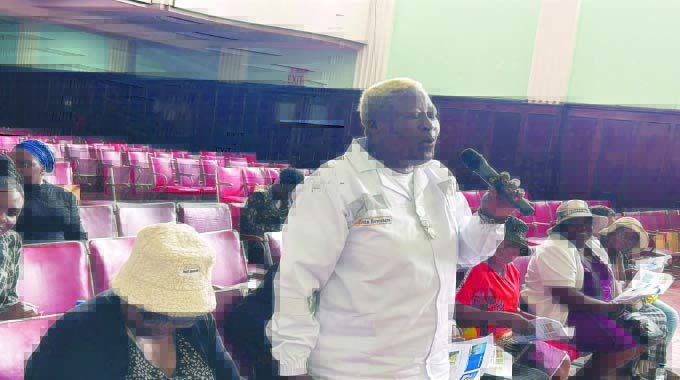
Tanaka Nkala, Chronicle Reporter
BULAWAYO residents are demanding urgent action from the city council to address a persistent water crisis and stalled sewer and water reticulation projects, according to feedback from ongoing 2026 budget consultation meetings.
At public forums across the city, residents from various suburbs have voiced concerns that water shortages and sewage bursts continue to plague their communities despite the local authority consistently listing water provision as a top priority. The city council is at present gathering input from residents and key stakeholders to inform the formulation of its 2026 budget.
One participant, identified only as Mrs Moyo from Nkulumane suburb, said some areas go for months without receiving any water.
“The council claims that water provision is a priority, yet some of us go for months without a single drop. It’s puzzling, especially considering we received good rains this year,” she said.
Another resident, Ms Maria Moyo, also from Nkulumane, said sewer bursts have plagued her community for over two years.
“In my Ward 20, a sewer tank has been overflowing. We raised this issue during last year’s budget consultations, and they even took our details, but nothing has been done,” she said.
Residents also proposed practical stop-gap measures, including the sinking of additional boreholes in water-stressed suburbs such as Mpopoma.
“We appreciate the once-a-week water supply, but in some areas, there’s nothing at all. In Mpopoma, residents have resorted to using the bush as toilets. We urge the council to install boreholes in such areas,” said Ms Cynthia Maticha.
These calls come a week after residents at the National Residents Summit in Bulawayo pushed for increased budget allocations towards Water, Sanitation and Hygiene (Wash) services. Participants at the two-day summit, hosted by the Bulawayo Progressive Residents Association (BPRA) under the theme “Rethinking Wash Sector Financing in the Context of Devolution”, urged that all revenue collected from water charges be ring-fenced for direct reinvestment in water and sewer infrastructure.
Responding to the concerns, Bulawayo City Council (BCC) officials urged residents to play their part by paying bills and rates.
“If we, as a city, wish to resolve these issues, it is up to us as residents to pay our bills. By doing so, our city will be able to maintain its standards,” said Ms Sivuyisiwe Ncube from the BCC’s finance department.
Ms Ntokozo Ncube from the BCC works department noted that the water crisis is being exacerbated by illegal gold panning along rivers feeding Bulawayo’s dams.
“Before the rains last year, inspections revealed illegal mining activities along riverbanks, which altered tributary routes. This has resulted in reduced water inflows into our dams,” she said.
Bulawayo has endured prolonged water shortages for decades, with the situation worsening in recent years due to ageing infrastructure, climate change and increasing demand.
The city relies on six supply dams — Umzingwane, Inyankuni, Upper Ncema, Lower Ncema, Mtshabezi and Insiza — which often run critically low during drought periods.
The shortage has forced the local authority to implement strict water-shedding schedules, with some suburbs going days or even weeks without water. Residents often turn to alternative sources such as boreholes, wells, or unsafe water points, raising fears of water-borne disease outbreaks.
Additionally, illegal gold panning along river catchments has worsened the crisis by disrupting inflows into dams.
Ageing sewer and water reticulation infrastructure compounds the problem, resulting in frequent sewer bursts, pipe leaks, and contamination risks.
Over the years, proposals such as the National Matabeleland Zambezi Water Project (NMZWP) have been touted as long-term solutions, but implementation has been slow.