Limukani Ncube, Intake Editor
THERE is a question Bulawayo city fathers need to ask themselves and it is far more important than the next pothole to be repaired: how do they make the city richer?
It sounds simple, but the answer could determine whether Bulawayo continues with its economic growth trajectory. For years, conversations about the City of Kings and Queens have revolved around potholes, water shortages, refuse collection, street lighting and the decline of industries that once sustained thousands of families.
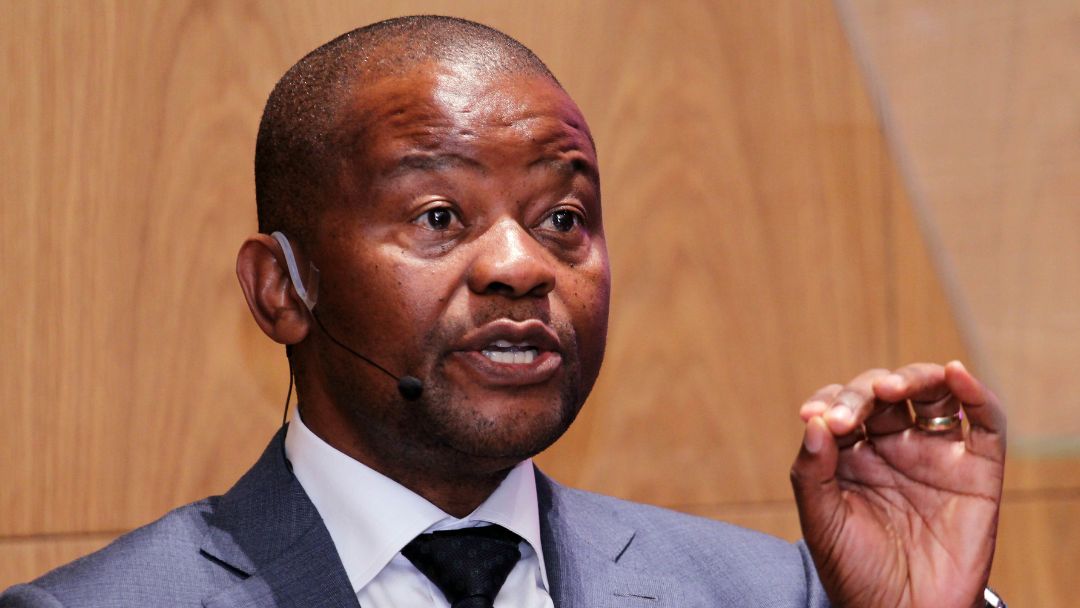
These are legitimate concerns, but South Africa-based businessman and corporate executive Mr Peter Mthandazo Moyo believes the city is treating the symptoms of a deeper economic problem.
In an interview on Bulawayo’s Finest podcast, Mr Moyo challenged municipal leaders, businesspeople and residents to change the conversation from maintaining the city to growing its economy.
“The first big thing, you have got to raise the incomes of abantu bakoBulawayo,” he said, arguing that residents’ ability to pay rates is fundamental to the municipality’s capacity to deliver services.
“If you don’t raise the incomes of the people of Bulawayo, the city can’t do anything without the rates.”
His argument is that the municipality cannot indefinitely demand more from households whose livelihoods are shrinking. Nor can it expect businesses to thrive when there is weak demand or declining industrial and economic activity.
Beyond the potholes
Mr Moyo’s childhood in Mpopoma offers a compelling starting point for understanding what has changed.
He recalls a community where, despite modest living conditions, employment, education and competition created opportunities. Growing up in a four-roomed house with seven siblings and extended family members, he said they never saw themselves as poor.
“There was absolutely nothing wrong with it,” he recalled of the modest lifestyle that taught them the importance of family, discipline and perseverance.
More importantly, he remembers a city where having someone in the household who went to work was normal.
“It is a city where each and every family had somebody that woke up every morning to go to work,” he said.
That memory lies at the heart of his economic prescription: Bulawayo must rebuild an economy in which people earn reliable incomes, businesses grow and municipal revenue follows.
Mr Moyo is not suggesting that roads should be abandoned or that refuse collection is unimportant. Rather, he suggests that leaders must recognise that sustainable service delivery depends on a productive economy.
His criticism is that discussions about fixing potholes and cleaning streets often fail to address the question of where the money to sustain those services will come from.
“I have never heard anybody talk about how they are going to increase the Gross Domestic Product of the city,” he said. That is the challenge: Councillors need measurable economic ambitions, not just promises of better service delivery, he argued.
Let the sunshine work for Bulawayo
One of the opportunities Mr Moyo identifies is right above the city. Bulawayo enjoys abundant sunshine, yet little has been done to harness solar power to boost economic productivity.
“There is no reason known to man why this city must ever have failed to have power,” he argued, questioning why the city has not done more to harness solar energy.
His proposal is to turn that natural advantage into an economic asset. Solar installations across industrial properties, businesses and suitable municipal land could help diversify energy supply.
Partnerships involving investors, universities and industry could also build technical skills and support renewable-energy businesses, he suggested.
The bigger opportunity is to make reliable electricity part of Bulawayo’s investment proposition. Manufacturers considering where to establish operations need more than available land and a willing workforce. They need predictable operating conditions, particularly a reliable energy supply. If Bulawayo can make meaningful progress on energy security, it could strengthen its appeal to investors and help existing businesses expand.
However, solar power would not solve every economic challenge, but it could become an important building block in a broader industrial revival.
Why not become an outsourcing hub?
Mr Moyo also sees an opportunity in services that can be delivered remotely to international clients. Bulawayo’s English-speaking workforce and its time-zone compatibility with Europe could support outsourced administration, customer service, accounting, data processing and other business services.
“Why have we never thought about making this city the centre of excellence for administration, outsourced administration?” he asked.
It is a question that should resonate with a city searching for new sources of employment. Unlike traditional manufacturing, business-process outsourcing does not necessarily require every worker to be employed in a large factory. With reliable power, fast internet, suitable business premises and targeted skills development, young people could work for companies whose customers are thousands of kilometres away.
However, the opportunity will not materialise through ambition alone. It requires investment in digital infrastructure, training, business confidence and a coordinated effort to market Bulawayo internationally.
NUST must become part of
the economic solution
Mr Moyo believes the National University of Science and Technology (NUST) should play a much bigger role in the city’s transformation. He points to the relationship between universities and surrounding industries as a model worth examining.
“We have got the National University of Science and Technology, right? What have we done?” he asked.
He argued that Bulawayo should think about the economic activities that can develop around its university, from technology and industrial research to student accommodation and international education. This however, dovetails with the Innovation Hubs system that has been put in place by the government across all tertiary institutions in the country.
His vision, which is in sync with government policy, to be replicated across the country, is to create “almost university towns” that attract students from beyond Zimbabwe’s borders. Such a strategy could generate demand for accommodation, transport, retail, hospitality and professional services in places like Gwanda, Lupane, while creating opportunities for research partnerships and innovation.
The city’s industrial heritage could also provide a foundation for university-industry collaboration, allowing researchers and entrepreneurs to develop practical solutions for manufacturing, engineering and renewable energy. The objective should be to connect education to enterprise so that knowledge generates jobs, investment and new businesses.
Building the next Bulawayo
Bulawayo’s danger is not simply that it has lost industries. It is that it could become so preoccupied with remembering what it once was that it fails to build what it could become.
The future may combine advanced manufacturing with solar energy, digital services, university-led innovation, tourism and regional commerce. Mr Moyo’s journey, from Mpopoma, Bulawayo to senior corporate positions across Southern Africa, reinforces his belief in the transformative power of education, discipline and opportunity.
His challenge to Bulawayo is to create opportunities for a new generation. The question to city fathers is: What will persuade young graduates to build their futures here rather than outside Bulawayo or even outside the country? That is the question that Mr Moyo believes must become central to the city’s fathers.
“The message is not that potholes do not matter. It is that the economy must generate the resources needed to fix them sustainably.”
For a city with Bulawayo’s history, talent and industrial heritage, the ambition should be clear: stop merely maintaining the City of Kings and start rebuilding its capacity to create wealth.