Nqobile Bhebhe, Zimpapers Business Hub
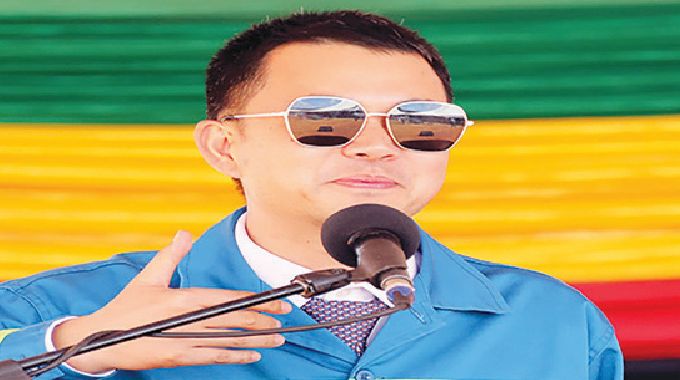
WHEN Dinson Iron and Steel Company (DISCO) chief executive officer Mr Benson Xu stood before mining industry leaders at the 2025 Chamber of Mines Annual Conference and Exhibition in Victoria Falls, he issued a pointed warning: Zimbabwe’s industrial ambitions would count for little without a transport system capable of moving its minerals, raw materials and finished products to markets.
Mr Xu called for a “Grand Railway Solution” that would transform Zimbabwe’s landlocked position from a disadvantage into an opportunity by creating efficient rail connections between production centres, markets and regional ports. “Zimbabwe is a landlocked country, but we want to make it trade-linked, to link markets effectively.
Logistics are critical. Whether it’s steel, lithium, iron ore, or chrome, we need to ensure these products can move efficiently to ports and buyers,” he said then. At the time, the proposal represented a broader industrial vision centred on rebuilding Zimbabwe’s railway infrastructure to support expanding mining, steelmaking, beneficiation and exports.
A year later, that vision has begun moving from the conference floor to implementation. The strategic partnership between the National Railways of Zimbabwe (NRZ) and Grand Railway Solutions (GRS), signed last week, provides for the construction of a new railway connection between DISCO’s Manhize steel plant and Mvuma, the rehabilitation of existing railway infrastructure and the deployment of locomotives and wagons for bulk freight.
The development effectively gives practical substance to Mr Xu’s call for a “Grand Railway Solution”, with Manhize emerging as a potential anchor customer for the revival of Zimbabwe’s rail freight network.
More significantly, the project brings together industrial demand, private investment and public railway infrastructure around a single logistics strategy.
Under the arrangement, GRS, a Dinson Group subsidiary, will provide investment capital, locomotives, wagons and operational expertise, while NRZ will provide its existing infrastructure and remain the train operator.
GRS director and founder, Mr Linos Masimura, said the programme would include the construction of a rail connection of about 50 to 54 kilometres between Mvuma and Manhize, alongside the upgrading of the existing Mvuma–Gweru route.
The Gweru–Mvuma rehabilitation covers about 80 kilometres and is expected to improve the capacity of the route feeding into the wider NRZ network.
The initial budget for the Manhize–Mvuma link has been estimated at approximately US$125 million, while the Gweru–Mvuma rehabilitation has separately been put at about US$27 million.
But the real economic significance of the project lies in the cargo it is expected to move.
Mr Masimura said the immediate objective was to provide rolling stock capable of transporting coal and coke from Hwange to Manhize and finished steel from DISCO to domestic and regional markets.
“The ultimate aim is to have enough rolling stock to move coal, coke, steel and other minerals,” he said.
This gives the railway partnership a built-in industrial cargo base, reducing the risk of infrastructure being developed without sufficient freight demand.
NRZ acting chief executive officer, Ms Ainah Dube-Kaguru, said the development had the potential to restore freight volumes associated with Zimbabwe’s steel industry to levels last seen during the Zisco era.
She said the Manhize operation could provide NRZ with an initial freight volume of about 600 000 tonnes annually or approximately 50 000 tonnes a month.
The wider arrangement is also expected to support the movement of about 1,1 million tonnes of coal from Hwange, while around 600 000 tonnes of finished steel could be transported from Manhize to domestic and regional markets as operations scale up.
For NRZ, the opportunity comes after years of declining freight volumes.
The railway operator’s cargo volumes, which peaked at about 12 million tonnes in the 1990s, had fallen to around two million tonnes by 2025 amid under-investment and increased competition from road transport.
The emergence of Manhize as an anchor industrial customer could help NRZ rebuild volumes while restoring rail’s role as a key enabler of industrial production.
The partnership could also improve railway efficiency through return loads.
Coal and other industrial inputs transported to Manhize could be complemented by steel and other outbound cargo, reducing empty wagon movements and improving the utilisation of locomotives and wagons.
Ms Dube-Kaguru said NRZ’s immediate export routes would include Maputo and Beitbridge, with longer-term plans involving extensions towards Nyazura and ultimately Beira. This means the Manhize–Mvuma connection could develop into more than an industrial spur.
It could become a strategic link connecting Zimbabwe’s central industrial and mining belt to regional transport corridors and ports. That prospect is particularly important as the Government seeks to increase mineral production, promote local beneficiation and position Zimbabwe as a regional industrial and logistics hub.
For mining companies, dependable rail services could provide additional capacity to move commodities that are transported predominantly by road. Mr Masimura said GRS would seek to identify other mining and industrial customers whose bulk cargo could be transferred from road to rail.
This could become increasingly important as production of lithium, chrome, iron ore and other minerals expands. The railway partnership also has implications beyond conventional freight.
A reliable rail connection between mines, industrial plants, warehouses and ports could strengthen Zimbabwe’s participation in regional commodity markets by moving large consignments more predictably and potentially more cost-effectively.
For DISCO, the railway is integral to its broader vision for Manhize. During the signing ceremony last week, Mr Xu said the steel operation was being developed as an integrated industrial hub focused not only on steel production, but also on processing, value addition and exports.
“DISCO is not only a steel plant; it is an industrial heart, a centre of production, processing, value addition and export.
For that heart to succeed, reliable, efficient, and competitive rail logistics are essential,” he said. The statement underlines why the railway project was central to the “Grand Railway Solution” proposed by Mr Xu in 2025. As Manhize expands production, the plant will generate demand for coal, coke, iron ore and other inputs, while simultaneously producing substantial volumes of finished steel requiring distribution to domestic and regional markets.
Without an efficient bulk transport system, increased industrial output could simply shift the bottleneck from the factory to the logistics network.
DISCO projects manager, Mr Wilfred Motsi, said the company was positioning its 800-hectare Special Economic Zone at Manhize as a platform for downstream manufacturing, with the industrial park expected to accommodate more than 300 businesses.
He said the SEZ formed part of a broader strategy to move Manhize beyond steel production into manufacturing, beneficiation and industries using locally produced steel and other raw materials.
“The story of Zimbabwe must not remain that we have more than 50 minerals. The story must be about what factories we have, what products we are producing and how many jobs we are creating,” Mr Motsi said.
The expansion of the Manhize industrial ecosystem could create additional freight demand for NRZ, reinforcing the commercial case for the railway investment. GRS plans initially to purchase and lease locomotives and wagons before eventually establishing wagon refurbishment and manufacturing capacity at one of the workshops associated with the construction of the DISCO plant.
This could create opportunities for local engineering services, skills development, employment and railway equipment manufacturing, Mr Masimura added.
The proposed build-operate-transfer model for the Manhize–Mvuma connection could also offer a template for using private capital to complement Government resources in addressing Zimbabwe’s infrastructure deficit. Under the arrangement, GRS will fund construction of the track, transfer it to NRZ and recover its investment through agreed offsets.
The model could potentially be replicated along other strategic railway corridors where mining and industrial projects generate sufficient bulk cargo to support infrastructure investment. Ms Dube-Kaguru said NRZ derives about 98 percent of its business from freight, highlighting the importance of industrial customers to the railway’s recovery.
The Manhize project consequently creates a potentially powerful commercial relationship in that DISCO gets the bulk logistics infrastructure required to support its industrial expansion, while NRZ gains a major and potentially growing anchor customer.
Economist Ms Alice Chikonzo said implementation would now determine whether the project delivers on its broader economic promise.
“If successfully implemented, the Manhize–Mvuma connection could become a strategic piece of Zimbabwe’s industrial infrastructure, linking production at Manhize with the national rail network and regional export corridors,” she said.
“It could also provide a template for using private investment and industrial demand to revive strategic public infrastructure. “And with Zimbabwe seeking to increase mineral production, expand beneficiation and build an export-oriented industrial economy, the ability to move bulk cargo efficiently could determine whether new production translates into sustainable economic growth or simply creates new logistical bottlenecks.”
The DISCO plant is set to become one of Africa’s largest integrated steelworks. DISCO is one of the Zimbabwean subsidiaries of Tsingshan Holding Group, the global stainless-steel powerhouse headquartered in China. Tsingshan also operates Dinson Colliery in Hwange, Matabeleland North and Afrochine Smelting in Selous, Mashonaland West.