Online Reporter
Thupeyo Muleya Beitbridge Bureau
Cross-border buses and transporters are cashing in on rising anti-migrant tensions in South Africa, with fares and luggage charges doubling as thousands of Zimbabweans rush home by road.
The border at Beitbridge has become busy again and since late May, long queues of buses, kombis and private vehicles have been arriving daily from Gauteng, KwaZulu-Natal and the Western Cape.
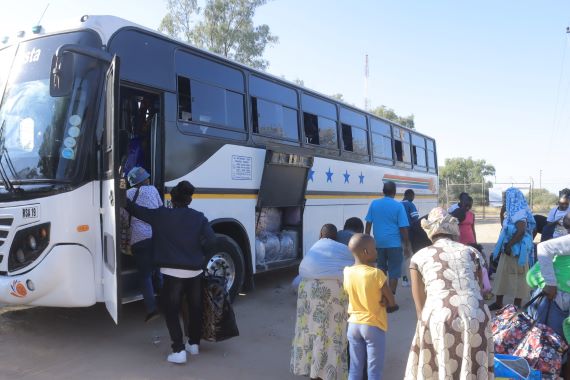
Border officials say most of the travellers are Zimbabweans leaving South African townships after violent anti-migrant protests.
So far 35,403 returned independently from South Africa while 4,735 returned through State assistance via the same border.
Interviews with passengers and operators show a sharp increase in travel costs.
A seat from Cape Town or KwaZulu Natal to Harare, which normally costs R1800, is now going for R3000.
“Most buses plying the KZN and Cape Town routes are reportedly fully booked up to 5 July,” said a woman travelling with her two children from Cape Town.
“The demand for transport home is high. People are scared. So the bus operators have doubled fares and this has seen many opting to use State assistance to leave South Africa.
“When the locals gave me one hour to leave, I was yet to receive my salary for June and worse I couldn’t afford the bus fares. From Cape Town to Harare people are now paying R3000 up from R1800 and if you have luggage its worse”
The woman said some operators are charging up to R4000 for extra bags, trunks and household goods, especially beds, fridges or stoves.
She said some travellers have little choice but to pay, or leave most of their property behind.
“Zimbabweans in those areas have created the demand, and the buses are cashing in,” said another returnee identified only as Mitchel.
She said since most were caught unawares, people have to use Government funded transport to their homes.
“I decided to come home with a few items using State-assisted transport to avoid huge costs,” said another returnee, Ernest.
“I had to leave before month-end and to make matters worse, landlords are no longer taking rentals from migrants for fear of being victimised.
“That’s the same case with employers, some migrants are told not to come to work, because the Government of South Africa has deployed Labour inspectors who if they find irregularities slap employers with huge fines”.
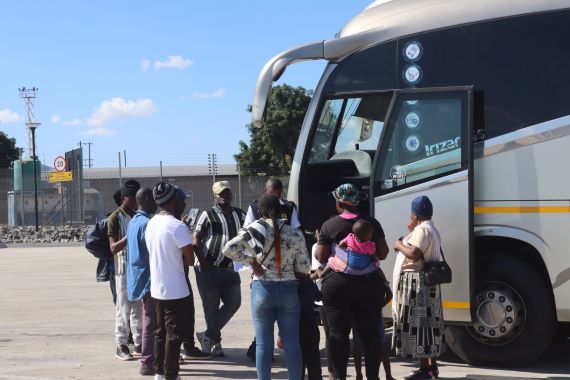
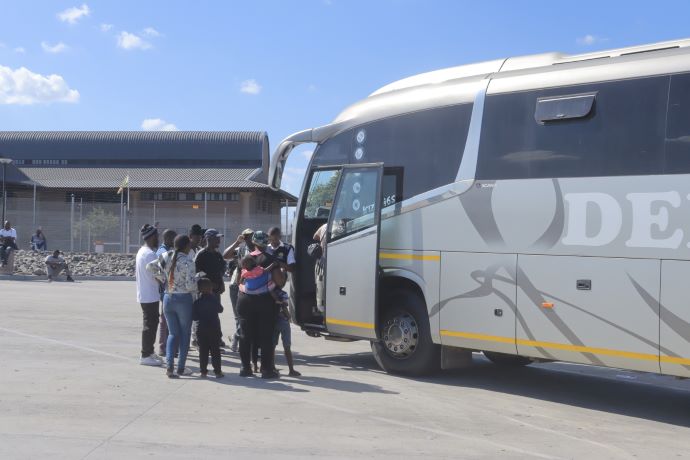
In response to the ongoing situation in South Africa, the Government has deployed Embassy officials to all troubled areas where they are documenting Zimbabweans and repatriating them by road in coordination with the host government.
The majority of the returnees are coming through the Beitbridge Port of Entry, which is at the moment the only official land border between Zimbabwe and South Africa.
The Government treats this as a national emergency and uses a whole of Government approach to make the process smooth.
The district civil protection committee, led by chairperson Miss Sikhangezile Mafu, coordinates operations when the buses arrive at Beitbridge with the support of a team of Government agencies.
The main processing point is the Government-run Reception and Support Centre in Beitbridge which can handle 1,000 adults and children every day.
“We have met with all State actors and agreed on the need to ensure a seamless process. We are using the whole Government approach so the process becomes seamless. All sub committees have been activated for health, transport, resource mobilisation and social protection,” said Miss Mafu.
She said on arrival, each person is registered and profiled by officials from the Department of Social Development and Immigration while the Ministry of Health and Child Care checks for medical needs.
—