Forward Nyanyiwa in CARLOW, Ireland
FOR the past quarter of a century, Zimbabwe has been under the yoke of Western-imposed sanctions, making the country one of the few countries in the world, alongside Cuba, to survive so long under the punitive regime.
The effects of the sanctions have been well documented — lost revenues, stalled development, de-industrialisation, among others.
The full extent of the carnage has not yet been fully quantified.
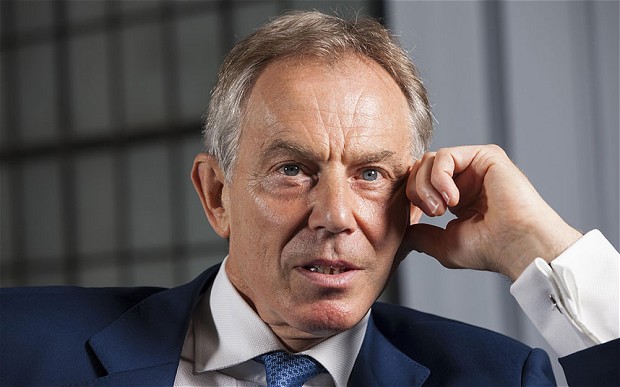
Equally, there hasn’t been any conversation yet about how much the West, principally Britain, America and Europe, owe Zimbabwe for the damage wrought by sanctions, particularly so because they were arbitrary, subjective and based on a lie by former British Prime Minister Tony Blair.
Blair can be best described as the sanctions “instigator-in-chief” as he orchestrated the embargo in an attempt to conceal a glaring misdeed that occurred in 1997.
On November 6, 1997, Blair, through his then-Secretary of State for International Development Clare Short, sent a seemingly innocuous letter to Harare in which he made a startling renunciation of responsibility.
The letter indicated that Britain was no longer in a position to fund Zimbabwe’s Land Reform Programme as agreed in 1979.
The infamous letter would come to reshape the diplomatic, political and economic relations between Britain and Zimbabwe.
Here was a breach of trust, a policy shift that made mockery of a public promise to resolve what was probably the major grievance of the Second Chimurenga.
Blair argued that he could not honour an agreement which Zimbabwe signed with the Margaret Thatcher Conservative-led government in 1979 at the Lancaster House Conference.
For Zimbabwe, this amounted to betrayal.
Mistrust deepened when Blair backed the formation of the Movement for Democratic Change to topple the Government in the hope of reversing the land reform.
By 2000, Zimbabwe’s Land Reform Programme was in full swing.
The pain went straight to Number 10 Downing Street in London — and Blair felt it.
Britain ganged up with America, leading to the signing of the Zimbabwe Democracy and Economic Recovery Bill (ZDERA) into law by US President George Bush on December 21, 2001.
Bush and Blair even went further to propose a military solution to the “Zimbabwe crisis”, and this was met with fierce resistance from the continental and regional blocs, together with other friendly nations.
Tony Blair is therefore responsible for the economic tumult that followed.
For this, he owes Zimbabwe an apology.
Overall, this big lie about Zimbabwe by Bush and Blair brought with it untold suffering to the country.
Firstly, Zimbabwe lost access to international lines of credit, forcing the Government to survive on domestic resources.
This also resulted in the increase and subsequent build-up of external debt arrears.
Furthermore, it worsened the country’s creditworthiness, leading to the drying up of external financing as well as suspension of balance of payment support.
The manufacturing sector was not spared as it bore the brunt of high borrowing costs, outdated technology and equipment, tight liquidity conditions, low demand and electricity shortages.
As a result, Zimbabwe lost some of its markets for manufactured products.
The agriculture sector, which provides employment and income to over 70 percent of the population, supplies 60 percent of raw materials to the manufacturing sector and contributes 40 percent to total export earnings, was similarly affected.
Several key institutions linked to agriculture sector were placed under sanctions, making it difficult to access agricultural lines of credit and attract investment.
This had the impact of affecting the country’s quest to attain the United Nations Sustainable Development Goals (SDGs) against poverty and hunger.
In other words, these illegal sanctions have violated basic human rights.
The supply of vaccines and drugs was affected and, by extension, animal health and welfare.
Zimbabwe’s healthcare sector was probably the worst affected by sanctions through brain drain.
As of 2010, Zimbabwe had 1.6 physicians and 7.2 nurses for every 10 000 patients, according to World Health Organisation (WHO 2010) statistics.
In addition, the coercive measures made it difficult to finance the prevention and treatment of HIV and AIDS from the Global Fund, with several grants being denied for political reasons.
Brain drain also spread to the education sector.
Today, as Zimbabwe and the region marks yet another commemoration to push for the removal of sanctions, the resilience of the country is nothing short of remarkable, because it is a story of how a small country weathered the worst forms of pressure in the form of an economic squeeze and isolation.
Overall, sanctions were designed to collapse the country and make it ungovernable.
But the real pain and losses affected real people.