admin
admin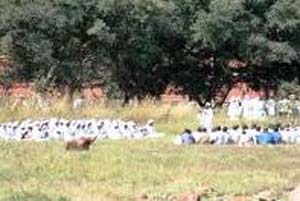
Vimbai’s family and husband belonged.
One of 12 wives, Vimbai soon began bearing children like they were going out of fashion.
As the church principles forbid followers from seeking medical services, when her delivery time came, Vimbai joined other women of the church in a bush maternity centre.
Her first delivery went well, but when she returned the second time it turned out that she had twins who presented with their feet first.
Both children died and were buried at night in the forest and after the difficult delivery Vimbai who had ruptures in the birth canal bled excessively and also died.
Vimbai’s story is neither unique nor remarkable in the world of bush deliveries for the Johanne Masowe apostolic sect female members.
The bush maternity camps are manned by untrained fellow sect members whose only qualification to oversee childbirth is the claim to divine appointment.
One such woman operating in Dema in the village headed by Derrick Rubatika, Miriam Mukosera has been running her informal maternity home for 12 years and claims all is well.
“There are no complications here. I am told by the Holy Spirit when a woman is going to have problems. I can even tell that a prospective mother is HIV-positive because the Spirit enlightens me,” Musokera said in an interview.
But the situation on the ground shows a totally different picture. Reports of high infant and maternal deaths haunt the camp.
The village head, Derrick Rubatika says village dogs often unearth tiny corpses that are buried in shallow graves bringing limbs and other body parts into the village which is a traumatic experience.
He says there are also stories of clandestine burials in the night in the forest surrounding the bush camp.
“There are soiled cloths on the river and exposed human bones. This is a health hazard and against our tradition,” Rubatika revealed.
In the Shona culture, infants who have not yet teethed are buried by women only in shallow graves usually close to rivers. But the worrying thing is that the centre has no official oversight and no one knows exactly the rate of death at the centre.
Deputy Prime Minister Thokozani Khupe has stated the current mortality rate for women at childbirth is at eight deaths every day and with such centres allowed to run unchecked and unsupervised it is unlikely to decrease any time soon.
Deputy Minister of Health and Child Welfare Dr Douglas Mombeshora has said the ministry will be sending a team to assess the situation at Musokera’s centre and react accordingly.
But it is not the only bush camp in the country and there is need for dialogue with the church leadership to reach an amicable solution.
Johanne Masowe is led by men and no women are allowed to preach or hold any positions of power.
Forced and early marriages are often reported to be rife in the church.
A woman who gives birth without proper medical care runs several risks. Routine health tests and check-ups for diseases like STIs and tuberculosis are not carried out.
Inoculations against tetanus and H1N1 are also not administered increasing chances of infant and maternal mortality during childbirth.
Anaemia, edema, vitamin and mineral deficiency as well as malnutrition are other indicators that qualified medical personnel view as red flags in pregnant women and if noted in time they make efforts to remedy the situation.
And the worst part is that there are no HIV tests in the bush camps thus no measure is taken to avoid mother to child transmission of the virus.
The administration of Nevirapine at prescribed stages of pregnancy on top of the correct ARV regime will practically ensure that an HIV-positive woman will deliver an HIV-negative baby.
The women are required to check in at six months until after their new born child’s navel scar has healed.
During this time, the women live in makeshift tents made of plastics with the dusty ground for a floor.
There are chances of suffocation, catching colds from draughts or that the tent could catch fire. With no toilets in sight and safe disposal of soiled sanitary towels, chances of communicable diseases spreading are quite high.
All the 25 women who were in the camp during this paper’s visit with some awaiting delivery or who had already delivered said that they saw nothing wrong in the whole set up.
They said it is the only place that they know and if they have problems they rely on prayer to get them through any complications.
A quick survey revealed that most of the women did not finish their primary school education and the low levels of literacy means that they have to rely on second hand information in many areas.
The expectant mothers and those who already have children have no clear knowledge of the child killer diseases and think that immunisation is just a modern tradition like women wearing slacks which they can ignore.
In another show of how deadly the lack of information can prove, they only know about HIV in a vague way and believe that since most of their marriages are between church members then as a group the Johanne Masowe members are not really at risk.
In polygamous unions, new wives tend to be child brides who are often taken out of school before maturity. But there are cases of Johanne Masowe male members engaging in sexual activity out of wedlock with non church members and even commercial sex workers.
Sometimes they also marry outside the church.
On the other hand, the women are also said to be engaging in extra-marital sexual activity when a man has more wives than he can conceivably satisfy.
A documented case in Buhera revealed a pact between co-wives of one man to take on a common lover who filled in the gaps left by the husband.
Other women who are not of this church are also opting to give birth at home citing the costs charged at hospitals and clinics.
There are also others who say that the care at public institutions is so bad that one opts for a home delivery as they feel that the chances of dying at hospital watched by indifferent nurses are higher.
Dr Mombeshora said his ministry has set up shelters to be occupied by mothers-in-waiting close to rural hospitals and he says there are plans to scrap all payments for maternal health care to make it accessible to every woman.
Zimbabwe’s health delivery system is battling to ensure an adequate delivery for the citizens.
With the high HIV and TB burden adding to the challenge and the state is under pressure to do the best it can with the inadequate funding that all ministries are operating with.
The rights to health and life are very fundamental human rights and the provision of safe childbirth facilities for all means that there will be a double benefit; to expectant mothers and to the infants.
[email protected]; [email protected].



 Online Reporter