admin
admin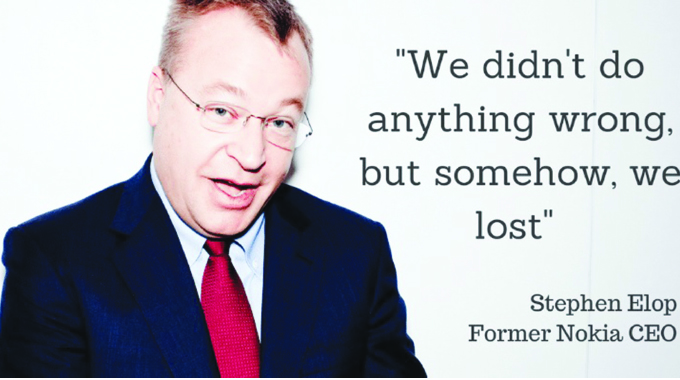
Arthur Marara, Point Blank
The enemy of tomorrow’s success is today’s success! If you are still talking about yesterday’s success it means you are not doing anything in the present.
Companies do not necessarily fail because of today’s failure, but they can fail due to failure to handle today’s success.
There are several companies that picked themselves up and came back on their feet and even thrived. Do not be a victim of your success. We are going to continue our conversation on business complacency and how to avoid it.
Increased vulnerability
Your complacency is your competitor’s business opportunity in the competitive landscape of business.
Complacency can be one of the most dangerous pitfalls an organisation can encounter. After reaching significant milestones—whether celebrating record profits, launching a successful product, or gaining substantial market share—companies often dive into a false sense of security.
This sense of accomplishment can disorient leaders, encouraging a belief that sustained success is guaranteed without further effort or adaptation.
During these periods of triumph, companies may become increasingly vulnerable to external threats.
Competitors, driven by ambition and innovation, are always on the lookout for weaknesses in established players.
They may leverage the opportune moment when a market leader lowers its guard to introduce disruptive technologies, innovative products, or flexible business models that challenge the status quo.
This dynamic can allow agile newcomers to leapfrog established companies without invoking the same level of bureaucracy or inertia that often plagues larger organisations. Entrepreneurs and start-ups can swiftly adapt to changing consumer preferences and emerging technological advancements, creating offerings that resonate more deeply with the market than those of their complacent counterparts. If a company fails to maintain vigilance during its periods of success, it risks becoming rapidly outmanoeuvred, losing its competitive edge, and ultimately being rendered less relevant.
Historically, numerous organisations have witnessed the erosion of their once-dominant positions.
For instance, industry giants that once led the charge in their markets have seen their relevance wane as innovative entrants disrupt traditional business practices.
Companies that do not cultivate a mindset of continuous improvement and stay attuned to market fluctuations may find themselves struggling to regain footing, often too late to reverse the damage incurred during their inattentiveness.
Moreover, complacency can lead to a misalignment with customer needs.
As consumer preferences evolve, companies that do not actively engage in feedback mechanisms or market research may misjudge the direction in which their audience is moving. This disengagement can create significant gaps in product relevance, allowing competitors to fill the void with solutions that exceed customer expectations.
To navigate this landscape effectively, organisations must institutionalise a culture of ongoing vigilance and proactive innovation.
It is crucial to adopt practices that ensure continuous monitoring of market trends, competitor activities, and emerging technologies.
By fostering a work environment that encourages creativity and agility, companies can position themselves not just to react but to anticipate changes, thus transforming potential threats into opportunities for growth.
Complacency not only jeopardises a company’s current standing but also provides fertile ground for competitors to stake their claim.
Businesses must remain alert, adaptable, and committed to continuous improvement to safeguard their achievements and secure their future in a competitive world. Failure to do so can lead to undesired outcomes, where a moment of inattention can result in long-term consequences that may be difficult to reverse.
In this article, we will explore the lessons that can be learned from Nokia’s fall and examine the importance of staying ahead of the curve in today’s rapidly changing business landscape.
Case study: Nokia
In the world of business, there are few stories as tragic as the fall of Nokia. At its peak in the early 2000s, Nokia was the leading mobile phone manufacturer, holding over 40 percent of the global market share.
Once a behemoth of the telecommunications industry, Nokia’s s dominance was a testament to its innovative spirit and strategic thinking. But what went wrong? How did a company that was once synonymous with mobile phones and innovation fall so far, so fast?
The answer lies in the company’s inability to adapt to changing market conditions, a failure to innovate, and an unwillingness to change.
After experiencing significant success, Nokia became slower to embrace smartphone technology, while competitors like Apple and Samsung advanced.
Nokia’s failure to adapt to the shift towards touchscreen smartphones left it vulnerable and led to a drastic reduction in market share, ultimately culminating in its sale to Microsoft.
In a shocking admission, Nokia’s CEO once said, “We didn’t do anything wrong, but somehow, we lost.” This statement highlights the devastating impact of complacency and a lack of strategic thinking.
Nokia’s downfall serves as a stark reminder that even the most successful companies can falter if they fail to recognise the changing landscape and adapt to new technologies.
As the world becomes increasingly fast-paced and competitive, it is more important than ever for business leaders to stay ahead of the curve and be willing to make tough changes to remain relevant.
The story of Nokia’s demise is a cautionary tale that warns us against the dangers of complacency and stagnation. It is a reminder that even the most successful companies can fail if they are not willing to innovate, adapt, and evolve.
Timeline of Nokia’s downfall
1979: Nokia creates radio telephone company Mobira as a joint venture with leading Finnish TV maker Salora.
1981: Launch of the Nordic Mobile Telephone service, the world’s first international cellular network.
1982: Nokia introduces the first car phone – the Mobira Senator – to the network..
1984: It launches the Mobira Talkman portable car phone.
1987: Nokia introduces the Mobira Cityman, the first handheld cellphone. It weighs 800g and comes with a price tag of 24 000 Finnish marks.
1991: Finnish prime minister Harri Holkeri makes the world’s first “global system for mobile communications” call, using Nokia equipment.
1992: The company launches its first digital handheld GSM phone: the Nokia 1011..
1994: Nokia launches the 2100 series, the first phones to feature the Nokia Tune ringtone. It goes on to sell 20 million phones worldwide.
1998: Nokia becomes the world leader in the mobile phone market.
2001: Nokia launches its first phone with a built-in camera, the Nokia 7650.
2002: Nokia launches a video capture phone, the Nokia 3650. It also launches its first 3G phone, the Nokia 6650. With 3G, phones can be used to browse the web, download music, watch TV on the move, and more.
2004: The company reveals that although it is still the market leader, it is losing share to its rivals.
2005: Nokia sells its billionth phone – a Nokia 1100 – in Nigeria.
2007: Nokia is forced into one of the world’s largest product recalls after it admits the batteries in 46 million phones could be faulty. Meanwhile, a longer-term problem emerges: Apple launches the iPhone.
2008: The company reports a 30 percent fall in third-quarter profits. Its smartphone sales fall 3.1 per cent, while sales of Apple iPhones grow by 327.5 per cent.
2009: Nokia announces plans to cut 1 700 jobs worldwide as the recession hits cellphone sales. Nokia admits it was slow to react to the rise of new devices such as the iPhone.
2010: Competitors’ devices, such as the iPhone and Android-based handsets, are posing a serious challenge to Nokia’s future. Nokia appoints former Microsoft man Stephen Elop as president and chief executive. Nokia cuts another 1 800 jobs despite a rise in profits.
2011: Elop tells staff: “We are standing on a burning platform.” Days later he announces a strategic partnership with Microsoft to compete with Apple and Google’s Android platform. Nokia cuts another 4 000 jobs worldwide from its 65 000- strong workforce.
2012: The group cuts 4 000 jobs and moves smartphone manufacturing to Asia. Analysts predict a possible takeover by Microsoft as it cuts 10 000 more jobs and announces its last factory in Finland will close.
2013: Microsoft buys Nokia’s handset business for €5,44 billion.
Arthur Marara [LLB(Hons) (UZ), LLM (UZ)] is a three-in-one packaged individual; a corporate law attorney, keynote speaker, peak performance and corporate strategy speaker. With his delightful humour, raw energy, and wealth of life experiences, he captivates audiences and inspires them to unlock their full potential. He duly admitted by the High Court of Zimbabwe to practice law as an Attorney, Notary Public and Conveyancer. Marara is a highly seasoned corporate law attorney with a proven track record of excellence in the legal field. With a wealth of experience and a passion for corporate law, Marara possesses the expertise required to navigate complex legal landscapes and deliver exceptional services to clients. Known for his in-depth understanding of corporate legal matters, Marara offers comprehensive counsel tailored to the unique needs of businesses. His unwavering commitment to providing strategic counsel and delivering favourable outcomes has earned him a stellar reputation in the industry.
Feedback: [email protected] or +263772467255



 Bongani Ndlovu