Online Reporter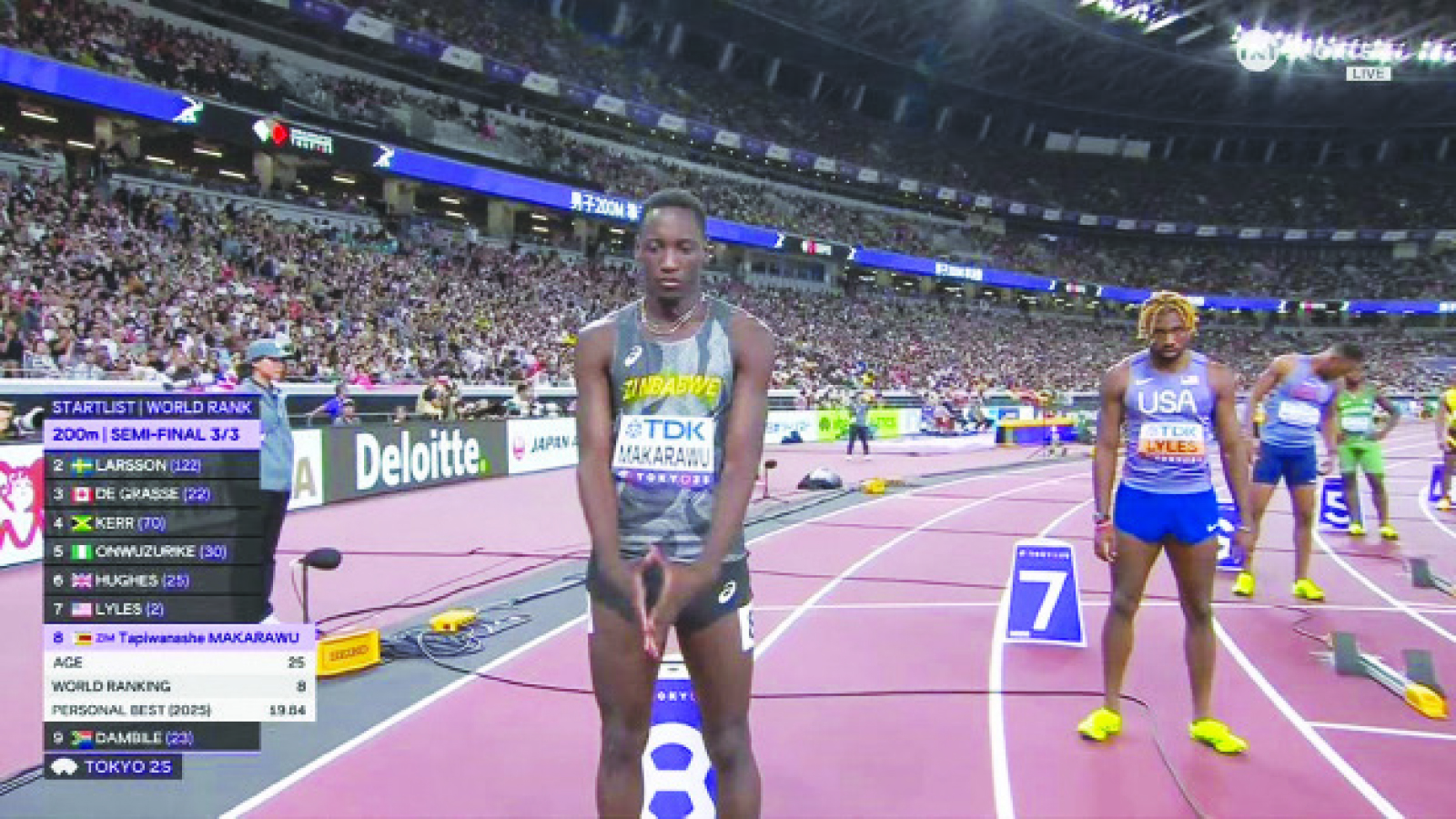
Petros Kausiyo in Tokyo, Japan
TAPIWANASHE Makarawu and Makanakaishe Charamba once shared the same Olympic final in 2024.
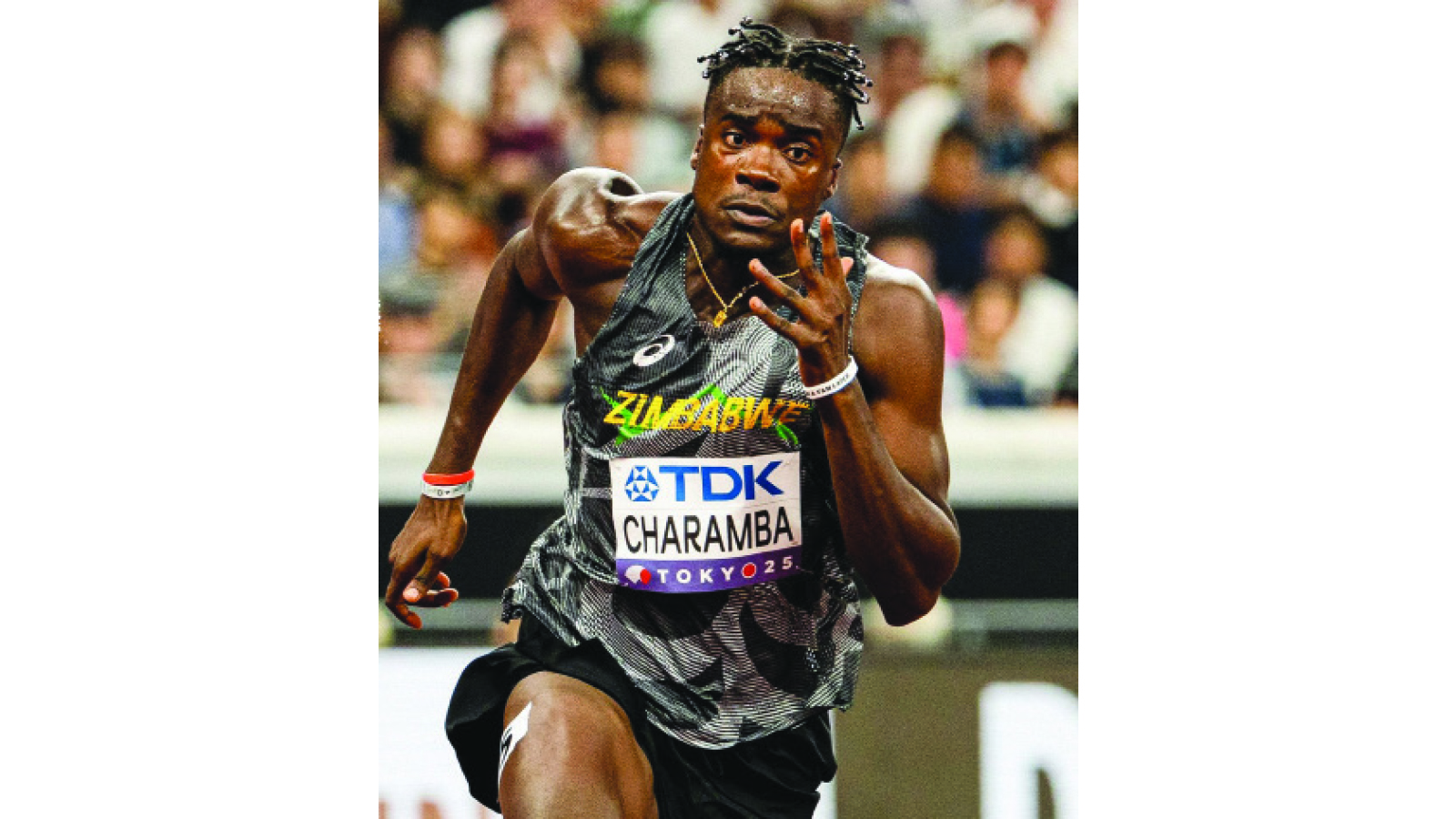
A year later, only one of Zimbabwe’s sprint pair will stand on the start line of another global 200-metre showdown. On a night when fractions of a second meant everything, Makarawu powered into the World Athletics Championships final while Charamba suffered the cruelest cut, finishing ninth overall when only eight men advanced.
Both United States-based sprinters arrived in Tokyo carrying the hopes of a nation and the memory of their shared Paris stage. But this time fortune split them apart.
Charamba looked certain to extend their joint story after placing third in the opening semi-final with a sharp 20.03 seconds. He then endured a long, nerve shredding wait for confirmation, sitting shoulder to shoulder with South African great Wayde van Niekerk as giant stadium screens replayed his run and magnified every anxious look.
The verdict was brutal. When the results finally flashed up, Charamba stood as the ninth fastest man of the night, a single place outside the cut for the final. He bowed his head while the crowd murmured, the kind of silence that says more than cheers ever could.
For Makarawu, destiny turned the other way. Drawn in the night’s toughest heat, the Zimbabwe national record holder needed to run close to perfection. He stumbled slightly on the bend but recovered with a powerful straight to clock 19.98 seconds for fourth. That time proved enough to claim one of the non-automatic slots and book his place in tonight’s final.
The split paths of the two friends gave the semi-finals their emotional heart. What began as a shared quest ended in contrasting emotions, triumph for Makarawu, heartbreak for Charamba.
“Zimbabwe’s hopes were based on the two athletes,” said Phakamile Lisimati, the National Athletics Association’s director of coaching and talent identification and Team Zimbabwe leader.
“Unfortunately, Makanakaishe came third in his heat but missed out because other heats were quicker. So we wish Makarawu the best of luck for the final. He’s been a shining star for us and continues to give us hope.”
Their duel unfolded against a night of high profile casualties. Australia’s teenage prodigy Gout Gout, once tipped for gold, clocked 20.36 and fell short. Jamaican sprinters Adrian Kerr and Christopher Taylor, Japan’s own Towa Uzawa, Nigeria’s Udodi Chudi Onwuzurike and even van Niekerk, the 400m world record holder, were swept aside.
Makarawu’s Heat 2 justified its billing as the fiercest of the round. Defending world champion Noah Lyles of the United States blasted to victory in 19.51 seconds. Britain’s Zharnel Hughes followed in 19.95, and South Africa’s Sinesipho Dambile squeezed into third with 19.97, leaving Makarawu to fight for survival in a Southern African photo finish. From that single heat came half of the final’s eight places, underlining its brutal quality.
The other semi-finals added more intrigue. Jamaica’s Brayn Levell won Heat 3 in 19.78, the night’s second fastest time, with Olympic champion Letsile Tebogo of Botswana following in 19.95. Together with the Heat 2 quartet, they shaped a final loaded with speed and storylines.
For Makarawu, a former Bindura University of Science Education student now training in the United States, the path ahead is clear. He must sharpen his bend, hold his form, and tap into the 19.84 national record he set earlier this season.
“I have matured enough to handle big occasions,” he said before these championships. That poise will be vital under the bright lights of Japan National Stadium tonight.
Lisimati believes a medal is within reach if the 26-year-old executes cleanly. “It is going to be a tight race with Lyles and Tebogo, but Carlie has given us hope,” he said, using Makarawu’s nickname. “We hope he can correct one or two technical issues we saw in his semi so that he can excel tomorrow and hopefully give us a podium finish.”
Charamba’s own run, though ending in heartbreak, points to a bright future. Matching the world’s best until the final cut, he reminded Zimbabwean athletics that he remains a vital piece of the nation’s sprint puzzle. His fight will inspire others and fuel the country’s ambitions for Paris 2028 and beyond.
Tonight, however, the spotlight belongs to Makarawu. He carries the flag alone, aiming to etch his name alongside Zimbabwe’s great sporting moments. Should he burst past his own record, a medal would not just crown his rise; it would turn this Tokyo trip into a landmark for the country’s athletics revival.
The friendship and rivalry that began in Paris now frames Zimbabwe’s next big chance. From shared dreams to diverging fates, the story of Makarawu and Charamba has gripped a nation. The final chapter of this meet will be written tonight, when one man in green and gold settles into his blocks with all of Zimbabwe urging him on.