admin
admin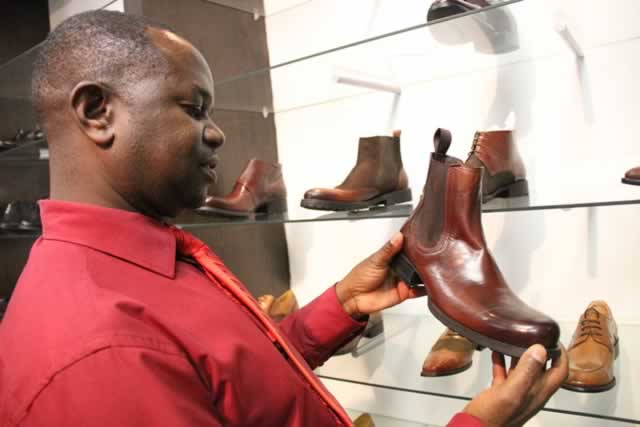
Problem Masau Lifestyle Writer
Just rewind your memory to a few years ago.
A man is walking down the streets of Harare clad in a Giorgio Armani suit with a matching shirt and a tie.
In his hand he has a dual SIM card “Nokia” cellphone. As if it is not enough, he is wearing a pair of a Giovanni Rossi shoes and is heading to his just imported Toyota Mark II.
When he arrives home he turns on his “Philips” television and a “Sony” DVD player and sits back and enjoys the pirated movie he had bought in the street.
All those renowned labels are just counterfeits.
Counterfeiting is the unauthorised representation of a registered trademark carried on goods identical or similar for which the trademark is registered. The sole purpose is to deceive the purchaser into believing that he or she is buying an original product.
Sadly, many Zimbabweans were duped to believe that their goods ranging from technological gadgets to clothing are genuine labels only to find out that in the long run, the goods were either counterfeits or just copycats.
In 2007, the International Chamber of Trade estimation of total global value of fake goods was more than US$600 billion and this represented 7 percent in global trade.
Fast forward to this day, Zimbabwe is proving to be a hub of genuine products with established brands finding their way into the country.
A snap survey by Saturday Lifestyle showed that renowned world brands such as Gucci, Georgio Amani, Louis Vuitton, Samsung, Sony and retail shops such as Shoprite and Jet have all established a foothold in the country.
Even international artistes such as Akon, Sean Paul, Sean Kingston, Brick and Lace and P Square have all performed in the country.
Are Zimbabwean now rich enough to afford all this luxury?
A snap survey showed that most of the companies that have established here are making good money.
The streets of Harare are awash with the latest cars such as Range Rover, Jaguars and all the latest versions of the Mercedes-Benz.
“The economy has stabilised and most of us can afford to buy things on credit without the fear of inflation,” said Memory Zivanai, who was shopping in Jet Store.
A store manager at a Sony distributor in the city centre said business was brisk.
“People are crazy about technological gadgets and they are buying these goods. We order many gadgets every week because they are in demand,” he said.
Is this a sign that the economy has stabilised?
University of Zimbabwe lecturer Tawanda Zinyama said though the country is yet to fully recover from a decade-long economic problems, things were looking up for many people.
“The rich and the poor gap is continuously increasing. Those who are well off continue to make money while those who are poor wallow in poverty. The good thing about this economy is that prices do not change overnight,” he said.
People can afford to save so that they can purchase genuine goods. Some people are even going to the extent of importing house plans that are common in Hollywood.
A report by the Cato Institute titled “Zimbabwe: Why Is One of the World’s Least-Free Economies Growing So Fast?, showed that Zimbabwe’s economy was growing faster than Hong Kong.
Between 2009 and 2011 GDP growth averaged more than 7 percent. By comparison, Hong Kong’s economy grew by 5 percent.
The country has been on a growth trajectory following the adoption of the multi-currencies in January 2009. This began with its adoption of the United States dollar and South African rand as Zimbabwe’s official currencies (known as dollarisation) in early 2009.
Nearly 9 percent of its gross domestic product comes from off-budget grants from the outside world and those grants have rapidly increased over the past several years.
There has also been a rapid escalation of sales of raw minerals that have had the good fortune to benefit from higher commodity prices.
Dollarisation has played an important role in stabilising the economy, and has yielded improvements in local markets and the tourism sector.


 Online Reporter